
Key Insights
- YouTube helps Web3 brands build trust and explain complex products in a simple way. It turns creator credibility into real user interest and stronger buying intent.
- The best results come from creators whose audience matches the product. A strong niche fit drives better engagement, better traffic, and better conversions.
- Clear goals and tracking make influencer campaigns easier to measure. Brands can connect views and clicks to sign-ups, leads, and revenue.
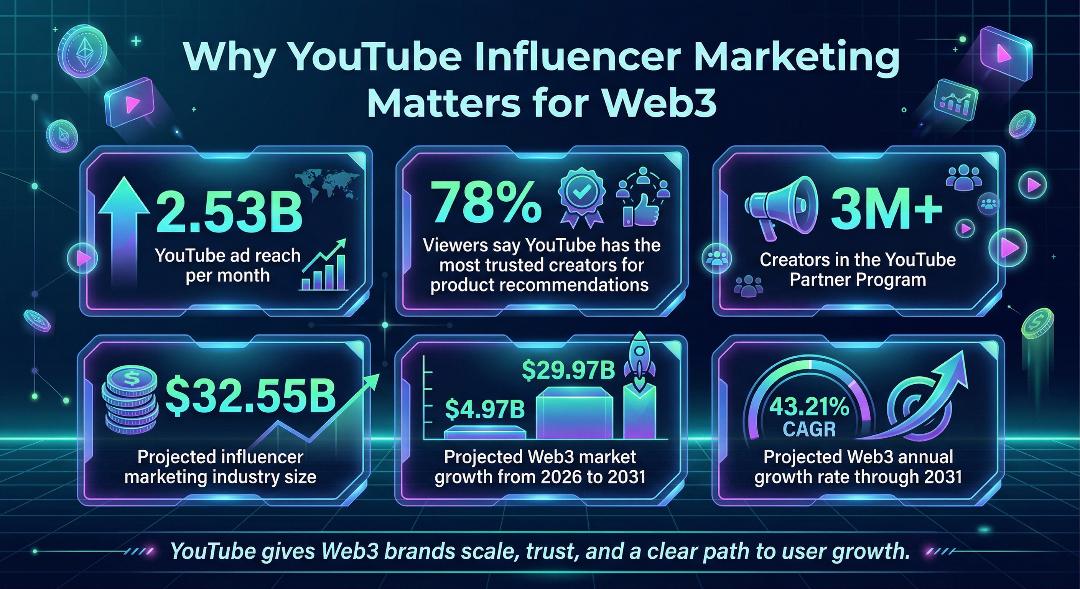
YouTube is now one of the strongest trust channels for Web3 marketing. That matters for brands selling products that feel new, technical, and risky to many buyers. YouTube ads reach about 2.53 billion users each month, and YouTube says 78% of viewers see its creators as the most trusted source for product recommendations. The platform gives brands access to more than 3 million creators in the YouTube Partner Program, so Web3 companies get scale and trust at the same time. A clear video from the right creator can explain a wallet, a DeFi product, or an NFT platform in minutes. It can turn confusion into interest, then move that interest toward clicks, sign-ups, and revenue.
The timing is right for brands that want a larger share of crypto and blockchain demand. The influencer marketing industry is projected to reach $32.55 billion, which shows how fast budgets are shifting toward creator-led campaigns. Web3 is growing fast too. Mordor Intelligence values the Web3 market at $4.97 billion in 2026 and projects it to reach $29.97 billion by 2031. That equals a 43.21% compound annual growth rate. These numbers make one point clear: the market is expanding fast, and trust will shape which brands win attention and sales. This guide explains how YouTube influencer marketing works for Web3 brands, which content formats build trust, how to plan campaigns, and how business leaders can connect creator spend to traffic, users, and revenue.
What Is YouTube Influencer Marketing for Web3?
Definition and Core Concept
YouTube influencer marketing for Web3 is a partnership between a blockchain brand and a creator who has an active, trusted audience on YouTube. The creator introduces a product, explains its use, or reviews its value in a video that feels clear and useful. In Web3, this work goes past basic promotion. The creator often teaches viewers how a wallet works, what a token does, or how a DeFi platform fits into real use. Traditional influencer campaigns often chase reach alone. Web3 creator partnerships put more weight on trust, product knowledge, and community credibility.
Why YouTube Matters for Web3 Brands
YouTube gives Web3 brands room to explain products that need more than a quick post or short clip. A creator can show a wallet setup, walk through a staking flow, or break down a blockchain tool step by step. That format builds trust, and trust matters a lot in crypto, where buyers often fear scams, weak products, or empty promises. YouTube supports richer product stories too. Viewers can see screens, hear opinions, and follow real examples, so the brand feels more concrete and less abstract.
Types of Web3 Businesses That Benefit Most
Many Web3 companies can gain from YouTube influencer marketing, but some categories stand out. Crypto exchanges use it to explain trading features, fees, and security. Wallet providers use it to teach setup, storage, and recovery steps. DeFi platforms use it to explain staking, lending, and yield tools in plain language. NFT projects use it to build interest and show utility. Web3 gaming brands use creator videos to show gameplay and token use. Blockchain infrastructure firms and Web3 SaaS companies use YouTube to explain complex products to founders, developers, and business buyers.
Why Businesses Should Invest in YouTube Influencer Marketing for Web3
-
Key Business Benefits
YouTube influencer marketing helps Web3 brands win trust in a market where many buyers stay cautious. It gives teams a strong way to explain technical products without losing the audience. It puts brands in front of niche crypto, blockchain, gaming, and fintech communities that already follow trusted creators. It supports conversions too. A good video can spark awareness, answer doubts, and push viewers toward sign-up pages, demos, app installs, or token research in one clear flow.
-
Commercial Value for Decision-Makers
For business leaders, this channel supports goals that tie to growth. It can bring in leads for Web3 SaaS firms, new users for wallets and exchanges, and wider product awareness for token launches or platform updates. It can grow community size across YouTube, Discord, Telegram, and X. It can raise brand visibility with investors, media contacts, and strategic partners who track creator conversations. Over time, repeated creator mentions can strengthen brand recall and make the company easier to trust.
-
Why This Channel Works Better Than Many Paid Alternatives
YouTube often performs better than standard paid ads for Web3 brands that need trust and explanation. A creator video feels more personal than a banner or display ad, and viewers spend more time with the message. Social ads can catch attention fast, but they rarely explain a wallet, protocol, or blockchain service in enough detail. YouTube content can keep working long after the campaign ends through search, suggested videos, and playlist placement, which gives brands a longer shelf life for every sponsored piece.
How YouTube Influencer Marketing Works for Web3 Brands
The End-to-End Process
A strong YouTube influencer campaign starts with a clear goal, then moves through audience research, creator discovery, vetting, outreach, planning, production, launch, and review. Web3 brands need this structure more than most sectors. The products are harder to explain, and the trust barrier is higher. A team may want wallet installs, exchange sign-ups, demo bookings, or token awareness, but the process stays similar. Pick the audience first. Find creators who already speak to that group. Check their content, comments, view patterns, and past brand work. Then build a brief that explains the product, the key message, the call to action, and the content rules. After the video goes live, track clicks, watch time, sign-ups, and sales data, then adjust the next campaign with what worked best.
Common Campaign Formats
Web3 brands use several YouTube formats, and each one serves a different job. Sponsored reviews help viewers see what the product does and where it fits. Product tutorials work well for wallets, exchanges, DeFi tools, and blockchain software that need a guided walkthrough. Founder interviews add a human face and help explain the company vision in plain language. Thought leadership videos suit B2B Web3 firms that want to reach buyers, developers, or partners. Launch announcements can build fast attention for a new feature, token, or platform. Community education series help brands stay visible over time, and affiliate or referral campaigns tie creator reach to trackable sign-ups and revenue.
How the Web3 Customer Journey Fits In
YouTube fits almost every stage of the Web3 customer journey. At the awareness stage, a creator introduces the brand to new viewers who trust that channel. At the consideration stage, the audience looks for product details, use cases, and proof that the offer is real. Trust validation comes next, and that often decides the sale in crypto. A viewer wants to see a real person explain the product, test it, and speak plainly about risks and value. Then comes conversion, where the video pushes traffic to a landing page, app, exchange, or sign-up form. After that, YouTube still helps with retention and advocacy through updates, tutorials, community content, and repeat creator mentions.
Want more qualified users from YouTube influencer marketing?
Work with Web3 creator experts to plan campaigns that attract the right audience and convert attention into action.

YouTube Influencer Marketing vs Other Web3 Marketing Channels
YouTube vs X (Twitter) KOL Marketing
YouTube and X both matter in Web3, but they play very different roles. X moves fast and helps brands join live market talk, news cycles, and token chatter. YouTube moves slower, but it gives creators more room to explain a product and build trust. A post on X can spark awareness in minutes, but that attention fades fast. A YouTube video can rank in search, show up in suggested feeds, and keep pulling views for months. Brands that need quick buzz often lean on X. Brands that need deeper product education and longer content life often get more value from YouTube.
YouTube vs Paid Ads
YouTube influencer marketing often feels more believable than paid ads, and that matters in Web3. A display ad interrupts. A creator video explains. That difference shapes how people respond to blockchain products that feel technical or risky. Paid ads can help with reach and retargeting, but they rarely explain a wallet setup, a staking flow, or a platform feature in enough detail. YouTube gives viewers time to understand the offer, see it in action, and hear a trusted opinion. For many Web3 brands, that leads to better traffic quality and stronger buying intent.
YouTube vs PR and Sponsored Media
PR and sponsored media give brands reach through publishers, and YouTube gives them reach through people. A news site or crypto publication can add authority, especially for launches, funding rounds, and product news. A creator adds closeness. Viewers often trust creators more than a branded article, since the message comes through a familiar voice and a regular content style. The best campaigns often use both. PR can build market credibility and search visibility, and YouTube can turn that attention into product understanding, trust, and action.
YouTube vs Community Marketing
Community marketing keeps users engaged after they discover a brand, and YouTube helps bring those users in. A Discord server, Telegram group, or on-platform community works best once people already know the product and want to stay close to it. YouTube helps create that first spark. A creator can explain the product, show the value, and send viewers into the brand’s community spaces. That makes YouTube a strong top-of-funnel channel, and community platforms do the work of deeper engagement, feedback, support, and loyalty.
How to Build a YouTube Influencer Marketing Strategy for Web3
-
Set Clear Campaign Goals
Every strong campaign starts with a single business goal. A Web3 brand may want broader awareness, more users, better token launch reach, stronger product education, or more enterprise leads. Pick the main goal first, then match the content, creator, and call to action to that target. A wallet app that wants installs needs a very different video plan than a blockchain SaaS company that wants booked demos. Clear goals keep the campaign focused, make reporting easier, and stop teams from chasing views that do not lead to revenue.
-
Identify Your Ideal Audience
Web3 is not one audience. Retail investors want simple, clear value. Crypto traders care about speed, fees, liquidity, and tools. Developers look for technical depth and proof. Web3 founders watch for market shifts, partnerships, and product fit. Institutional users want trust, compliance, and scale. Enterprise buyers look for use cases, cost, and business value. A campaign works best once the brand knows exactly who it wants to reach, what that group already knows, and what must happen next.
-
Build a Funnel-Aligned Messaging Strategy
The message should change at each stage of the funnel. Top-of-funnel content should teach, explain, and spark interest with simple language and clear use cases. Mid-funnel content should build trust through reviews, product comparisons, demos, and creator opinions that feel honest. Bottom-funnel content should push action with direct calls to sign up, book a demo, install an app, or join a waitlist. This structure keeps the campaign from feeling random, and it gives each video a clear job.
-
Choose the Right Creator Mix
A smart Web3 campaign rarely relies on one creator type. Macro influencers give broad reach and fast awareness. Mid-tier creators often bring stronger authority in crypto, tech, finance, or gaming niches. Micro creators usually have tighter communities and better engagement, which helps brands that need trust and detailed feedback. The best mix depends on the goal. A token launch may need scale first. A DeFi tool or B2B platform may get better results from smaller creators with deeper audience trust.
How to Find the Right YouTube Influencers for a Web3 Campaign
What to Look For
The right YouTube influencer should match the brand’s target market in clear ways. Check audience age, location, interests, and content habits. Look at comment quality, repeat viewers, and how often the creator gets real discussion under videos. Strong Web3 or adjacent niche credibility matters a lot, especially in crypto, finance, gaming, and tech. Content quality matters too. The channel should look sharp, sound clear, and explain ideas well. Most of all, the audience should trust the creator, not just watch them.
Red Flags to Avoid
Bad creator fit can waste budget fast. Fake engagement is one of the clearest warning signs, and it often shows up as weak comments, odd spikes in views, or little link activity. Low-quality comments can point to poor audience trust. Overly promotional channels lose credibility, especially in Web3, where buyers already doubt many claims. Poor brand alignment creates friction and weak results. Weak disclosure habits can create legal and reputation risk, which no serious Web3 brand should ignore.
Influencer Vetting Framework
A useful vetting process should score creators on five points: audience fit, authority, brand safety, past sponsorship results, and conversion potential. Audience fit shows whether the creator reaches the right people. Authority shows whether viewers respect the creator’s opinion in crypto or a related niche. Brand safety covers tone, past content, and disclosure habits. Sponsorship history shows whether the creator can work with brands without losing trust. Conversion potential looks at clicks, action style, and how well the creator moves viewers from interest to action.
Want to grow your Web3 brand with trusted YouTube creators?
Best Content Formats for Web3 YouTube Influencer Campaigns
Educational Video Content
Educational videos work well for Web3 brands that need to explain a product before asking for action. Blockchain explainers help viewers grasp the basic idea behind a network, token, or platform. Wallet setup tutorials remove friction and show each step in a simple way. DeFi onboarding videos help new users learn staking, swapping, lending, or bridging without feeling lost. Security walkthroughs add another layer of value, since users want clear guidance on private keys, phishing risks, and wallet safety. This format works best at the start of the buyer path, where clarity matters more than hype.
Trust-Building Content
Trust-building content helps Web3 brands deal with doubt, which is common in crypto and blockchain markets. Founder interviews put a real face behind the product and give viewers a better sense of the team’s intent. Product reviews help people hear an outside opinion from a creator they already follow. Use case demonstrations show the product in action, which makes claims feel more real. Community success stories add proof from actual users and help the brand feel established. This type of content works well for viewers who know the brand name but still need a reason to believe it.
Conversion-Focused Content
Conversion-focused content pushes viewers from interest to action. Demo videos show what the product does and what the user gets after sign-up. Referral-driven campaigns give creators a direct way to drive traffic with trackable links or codes. Limited-time offers create urgency and help move people who were already close to acting. Sign-up walkthroughs remove doubt by showing the exact process on screen. Creator-specific promo codes add a clear reason to click now instead of later. This format works best once the viewer already understands the product and trusts the creator enough to act.
Best Practices for Briefing YouTube Influencers
-
What to Include in the Brief
A good brief gives creators enough direction to stay accurate and enough freedom to sound natural. Start with brand positioning, so the creator knows how the company wants to be seen. Add a short product overview that explains what the tool does and who it serves. Include the audience profile, so the content speaks to the right viewer. Give a list of talking points that cover the product’s value, top features, and real use cases. Add claims guidance and compliance rules, especially for finance, token, or yield topics. End with the call to action and the exact conversion goal, whether that means sign-ups, installs, demo bookings, or community joins.
-
How to Balance Accuracy and Authenticity
The best creator content sounds natural, not forced. Over-scripted videos often feel flat, and viewers can spot that fast. Brands should give creators a clear structure, approved claims, and key facts, then let them speak in their own voice. That keeps the message true to the product and true to the channel. In Web3, this balance matters even more. The content needs to stay clear, honest, and compliant, but it still needs to feel like a real recommendation from a real person.
-
Messaging Tips for Technical Web3 Products
Technical Web3 products need plain language, not jargon-heavy copy. Start with the user benefit, so viewers know why the product matters. Then show the workflow on screen, step by step, so the viewer can see how it works in real life. Keep terms simple and explain them fast. Trust, security, and ease of use should stay near the center of the message, especially for wallets, exchanges, DeFi apps, and blockchain software. A viewer should leave the video with a clear answer to three questions: what the product does, who it helps, and what to do next.
Conclusion
YouTube influencer marketing gives Web3 brands a clear way to build trust, explain complex products, and turn creator attention into real business results. A well-planned campaign can support awareness, user growth, product education, community building, and sales at the same time. The brands that win on YouTube pick the right creators, match content to audience intent, keep messaging clear, and track every click, sign-up, and conversion. That is how creator campaigns move from brand buzz to revenue. Blockchain App Factory provides Crypto YouTube Influencer Marketing services for Web3 brands that want creator sourcing, campaign planning, content coordination, and performance-driven execution under one roof.

Vimal J is the Head of Sales at Blockchain App Factory, with 10+ years of experience in sales, client strategy, and Web3 business growth. He helps startups, enterprises, and project founders choose the right blockchain solutions for their goals, bringing a practical market perspective to topics like token development, crypto launches, and Web3 adoption.