


If you’re planning to promote a DeFi or wallet Mini App in 2027, start with the actual reason someone would want to use it. That reason will eventually help you decide which Telegram communities to approach, what your ads should say and also what to show people when they arrive.
For instance, if your app helps people swap tokens, your promotion needs to reach people who have a reason to trade. An audience interested mainly in claiming rewards could increase your visitor count while leaving you with very few people actually using the swap feature.
Reaching suitable users is only part of that process, though. Those users still need to understand the fees, feel comfortable connecting a wallet and complete a first transaction. So your campaign needs to explain what they can expect first before asking them to try the app.
With that in mind, this guide explains Telegram Mini App marketing from launch preparation through to repeat use. You’ll learn how to choose promotion channels, improve wallet onboarding, measure campaign results and plan revenue options while accounting for Telegram’s rules for crypto projects!
- If your campaign promotes token swaps, count completed swaps and returning traders.
- Show fees before wallet approval, explain missing funds and save transaction details during setup.
- Compare how much revenue returning customers bring in with how much you spend to attract and serve them.
What This Blog Answers
- How do you promote DeFi and wallet Mini Apps within Telegram’s rules?
- Which Telegram channels, crypto influencers and ads attract users interested in DeFi?
- How can you turn Telegram Mini App visitors into active wallet users?
- How do you measure user acquisition costs, retention and revenue from Mini Apps?
What are Telegram Mini Apps, & How Do DeFi Users Access Them?
Telegram Mini Apps let people use your DeFi product inside Telegram. They’re web applications connected to a bot, with screens where users can check balances, choose tokens or manage deposits. So when you share your product in a community, you can include a link that’ll open the app directly.
Here’s how someone would access a swap through that link:
- Open the product from Telegram: The user taps your link, and the Mini App opens inside Telegram. They can also just access it through the Launch App button on your bot’s profile, without installing an app separately.
- Connect a wallet when needed: If they want to swap tokens, they’ll have to connect a compatible wallet through TON Connect. Connecting lets the app request transactions; it also doesn’t share the wallet’s private keys or automatically approve a swap.
- Review & approve the swap: After selecting the tokens and amount, the user checks the transaction request in their wallet and approves it. The app should then confirm whether the swap succeeded on-chain.
What Makes Telegram Mini App Marketing Different for Crypto Projects?
If you’re bringing a DeFi or wallet project to Telegram, check whether your existing campaign will work there before spending on promotion. Telegram has specific rules for crypto assets and payments, and users need to understand exactly what your Mini App offers. Planning around these requirements will help you choose an offer you can deliver and measure whether your promotion campaign will bring actual product adoption and usage.
These differences can affect four decisions in your marketing plan:
| Marketing Decision | What You Need to Consider |
|---|---|
| Which assets to promote | Telegram restricts Mini Apps from promoting non-TON cryptoassets. The restrictions also cover officially affiliated channels, so review the tokens and links in your promotional posts. |
| Which users will pay | If you sell digital features inside Telegram, such as paid analytics, customers must pay using Telegram Stars, its in-app currency. Explain this payment requirement clearly in your ads. |
| What earns user’s trust | A verified bot doesn’t mean Telegram will recommend your service. Explain who runs the app and what it costs, and also link to any security audits users can read. |
| Which results to measure | If your campaign promotes token swaps, count completed swaps and returning traders. App opens alone won’t tell you whether the campaign has brought people who use the service. |
4-Step Telegram Mini App Marketing Framework: From Launch to Long-Term Growth
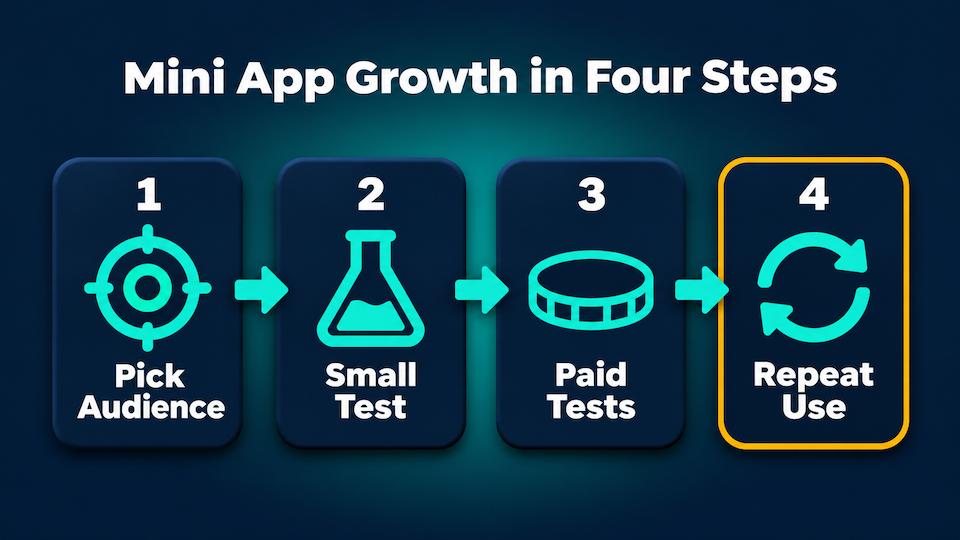
Before promoting your Telegram Mini App, you have to choose the users you want to reach and the feature you want them to try. Then, explain how the feature will help your audience. Follow the steps below to prepare the launch, check first transactions and decide which campaigns to fund.
1. Give a Specific Audience a Reason to Try the App
For a swap campaign, choose between users with funded, compatible wallets and people creating their first wallet. Experienced users may be ready to trade, while newcomers need help with setup and funding. Write separate promotions for these audiences and measure the results separately.
Give each audience a clear reason to choose your Mini App. If you advertise lower swap costs, compare quotes for the same token pair and amount at the same time. Show the expected tokens received and the fees paid, including how trade size affects the price.
Make the offer easy to check:
- Give creators a demonstration of the swap, showing the supported wallets, assets and transaction fees.
- Check if your Mini App is available in the countries where the creator’s audience lives and supports a language they understand.
- Count a completed swap as first use. Report wallet connections separately to show how many visitors connect but never trade.
2. Launch to a Small Group & Follow the Whole Transaction
Invite a small group from your chosen audience to test the swap. Use the message and link you plan to publish, then ask the participants where they needed help.
Give each creator, sponsored post, or ad a separate tracking link. When someone opens your Mini App through that link, Telegram can pass along a code showing which campaign brought them in. Ask your developers to check this information and track what users do next, such as completing a swap. If someone clicks multiple campaign links, decide which campaign gets credit for bringing them in.
Once users open your Mini App, track how many connect their wallets, approve transactions, and complete swaps. Keep these numbers separate so you can see where users stop. And since approving a transaction doesn’t always mean the swap succeeded, ask your developers to check the final result on the blockchain before counting it as completed.
Use the test results to fix what stopped people. If someone couldn’t complete a swap because they lacked network fees, show them how to add funds or decide whether you’ll cover those extra costs. And if they rejected the quoted price, check whether your campaign actually promised something different.
3. Test Paid Placements Against the Cost of Acquiring a Customer
Once test users can complete the swap, run a few paid campaigns. Keep the offer consistent and give each group of new users the same time to transact and return.
For each paid campaign, calculate:
Cost per new transacting user = total campaign spending ÷ new app users who complete a swap.
Include content production, placement fees, rewards and also the transaction fees your project covers. For transaction referrals, verify the action before paying rewards. Check for repeated claims across wallets so extra addresses aren’t automatically counted as extra customers.
Before raising a campaign’s budget, decide how long your business can wait to recover its acquisition spending. Compare that spending with the revenue campaign users generate after service costs. Count every expense once, including the rewards that are already recorded in the campaign budget.
If the promoted feature is free, track whether the campaign users later generate revenue through paid features or partner commissions. Use verified income from those users when deciding what you can afford to spend acquiring more.
4. Use Repeat Activity to Guide Follow-Up & Further Spending
Offer follow-up messages about the feature each customer used. Swap users could request price alerts, while lending customers could request updates about their deposits. Let customers choose the updates they can receive and turn off unwanted messages. Telegram supports bot messaging permission requests and prohibits unsolicited spam.
Track Repeat Usage Based on What Your Product Offers:
- Wallets & swaps: Count repeat transfers or swaps over a period that matches how often users need the feature.
- Lending: Track remaining deposits and withdrawals in token quantities as well as dollars. Rising token prices should not be mistaken for new deposits.
For reward campaigns, keep tracking users even after the rewards end. Then increase budgets gradually so that revenue from repeat use would cover acquisition costs within your chosen period. Check acquisition costs after each budget increase. If users stop returning when the rewards end, ask what would make the app worth using without the reward.
|
Launching a DeFi or wallet Mini App on Telegram? Plan your promotion around completed transactions and repeat use. |
Which Channels Can Promote a Telegram Mini App?
Now that you’ve planned the launch, decide where people will hear about your Mini App. Some people would need a demonstration before connecting a wallet, while others can already understand the feature and need a reason to try your version. Use that difference to choose both the channel and the message.
1. Your Telegram Community & Partner Groups
Start with people who already know the product. If customers use your Telegram group for support, show which familiar features they can now access through the Mini App. Pin the demonstration beside the official link, and include both in your customer newsletter.
To reach new users, approach admins of communities discussing the same assets your app supports. Offer a demonstration followed by questions, so members can ask about fees or withdrawals before trying it.
Before arranging the session, confirm whether all the community members can access your service in their countries and understand the app’s language.
2. Creators & Sponsored Channel Posts
Use a walkthrough if the product needs explaining. Choose a creator who covers wallets or DeFi, then ask for a complete demonstration showing the fee and approval screens.
Before agreeing on a fee:
- Check recent views on comparable posts, because subscriber totals won’t tell you how many people will actually see the promotion.
- Check that the creator’s followers live in countries your app serves and speak a language it actually supports.
- Agree on sponsorship disclosure, publication date, post duration and permission to reuse the content.
If you book through Telegram’s Suggested Posts, the channel owner will receive payment after 24 hours. Also, if the post is removed earlier, Telegram will refund you. So agree separately if you need the post to stay visible for a week.
3. Official Telegram Ads
Use short ads if a benefit can explain the offer. Telegram lets advertisers select public channels with 1,000+ subscribers, so shortlist channels discussing the wallet or DeFi activity your app supports.
Also, the 160-character text limit leaves little room for explanation. If you advertise USDT transfers, make that the message, then send readers to your bot with a clear button for opening the transfer feature.
What you’re buying: Standard campaigns charge per 1,000 ad views. Before increasing the budget, calculate how much you’ve spent for each new user who actually completed a transaction.
4. Ads Inside Other Telegram Mini Apps
Use these placements to reach people already using Mini Apps. Networks such as AdsGram offer image and video ads along with targeting options including country, language and device.
Before launching, check whether the placement gives viewers a reward for watching. If it does, track what those visitors do after claiming the reward, because watching an ad doesn’t establish real interest in your wallet.
Read the billing terms: AdsGram’s “target CPA” is a desired cost per completed action. Billing still happens per 1,000 ad views, so the target doesn’t guarantee what you’ll pay to acquire a user. Set a separate campaign spending limit.
5. Search, YouTube, X & crypto Publications
People often search online when they need help using crypto. If your wallet supports USDT transfers on TON, publish a page and video explaining that process, including fees and supported assets. Then link to the feature demonstrated, so readers can try the process they’ve just learned.
Share clips on X, and approach crypto newsletters or publications if you have a release or integration their readers can use. Give editors a working demonstration and evidence for product claims.
If you’re planning to run paid ads alongside these promotions, check the platform rules first. Google doesn’t allow ads for DeFi trading protocols or self-custody software wallets, while other wallet providers may need licenses and approval to advertise in certain countries. Facebook, Instagram and X also have their own rules, so review those before deciding where to spend.
6. App Directories & Your Telegram Profile
On Telegram: Set up the Main Mini App to add a Launch App button, then upload screenshots and demonstrations in your audience’s languages. Telegram may feature successful apps accepting Stars, but completing a profile won’t secure that placement.
On TON App: Prepare your website before applying. The directory requires your own registered domain, a public link to the listing and website text explaining the project’s TON connection. A directory listing is separate from Telegram’s own featuring decisions.
7. Wallet Partnerships & Customer Referrals
Approach partners whose users can already use your product like yours. A DeFi app can propose a joint tutorial to wallets supporting its accepted assets. Agree with your partner on where to post the tutorial, which app users will open, and who will answer their questions.
For customer referrals, explain which action the invited user must complete, who will receive a reward and when the payment happens.
Choose the payment system around that action: Telegram’s own affiliate program pays commissions on Stars purchases. If you want to reward referred swaps or deposits, arrange separate transaction tracking and reward payments.
How Should Wallet Onboarding Turn Visits into First Use?
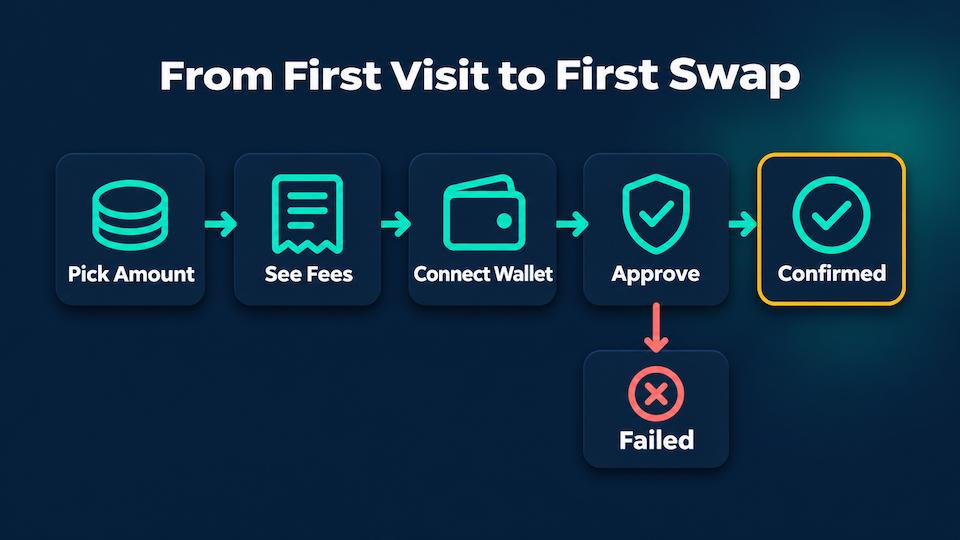
If someone opens your Mini App to transfer or swap tokens, help them start that task straight away. Let them select the asset and amount, then show the estimated cost. They can decide whether to continue before you ask them to connect a wallet.
“Connect wallet” needs a clear next step
People arrive with different levels of preparation, so offer two paths:
- Already have a compatible wallet? Let users connect their wallet with TON Connect. They must approve each payment themselves and should never share their recovery phrase.
- Need a wallet? Provide setup and recovery guidance through a supported wallet. Then bring the visitor back to their saved transaction, so setting up an account doesn’t mean starting the task again.
“Not enough funds” needs an explanation
Before requesting payment approval, show the amount being sent, where it’s going, what the user should receive, and app and network fees.
If a balance is too low, name the missing token and amount, then explain how to add funds on the correct network. Keep the original entries while the user does that. For swaps, refresh an expired quote and let the user review the updated rate and minimum amount received before approving.
“Approved” still needs a confirmed result
After wallet approval, check the blockchain result and show whether the intended transfer, swap or deposit is processing, completed or failed.
If the wallet closes or its response goes missing, check whether the request succeeded before offering a retry. Otherwise, the user could repeat a payment that already went through. After completion, show a receipt with amounts, fees and a transaction link.
How DeFi & Wallet Projects Can Retain Mini App Users
Once someone has used your Mini App, make the next visit as useful as the same reason they tried it. A wallet customer may need another payment. A DeFi customer may need to check or manage money deposited or borrowed.
Keep the Next Task Within Reach
For Wallet Customers, Save the Details They’ll Reuse
Offer named recipients and recent transfers, so users don’t have to copy an address again for every payment. They should still review the recipient, amount and fees before sending.
For DeFi Customers, Open with Their Existing Deposit or Loan
Show the current balance, interest rate and fees beside the available withdrawal or repayment options. Include support there, so a customer with a withdrawal problem knows where to ask for help.
After their first transaction, let users add the Mini App to their home screen if possible. Then they can reopen it without searching for the post.
Send a Reminder When It Gives the User Something to Act On
Explain the alerts you offer, then request permission to send Telegram bot messages. Let users choose notifications and frequency, with an option to switch them off.
If a customer asks for a withdrawal alert, send it when their funds become available and link directly to that withdrawal screen. Stop the reminder after withdrawal.
Check Whether Customers Continue Using the Product
Group users by the week of their first completed transaction, then review further use within 7 and 30 days. Count subsequent payments and deposit or loan management.
Track locked deposits separately, because users cannot yet choose to withdraw them. If you test a bonus, randomly assign eligible users to receive it or receive none, then compare later use and costs after the bonus ends.
How Do Telegram Mini Apps Earn Revenue?
Once users return regularly, choose a way to earn that’d fit what they came to do. A wallet customer may accept a clearly explained swap fee, while someone managing several wallets may prefer paying for reporting tools.
Earn from the Services Customers Already Use
Swaps & Crypto Purchases:
Your app can add a fee through providers that support it. STON.fi supports app fees on swaps, while Transak supports partner fees on crypto purchases.
For illustration, a 0.2% app fee on a $100 swap earns $0.20 before costs. Show that fee in the quote alongside provider and network charges, so customers know what they’re paying.
Lending:
A lending protocol can keep part of the interest borrowers pay.
If you use another protocol to provide loans, agree how your Mini App gets paid. Simply giving customers access doesn’t mean your business receives that interest.
Earn from Paid Extras or Advertising
Paid Tools:
Customers managing several wallets could pay for a monthly report combining their transaction histories.
A subscription can cover that service, but Telegram requires payment in Stars, its in-app credits, for digital features sold inside Telegram.
Check what you receive when redeeming Stars before setting prices, because customers’ purchase costs differ from your payout.
Advertising:
If you keep features free, advertisers can help cover their costs.
AdsGram pays per 1,000 views for full-screen ads and ads that reward viewers, with rates varying by country.
AdsGram: If you reward people for watching, those rewards reduce what you keep. Keep ads away from payment approval screens.
A $0.20 fee doesn’t leave $0.20 for marketing if you also subsidise the transaction. Deduct rewards, subsidies and service costs before comparing what you keep with campaign spending. Check provider payout dates before committing to campaign payments.
To Conclude
As you plan for 2027, focus on what should remain after your Telegram campaign ends. The launch reward may finish, and a creator’s post may stop attracting visitors, but customers should still know what your DeFi or wallet Mini App will help them do.
Give people a reason to choose the app again.
When users open your Mini App from a promotion, they should find the same features and fees you advertised. From there, make it easy for them to complete their transaction, check the charges and get help if something goes wrong. A good first experience will give them a reason to return.
Then pay attention to what happens without another incentive. Returning customers will reveal to you which features deserve further work, while their questions can reveal what still needs explaining. Use that evidence to improve the product and give future campaigns something specific to demonstrate.
Compare how much revenue returning customers bring in with how much you spend to attract and serve them. If the costs are higher than the revenue, review your pricing and marketing expenses before spending more.
Make your Mini App the go-to choice whenever users look for an option to send, swap or manage crypto. Let your marketing bring people in, give them a reason to return, and make your product part of how they use crypto every day. That’s how a successful launch grows into lasting adoption!
|
Want more Mini App visitors to complete a first swap? Get a campaign plan measured by completed transactions and repeat use. |
FAQs
1. How do you promote a Telegram Mini App for DeFi users?
Reach groups whose members use supported assets, share app demos and test creator posts. Compare channels by completed transactions, repeat use and acquisition cost.
2. How much should you spend on Telegram Mini App marketing?
Multiply your target number of new transacting users by the amount you can afford per user. Include ad spend, creator fees, rewards and all transaction fees you cover.
3. Do crypto Telegram Mini Apps have to use TON?
Current rules require crypto Mini Apps to use TON. Multichain wallets may manage other-chain assets inside their own app; connections to other apps must use TON Connect.
4. How can Telegram wallet Mini Apps improve first-use conversion?
Show fees before wallet approval, explain missing funds and save transaction details during setup. Count conversion after the intended transfer or swap succeeds on-chain.
5. How can Telegram Mini Apps retain DeFi users after rewards end?
Keep balances, withdrawals and repayments easy to find. Send requested alerts, then check repeat product use after rewards end to see whether users still need the app.
6. Does Telegram’s affiliate program pay commissions on token swaps?
No. Telegram’s native affiliate program pays commissions on Stars purchases. Rewards for referred swaps or deposits need separate transaction checks and reward payments.

Vimal J is the Head of Sales at Blockchain App Factory, with 10+ years of experience in sales, client strategy, and Web3 business growth. He helps startups, enterprises, and project founders choose the right blockchain solutions for their goals, bringing a practical market perspective to topics like token development, crypto launches, and Web3 adoption.
Article Reviewed by:
Arun Kamala Santhanath
Marketing Head, Blockchain App Factory


