


A working guide to where prediction market traders come from in 2026 and which promotions hold up under review.
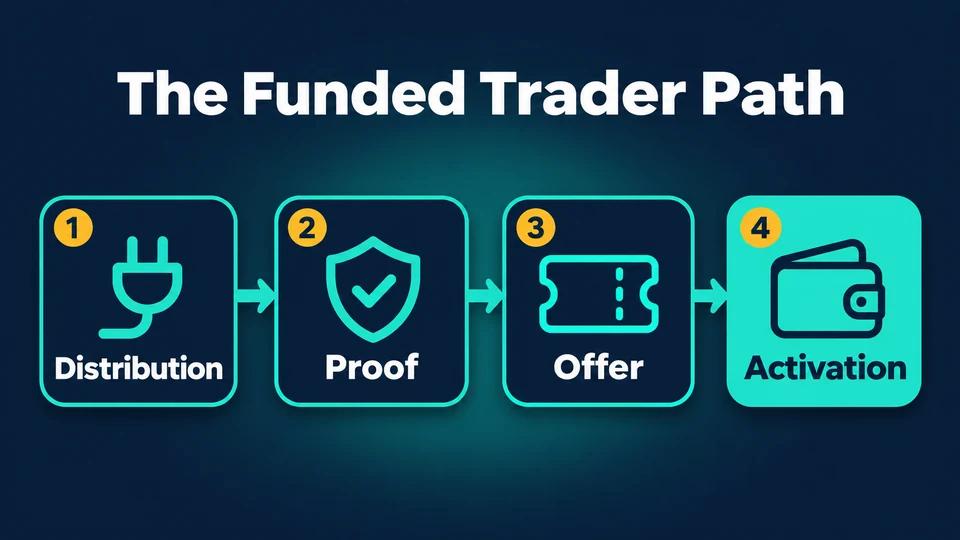
Marketing a prediction market app in 2026 means doing four jobs in order: get listed inside apps that already hold funded accounts, publish proof of liquidity and fair resolution, run promo codes that pass regulatory review, and pay only for traders who fund and trade.
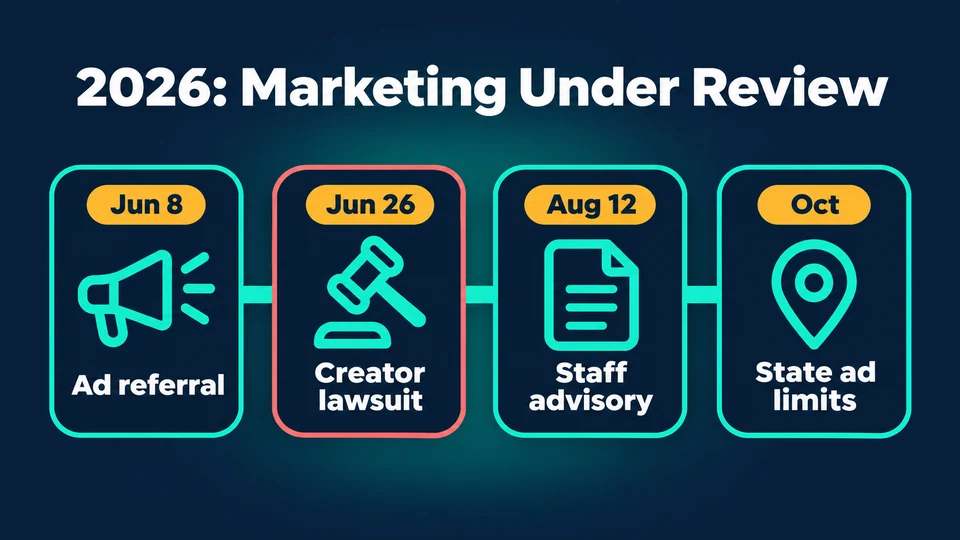
The marketing itself is now under review. On August 12, 2026, CFTC staff published an advisory on prediction market incentive programs that names “risk-free” trades and unlimited rebates as things it does not want to see, which means the welcome offers this sector borrowed from sportsbooks now get read the way financial advertising gets read. So the order of work matters.
The short answer
- Integrations inside wallets and brokerages have the strongest public evidence of bringing in funded traders.
- Liquidity only helps marketing when a new trader can see order book depth on the market page.
- Resolution rules need to be public before launch, because one disputed market can become the brand story.
- Promo codes work, and every code needs written terms and a dated list of excluded states.
- Paid creators must disclose on every post, and simulated trades cannot be presented as real ones.
- Signups are the wrong target, and funded accounts that trade twice are the number to pay for.
This guide is for founders and growth leads at prediction market platforms and at the wallets and aggregators that route orders to them. It is not legal or financial advice.
Key Takeaways
- Distribution partners that already hold funded accounts are the fastest route to traders, and a partner can later become a competitor.
- Every promo code and creator post is advertising for a regulated financial product, so terms and disclosures have to be written before launch.
- Reported volume and signups overstate growth, so report funded accounts that place a second trade.
|
$120.73B Reported October 2026 volume across eight US prediction market exchanges Source: DeFi Rate |
81.3% Kalshi’s share of that reported volume Source: DeFi Rate |
21,000 Estimated monthly US searches for “kalshi promo code” Source: Ahrefs estimate |
What does marketing a prediction market actually involve?
Marketing a prediction market is the work of bringing in traders who deposit and trade, in a product that federal regulators treat as an exchange and many states treat as gambling.
That double status is what separates it from a token launch. A token is sold once. A market on tonight’s game or next month’s rate decision expires, and the trader has to be won again for the next one, so the marketing job does not end at launch the way a TGE campaign does.
- Anyone can compare your prices with Kalshi and Polymarket before depositing, so a thin order book is a marketing problem.
- One disputed resolution can define the brand. Settlement rules belong in the marketing plan.
- Promotions are reviewed by the exchange’s regulator, and they can be challenged in court under consumer protection law (two venues found that out in June 2026, as covered further down).
- Your buyer is often another product team, because wallets and brokerages now decide which markets their users see.
What is prediction market distribution?
Prediction market distribution is the set of third-party apps, such as wallets and brokerages, that show your markets to their own users and route those orders to your exchange or protocol.
Kalshi is the best-documented case. When Bernstein analysts looked at October 2025 (The Block covered their client note the following month), they put Robinhood customers at 57% of Kalshi’s volume. That is more than half of an exchange’s trading arriving through one partner’s app.
- Kalshi made distribution a public target. John Wang, who joined as head of crypto in August 2025, told The Block that October that Kalshi aimed to be inside every large crypto app and exchange within 12 months.
- That window closed in October 2026. In the same month, Phantom launched Kalshi-powered markets for eligible US users.
- A partner can turn into a rival. By July 2026, Wall Street Journal reporting relayed by The Block had Robinhood’s share of Kalshi volume shrinking, a slide that began once Robinhood started routing contracts to Rothera, the exchange it part-owns.
- Distribution is a different thing from affiliate marketing. An affiliate sends a click; a distribution partner hosts the trade inside its own interface.
The Robinhood story is the one to keep in mind. If you are the venue, talk to more than one partner from the first conversation, because the partner that brings you half your volume this year has every reason to build its own exchange next year.
How do wallet and aggregator integrations bring in traders?
Integrations bring in traders by removing the deposit step, since the user already holds a balance in the app that shows the market.
That sounds like one arrangement. It is several, and which one you are offered depends on whether you are the venue or the front-end.
The embedded exchange model
Phantom’s US launch is the cleanest example. Kalshi verifies the customer and executes the trade; Phantom supplies the screen and lets the user fund from a cash balance already sitting in the wallet. Cointelegraph’s report also notes that Phantom received CFTC no-action relief in March 2026, and that relief is what lets it connect users to a regulated market without registering as an introducing broker.
So the wallet owns the screen and the exchange owns the customer record. If you run a wallet, put that regulatory step in the plan before you promise anyone a date.
The points-linked model
MetaMask announced its Polymarket partnership in October 2025 and later added the markets to its mobile app. The Block’s write-up of the launch says every prediction earns MetaMask Rewards points. Think about what that does: the wallet’s own loyalty program is doing the activation work.
The builder code model
Polymarket’s Builder Program documentation defines a builder as anyone who routes user orders to Polymarket, and the mechanics are simple enough to explain in a sentence: attach your builder code to each order and the volume is credited to your app, then ranked on a public leaderboard.
If you are an aggregator, that leaderboard is a free proof asset (a third party publishing your numbers for you). If you are the venue, it is an attribution system for partner-sourced volume.
What to bring to a partner pitch
- Bring a dated map of the states and countries where each contract type is available, because the partner has to geofence the same way you do and will be asked about it by its own lawyers.
- Bring a written split of duties. Who verifies customers? Who answers the support ticket when a market resolves late?
- Bring a sandbox: an API and a market data feed the partner’s engineers can test without calling you.
- Bring approved wording for the partner’s own announcements, since CFTC staff expect exchanges to oversee third parties that deliver their incentives.
Wallet teams planning the user-facing side can pair this with our guide to crypto wallet marketing strategies.
How do you prove liquidity and fair resolution to new traders?
You prove liquidity by showing live spread and depth on each market page, and you prove fair resolution by publishing the rules and the dispute process before the market opens.
At the largest venues, both are already public record. That is the bar a new venue gets measured against, whether or not the comparison feels fair to a team that launched last month.
- Kalshi files its liquidity programs with the CFTC, and the filings are posted for anyone to read. One from October 2026 renamed its liquidity provider scheme the Designated Liquidity Provider Market Making Program and gave it an end date of December 1, 2027.
- CFTC Staff Letter 26-23 warns against market-maker stipends that cover losses or guarantee profits. Paid liquidity has to be earned through quoting obligations, so say publicly what those obligations are.
- One dispute can take over the conversation about a venue. In June 2026, a Polymarket market on whether Strategy would sell Bitcoin by May 31 (more than $60 million in volume, by The Defiant’s count) settled “No” after a contested UMA token-holder vote, and Cointelegraph’s report on the outcome dwelt on how much voting power sat with the largest token holders.
- Who votes is part of the story too. A Wall Street Journal analysis, summarized by Finance Magnates in May 2026, found that at least 60% of active UMA voters were linked to Polymarket accounts.
Whatever oracle or rulebook you use, publish four things on every market page: the resolution source, the cutoff time, the dispute window and the party with the final say.
Which acquisition channels work for a prediction market app?
Integrations and disclosed publisher codes are the two channels with public evidence of scale, and undisclosed creator campaigns carry the highest legal exposure.
The table compares seven channels on what you pay for and which rules apply, and every example in it comes from a source named in this guide. Our view, for a venue starting from zero: sign one integration before you buy a single creator post.
| Channel | What you pay for | Who holds the user | Main rule set | Live example |
| Wallet or brokerage integration | Negotiated terms, not public | Partner app | CFTC rules for the venue and the partner | Phantom and Robinhood with Kalshi |
| Builder or aggregator front-end | Rewards on routed volume | Front-end | Venue program terms | Polymarket Builder Program |
| Publisher promo codes | Bonus credit per new account, plus a publisher fee that is not public | Venue | CFTC incentive filings and FTC Endorsement Guides | CBS Sports codes for Kalshi and Polymarket US |
| Refer-a-friend | Credits to both users | Venue | CFTC incentive filings and referral caps | Polymarket US refer-a-friend |
| Certified search ads | Clicks | Venue | Google certification, with five states excluded | Google Ads Prediction Markets policy |
| Disclosed creators | Flat fee or fee per funded trader | Venue | FTC Endorsement Guides | Accounts labeled as venue partners |
| Undisclosed creators and clipping | Views | No traceable owner | State consumer protection law | Alleged in NACA v. Polymarket |
How to read this table: teal rows are the channels Blockchain App Factory would start with and the red row is the one we would avoid. The color coding is our own assessment.
|
Planning a prediction market launch? Blockchain App Factory plans partner outreach and runs disclosed creator campaigns for prediction market teams. |
What do the live promo-code campaigns show?
The live campaigns show that both large US venues buy new accounts with small trading credits through sports media publishers, and that the published terms differ from page to page.
Take CBS Sports’ promo page as it stood on November 5, 2026. The Kalshi code paid $55 in credits once a new user had traded $25; the Polymarket US code on the same page paid a $25 credit on a $10 deposit. Local news sites carry the same format (Syracuse.com ran its own Polymarket invite code earlier in 2026).
- The credits are short-dated. FantasyLabs’ November 5 check of the Polymarket US offer says the credit expires 30 days after it is issued, and that is your activation window whether you planned for it or not.
- Code entry has a deadline. New Kalshi users get three days from account opening to apply a code under the terms CBS Sports lists, so decide in advance what support does with late requests.
- Publishers disagree about states. On pages verified within two weeks of each other, DeFi Rate listed Nevada as the only excluded state for the Polymarket US offer while SportsBettingDime listed eight.
- Referral rules differ by entity. Polymarket’s help center says its international referral program pays out only after an account reaches $10,000 in lifetime volume; the US app runs a separate refer-a-friend offer with its own terms.
Of the four, the state-list problem is the one we would fix first, and it is cheap. Give every publisher one dated eligibility file, and make showing that date on the page a condition of the deal.
What compliance rules apply to prediction market promotions?
Four rule sets apply in the US: CFTC oversight of exchange incentive programs, FTC endorsement rules for paid creators, state gambling and consumer law, and each ad platform’s own policy.
Read this section as a map for a conversation with counsel. The state picture has shifted several times in 2026 already.
CFTC staff guidance on incentives
Staff Letter 26-23 runs to 12 pages. It flags spin-the-wheel rewards and hidden discount codes as likely problems under exchange core principles, and it asks exchanges to oversee the third parties that deliver their incentives. That last point reaches affiliates.
Exchanges were asked to file amendments to existing programs by September 14, 2026, though the letter calls itself informational and says it creates no new obligations.
Creator disclosure
On June 8, 2026, BBB National Programs’ National Advertising Division said it would refer Kalshi to regulators, state attorneys general among them, after Kalshi declined to take part in its inquiry into influencer disclosures. Kalshi’s response, given to InGame, was that it complies with advertising law and has tightened its communication with influencers.
Polymarket’s turn came eighteen days later. The National Association of Consumer Advocates sued Polymarket in DC Superior Court. Its complaint alleges that the company’s CMO sent at least $350,000 to creators from a personal PayPal account and that creators filmed winning bets on a simulated copy of the site. These are allegations. No court has ruled on them.
|
“Before a creator posts for a prediction market client, we ask to see the disclosure line in the draft itself. If the tag is missing from the draft, the post does not go out. We also do not pay for views on a clip we cannot trace back to a named account.” Arun Kamala Santhanath, Marketing Head, Blockchain App Factory |
Our guide to crypto ad rules and disclosure covers the wording, and the KOL audit guide covers how to check a creator’s reach before you sign.
State limits
CBS Sports’ state tracker, updated November 6, 2026, lists Kalshi’s sports contracts as unavailable in Michigan, Nevada and Washington, and it puts Ohio in an odd middle position where the markets are live but operators cannot advertise them in the state.
A promo code is a national ad unless you make it otherwise. So each one needs state exclusions written into its terms, and the media buy needs geotargeting to match.
Ad platform rules
Google’s Prediction Markets policy limits ads to certified, federally regulated operators, and its only approved location is the United States minus five states: Connecticut, Michigan, Nevada, New York and Ohio.
Which leaves offshore, crypto-native markets outside the door: without CFTC or NFA status, they cannot qualify. For those venues, search demand has to be earned through content and partner pages.
How should you measure activation instead of signups?
Measure funded accounts that place a second trade within the promo credit’s life, and report cash traded next to contract volume.
Headline volume flatters. DeFi Rate’s tracker has Kalshi at roughly $98 billion in October 2026 contract volume and $22 billion in dollars paid; when the market leader’s cash figure is under a quarter of its headline, a new venue’s dashboard should carry both numbers side by side.
- Count a signup only once the account is verified and funded.
- Track the first trade and the second trade separately. Bonus credit usually pays for the first, so it is the second that tells you whether the person came for the market or for the $25.
- Attribute by partner code. Builder codes and promo codes already tie volume to a named source at the big venues, and your own stack should do the same from the first day a partner link goes live.
- Pay partners on funded traders where the contract allows. Cap what any single account can earn.
Our crypto marketing metrics guide has the wider reporting set.
What should you check before a promotion goes live?
Run these ten checks before any code or creator post is published.
- Is there a dated eligibility file listing every state and country where each contract type is offered, and has every publisher been sent the current version?
- Has the incentive been filed or reviewed under the venue’s own regulatory process?
- Does every offer state its cap and its expiry?
- Is “risk-free” gone from every asset, partner pages included?
- Does every paid creator post carry a visible disclosure in the post itself (a line in the bio or a tag buried under “more” does not count for our purposes)?
- Were all trades shown in creative placed with actual funds on the live product?
- Can each publisher code be traced to a named company with a signed agreement?
- Do market pages show the resolution source and the dispute process?
- Is the age gate the same everywhere?
- Does the dashboard report funded accounts and second trades by source, so that a channel can be cut on evidence when the 90 days are up?
And stop the launch if any of these turn up.
- A partner offers to pay creators through personal payment accounts.
- An agency proposes a clipping campaign posted from newly created accounts, which is the practice described in the NACA complaint against Polymarket.
- A publisher will not date its state eligibility list.
- A liquidity partner wants a stipend that covers its trading losses.
What does a 90-day prediction market marketing plan look like?
A 90-day plan builds proof and distribution in the first half, then runs capped promotions and decides which sources to keep. Each phase below ends with one decision, and the next phase should not start until someone has made it.
| Days 1 to 15 | A dated state eligibility file and a public resolution rules page ship. The decision at the end is which jurisdictions launch first. |
| Days 16 to 45 | A partner pitch pack and a sandbox data feed go to two target wallets or front-ends. The decision at the end is which integration model to sign. |
| Days 46 to 75 | Publisher promo codes and a disclosed creator pilot go live with capped credits. The decision at the end is which sources produced funded traders. |
| Days 76 to 90 | The activation report and a partner scorecard ship. The decision at the end is which channels get more budget and which are cut. |
What should you do this week?
Start with the eligibility file and the resolution rules page. They are dull documents. But every partner and publisher you approach later will ask for both, and neither one needs budget approval to write.
Blockchain App Factory’s prediction markets marketing agency plans partner outreach and runs disclosed creator and referral campaigns for prediction market teams. We do not give legal opinions or make markets, so counsel and liquidity partners stay on your side of the table.
|
Who can run a disclosed creator program for a prediction market? Send us your launch states and target partners, and we will scope the first 90 days. |
Frequently asked questions
How do you market a prediction market app?
You market a prediction market app by getting it listed inside wallets and brokerages that already hold funded accounts, then backing that with visible liquidity and published resolution rules. Promo codes and creator posts come after, with written terms and paid-relationship disclosures.
What is prediction market distribution?
Prediction market distribution is the set of third-party apps, such as wallets and brokerages, that show your markets to their own users and route the orders to your exchange or protocol. It differs from affiliate marketing because the trade happens inside the partner’s interface.
Are prediction market promo codes legal in every US state?
No, availability differs by state and by contract type. In early November 2026, Kalshi’s sports contracts were unavailable in Michigan, Nevada and Washington, and publishers listed different excluded states for the same Polymarket US offer. Check the exchange’s current terms before you publish any code.
Do Kalshi and Polymarket have affiliate programs?
Yes, both distribute promo codes through sports media publishers and both run refer-a-friend offers for US users. Polymarket’s international site also has a referral program that pays out after $10,000 in lifetime trading volume, plus a Builder Program for apps that route orders.
What should a prediction market measure in place of signups?
Measure verified, funded accounts that place a second trade before their promo credit expires. Report cash traded next to contract volume, since the two can differ by a wide margin.
Sources
Regulators and primary documents: CFTC Staff Letter 26-23; KalshiEX LLC program filings with the CFTC; BBB National Programs, National Advertising Division release on Kalshi; NACA v. Blockratize case page; Google Ads Prediction Markets policy; Polymarket Builder Program documentation and help center.
Media and data: The Block; Cointelegraph; The Defiant; Finance Magnates; InGame; CBS Sports; FantasyLabs; SportsBettingDime; DeFi Rate; Ahrefs.

Vimal J is the Head of Sales at Blockchain App Factory, with 10+ years of experience in sales, client strategy, and Web3 business growth. He helps startups, enterprises, and project founders choose the right blockchain solutions for their goals, bringing a practical market perspective to topics like token development, crypto launches, and Web3 adoption.
Article Reviewed by:
Arun Kamala Santhanath
Marketing Head, Blockchain App Factory


