Key Insights
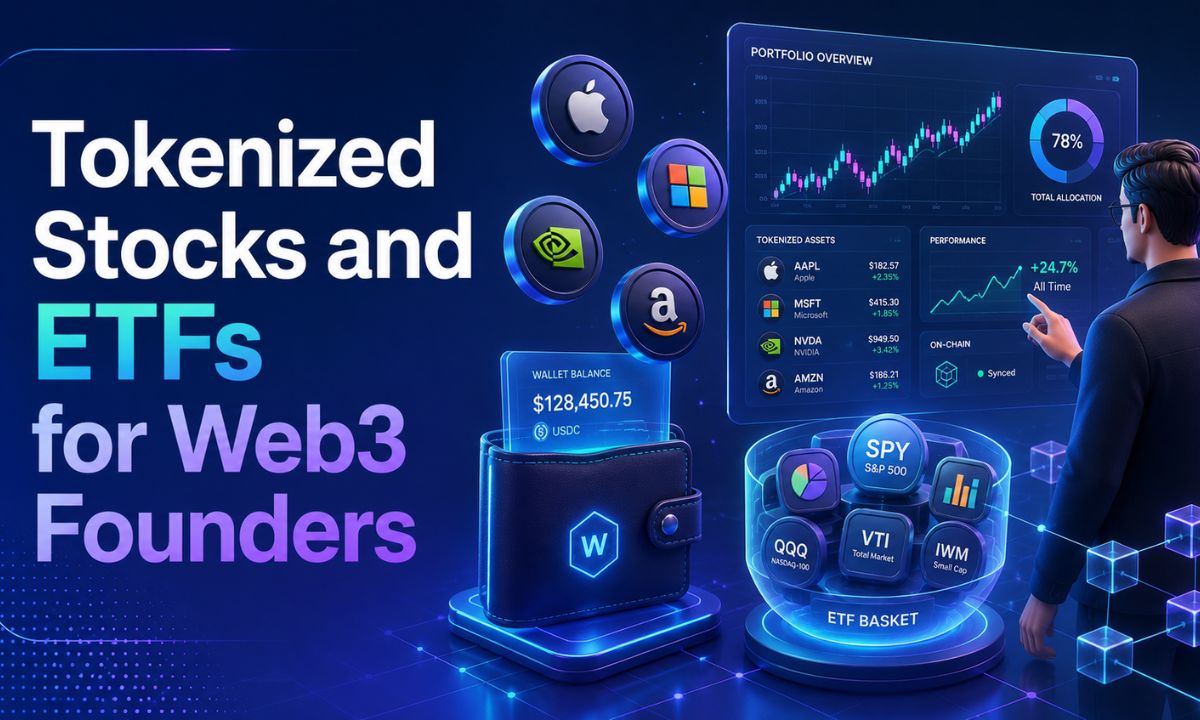
- Tokenized stocks and ETFs connect public market products with Web3 wallets, apps, and stablecoin flows. This gives founders room to create trading, investing, treasury, and RWA platforms.
- A tokenized stock does not always mean direct share ownership. Rights around dividends, redemption, voting, and transfers depend on the legal model.
- Users need simple answers before they buy: what the token represents, who issues it, and what backs it. Founders who explain risks, fees, liquidity, and access rules will earn stronger user confidence.
Tokenized stocks and ETFs are gaining real attention in 2026. They connect public market assets with blockchain-based finance. For years, Web3 users traded Bitcoin, Ether, stablecoins, utility tokens, and meme coins. Now, many want access to familiar assets like Apple stock, Tesla stock, the S&P 500, bond ETFs, and sector funds.
This shift gives Web3 founders a wider market to serve. Users want stock and ETF exposure inside wallets, apps, and onchain platforms. They want faster funding through stablecoins. They want portfolio tools that feel easier than old brokerage apps.
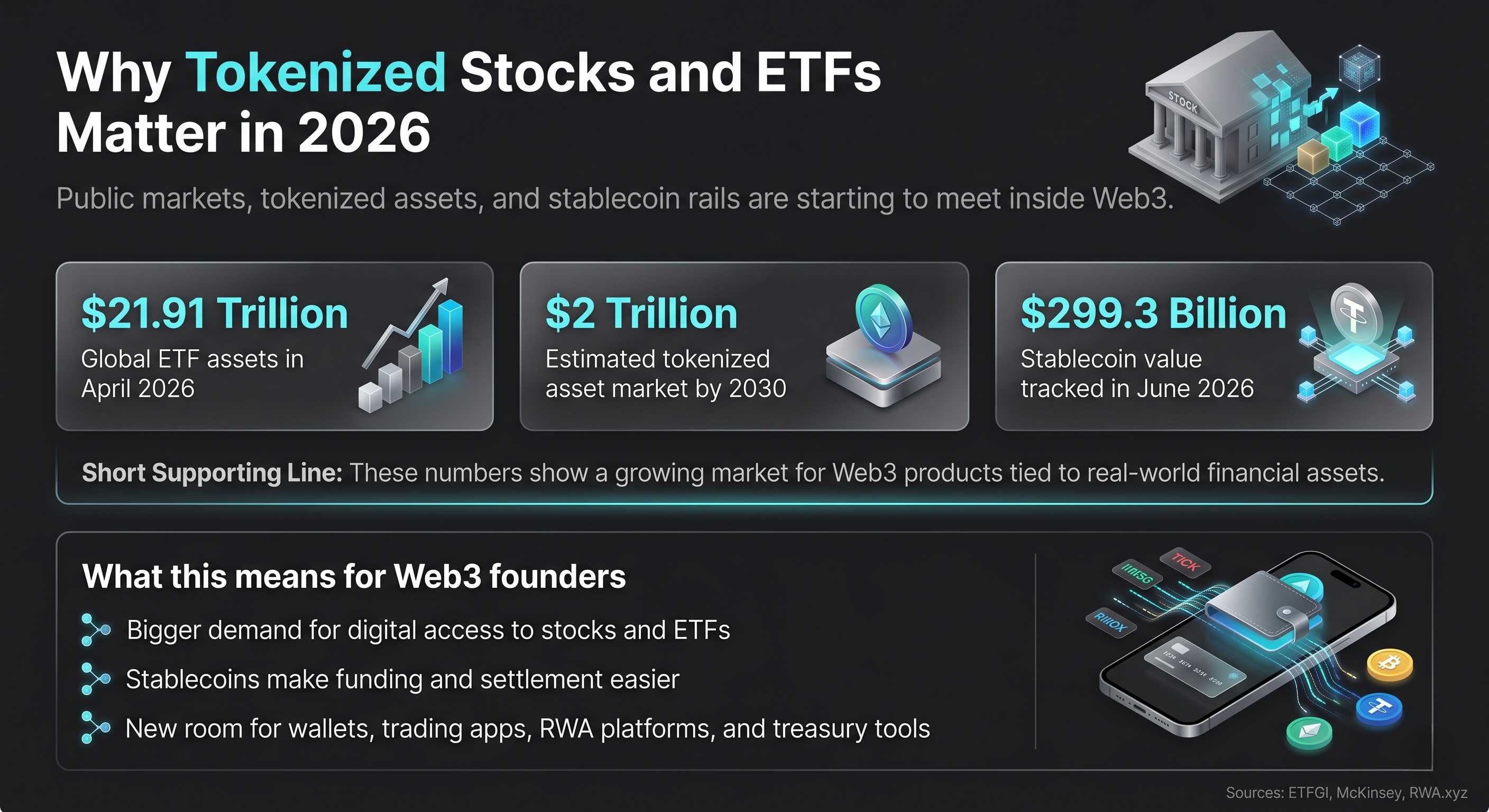
The numbers make this shift hard to ignore. Global ETF assets reached $21.91 trillion in April 2026. That shows how large the ETF market already is. McKinsey estimates tokenized assets can reach around $2 trillion by 2030, not counting crypto and stablecoins. Stablecoins add even more weight to the story, with about $299.3 billion in total value tracked in June 2026. For founders, this points to a clear opening. Public market products, tokenized assets, and stablecoin payment rails are starting to come together inside Web3.
Tokenized equities can support trading apps, ETF marketplaces, RWA platforms, DeFi collateral systems, compliance tools, and treasury products. The token is only one part of the product. The real business sits around access, trust, liquidity, and user rights.
Founder Method: Start With the User Problem
Start with the user problem, not the asset list. A user in one region needs access to US equities. A wallet user wants ETF exposure. A business wants to manage idle stablecoins. A DeFi protocol needs approved collateral.
The product type should follow that problem. The legal model, custody partner, chain, and revenue plan should follow next.
Why This Matters for Web3 Platforms
A token linked to a stock can look simple. The user sees a ticker, chart, balance, and buy button. Behind that screen, the platform needs legal terms, custody, pricing data, transfer rules, and redemption logic.
Trust will decide the winners. Users need to know what they are buying. They need to know what backs the token, what rights they receive, and what risks apply.
Founder Method: Explain Before the Buy Button
Every asset page should answer simple questions.
What does the token represent?
Who issues it?
What backs it?
Can users redeem it?
Are dividends included?
Can the token move to another wallet?
What Are Tokenized Stocks and ETFs?
Tokenized stocks are blockchain-based digital assets linked to public company shares. A token can track a stock price, represent a claim, sit inside a fund, or give synthetic exposure. The structure changes the user’s rights.
A token linked to Apple stock does not always mean direct Apple share ownership. The user can hold price exposure, an issuer claim, a fund interest, or another financial right. That difference matters for product design, legal wording, and user trust.
What Are Tokenized Stocks?
Tokenized stocks give digital exposure to listed companies. Some tokens are backed by shares held with a custodian. Some represent a contract claim. Some only track price movement.
The wallet view can look the same in each case. The rights behind it can differ. One product can pay dividends. Another can exclude them. One can allow redemption. Another can limit users to platform trading.
Founder Method: Match the Label With the Rights
Do not call every product “real stock ownership.” Use the correct label.
Say “price exposure” for price tracking. Say “claim” for claim-based products. Say “fund interest” for fund structures. State voting rights, dividend rights, transfer limits, and redemption terms before purchase.
What Are Tokenized ETFs?
Tokenized ETFs give exposure to baskets of assets. These baskets can include index funds, bond ETFs, sector funds, dividend funds, or thematic funds. Many users prefer ETFs since one product spreads exposure across many assets.
A tokenized S&P 500 ETF product can offer broad US market exposure. A tokenized bond ETF can suit users seeking steadier asset exposure. A sector ETF can focus on technology, healthcare, energy, or real estate.
Founder Method: Use ETFs for Simple Portfolio Products
ETFs suit wallet apps, treasury tools, robo-advisory products, and RWA platforms. They help users access broader market exposure without choosing single stocks.
Founders still need direct product wording. Explain the issuer, asset backing, price source, redemption terms, fees, and market-hour rules.
What Founders Must Understand
Tokenization does not create automatic share ownership. A token can give market exposure without shareholder rights. It can limit transfers, trading times, redemptions, dividends, and user locations.
Two platforms can list tokens tied to the same stock. One token can be backed by real shares. Another can track price through a contract. The ticker looks similar, but the rights are different.
Founder Method: Separate the Screen From the Structure
The screen shows the simple part: ticker, price, balance, chart, and buy button.
The structure carries the serious part: ownership rights, issuer claim, custody, dividend policy, redemption rules, transfer limits, and dispute handling. Founders need both. The screen attracts users. The structure earns trust.
Why Tokenized Stocks and ETFs Are a Big Opportunity for Web3 Founders
Tokenized stocks and ETFs sit at a useful meeting point between traditional investing and Web3 finance. Many people already understand stocks, ETFs, indexes, and market prices. Crypto users already understand wallets, stablecoins, and onchain records. This overlap gives founders a product category that feels familiar but still fits the Web3 user experience.
The opportunity is not just about listing tokenized versions of popular stocks. A stronger idea is to bring public market exposure into wallets, exchanges, DeFi apps, and treasury tools. Founders can serve users who want familiar assets without moving back and forth between old brokerage platforms and crypto apps.
Global Access to Traditional Markets
Many users still face trouble accessing US and global equities. Brokerage rules, local restrictions, FX costs, slow onboarding, and high fees can block them. For digital-first users, this feels outdated.
Tokenized assets can offer a more wallet-friendly route in approved markets. A verified user can fund with stablecoins, hold tokenized equity exposure, and track positions onchain. This can make public market access feel closer to Web3 than traditional brokerage.
Founder Method: Keep Access Permissioned
Founders should not market tokenized equities as open access for everyone. The platform needs country rules, investor checks, transfer limits, and wallet allowlists from the start.
A permissioned product can still feel simple for users. The goal is to approve the right users, block restricted activity, and avoid legal trouble later.
Demand for Real-World Assets in Web3
Crypto users now want more than volatile tokens. Many want exposure to public companies, broad indexes, bond funds, dividend products, and treasury-linked assets. These assets feel more familiar, so users need less education before they invest.
Tokenized stocks and ETFs help Web3 apps bring traditional market products into a digital setting. A token linked to a broad index fund can feel easier to understand than a complex DeFi product. That familiarity can help platforms reach users who want blockchain access without leaving known asset classes.
Founder Method: Package Familiar Assets Clearly
A wallet or investment app should show tokenized stocks, ETFs, crypto tokens, and stablecoins in one clean portfolio view. Users should not need to open several platforms to understand their holdings.
The trade screen should explain the basics near the buy button. Show the price source, market hours, fees, dividend treatment, and redemption rules. Clear product wording helps users act with more confidence.
Stablecoins Make Onchain Settlement Easier
Stablecoins fit naturally with tokenized securities. They can support buying, selling, settlement, and redemption flows. This gives users a payment method they already use in Web3.
A user holding stablecoins can buy a tokenized ETF, receive sale proceeds, or rebalance a portfolio without waiting for slow bank transfers. For founders, this creates a faster and more direct user experience.
Founder Method: Show the Settlement Flow
The platform should not hide settlement steps. Users should see what is happening after they place an order.
Simple labels can help. For example, the app can show order funded, trade placed, settlement pending, token received, redemption requested, and funds returned. These updates reduce confusion and build trust.
New Business Opportunities for Founders
Tokenized stocks and ETFs can support trading apps, tokenized ETF marketplaces, RWA investment platforms, wallet portfolio tools, DeFi collateral systems, compliance APIs, white-label brokerage tools, and treasury management products.
Each business model solves a different problem. A trading app focuses on access and liquidity. A wallet tool focuses on portfolio visibility. A compliance API helps platforms check users and wallets. A treasury product helps businesses manage idle digital funds.
Founder Method: Choose the Business Model Early
Founders should pick the customer and revenue model before choosing assets. Are you serving retail users, wallets, exchanges, DeFi protocols, or business treasuries?
The answer should guide the asset list, legal model, partner stack, chain choice, and product design. A focused platform is easier to explain, build, and grow.
How Tokenized Stocks and ETFs Work
Tokenized stocks and ETFs look simple on the app screen. The user sees a ticker, price chart, balance, and buy button. Behind that screen sits a full financial product with legal, custody, data, trading, and compliance parts.
The platform usually needs an issuer, a legal structure, custody support, market data, smart contracts, compliance checks, liquidity, and reporting. Each part affects safety, trust, and user experience.
The Basic Process
The process starts with asset selection. The platform chooses a stock, ETF, index product, or market exposure based on user demand, liquidity, legal fit, and partner support.
Next, an issuer or regulated partner defines the token structure. This step decides what the token represents. It can represent a claim, a fund interest, direct ownership, a certificate, or synthetic exposure.
After that, the asset or exposure is arranged. In asset-backed models, a custodian holds shares, ETF units, cash, or collateral. In other models, the token can track prices through contracts or other financial structures.
Then the token is minted on a blockchain. Smart contracts manage balances, transfers, allowlists, minting, burning, and restrictions. Approved users can buy, hold, trade, or redeem the token based on product rules.
Founder Method: View the Product in Layers
Founders can view the product in five layers: asset, legal rights, custody or collateral, blockchain token, and app screen. Each layer must work. A clean interface cannot fix weak liquidity. A smart contract cannot fix unclear user rights. A popular ticker cannot fix poor compliance checks.
Main Participants in the Model
A tokenized stock or ETF product usually needs several partners. The exact setup changes by jurisdiction, asset type, issuer model, and customer base. Most products still involve issuance, custody, trading, data, and compliance support.
Issuer
The issuer defines what the token represents and manages the offering. It also explains user rights, product limits, fees, and redemption terms. For founders, the issuer affects product claims, market access, and trust. A weak issuer setup can damage the product even when the technology works well.
Custodian
The custodian holds the underlying shares, ETF units, cash, or collateral in asset-backed models. This role matters because users want to know whether the token is properly backed. Founders should explain custody in simple terms. Users need to know who holds the assets, how backing is checked, and what happens during redemption.
Broker or Market Maker
A broker or market maker supports execution, liquidity, and pricing. Without liquidity, users can face wide spreads, trade delays, and poor exits. Liquidity should be planned before launch. If users cannot enter or exit fairly, they will not trust the product for long.
Smart Contracts
Smart contracts manage token balances, transfers, allowlists, minting, burning, and restrictions. Tokenized securities often need approved-wallet transfers, so free movement to any wallet is usually not suitable. The contract can block unverified wallets, pause transfers, or burn tokens during redemption. These rules help the token follow product and compliance requirements.
Oracles
Oracles bring market data into the product. They can provide prices, NAV data, market status, dividend data, stock splits, and corporate action updates. Poor data can affect trades, portfolio values, collateral checks, and user reports. Founders should treat data quality as a business risk.
Compliance Providers
Compliance providers handle KYC, AML checks, sanctions screening, investor eligibility, and jurisdiction limits. They help decide who can buy, hold, transfer, or redeem the token. Verification should feel simple for users. The platform should explain why checks exist, what status means, and what action the user needs to take.
Founder Method: Make the Back End Easy to Understand
Users see one token, but the platform manages a full market stack. Asset pages should explain the issuer, asset holder, price source, redemption path, transfer limits, and fees. Short paragraphs and plain answers work better than dense legal copy. Users trust products they can understand before they buy.
Ready to Build a Tokenized Stocks and ETFs Platform?
Tokenized equities can open new business paths for Web3 founders, from RWA trading apps to ETF marketplaces, treasury tools, and compliance-first investment platforms. Blockchain App Factory helps you plan, develop, and launch real-world asset tokenization platforms with the right technical setup and market-ready features.

Main Tokenized Equity Models Founders Should Know
Tokenized stocks and ETFs can follow different legal and financial models. This part matters a lot for founders. Two products can show the same ticker, yet give users very different rights. One product can be backed by real shares. Another can track the price through a contract. A third can represent an interest in a fund. The user sees a token, but the structure behind that token decides what the user owns, claims, or tracks.
Asset-Backed Token Model
In an asset-backed model, an issuer or custodian holds the underlying stock, ETF unit, cash, or related asset. The token represents a claim or exposure linked to that asset. This model is easier for users to understand. They can see a connection between the token and the asset behind it. Trust still depends on custody, audits, reporting, and redemption rules.
Founder Method: Show the Backing
Founders should explain who holds the asset, how backing is checked, and how users exit the product. Short proof pages work well here. Show custody details, asset checks, redemption terms, and fee rules in plain language.
Fund or ETF Wrapper Model
In a fund or ETF wrapper model, users hold tokenized interests in a fund or vehicle. That vehicle owns stocks, ETFs, cash instruments, or other permitted assets. This model works well for diversified products. It can support index products, treasury tools, basket products, and institutional investment products. Users get exposure through one token instead of choosing each asset alone.
Founder Method: Use Wrappers for Basket Products
A wrapper can make portfolio products easier to manage. It gives the platform a way to group assets under one product. Founders should explain the fund structure, fees, holdings, rebalancing rules, income treatment, and redemption process. Users should know what sits inside the product before they buy.
Certificate or Note Model
In a certificate or note model, the token links to a financial instrument. That instrument tracks the performance of a stock, ETF, index, or basket. This model gives product teams more flexibility. It can support different payout terms, maturity dates, and market exposure types. The tradeoff is issuer credit risk. Users depend on the issuer’s ability to meet the terms.
Founder Method: Explain Issuer Risk
Do not make a note-linked token look like direct stock ownership. State that the user holds exposure through a financial instrument. The asset page should name the issuer, explain the reference asset, show the payout logic, and describe what happens during default or early closure.
Synthetic Exposure Model
In a synthetic model, the token tracks the price of a stock or ETF through contracts, derivatives, or oracle-based systems. The product does not always hold the real stock or ETF. This model can reach the market faster than asset-backed structures. It also carries more risk around regulation, liquidity, price feeds, and counterparties. A price error or weak counterparty can hurt users fast.
Founder Method: Label Synthetic Products Directly
Synthetic products need direct wording. State that the token tracks price exposure and does not give direct ownership of the stock or ETF. The platform should explain price feeds, trading limits, counterparty roles, and market closure rules. Simple labels prevent confusion.
What Founders Should Remember
Do not describe every tokenized equity product as real stock ownership. That phrase only fits certain legal structures. The right wording depends on the token model. Use “asset-backed claim,” “fund interest,” “note-linked exposure,” or “synthetic price exposure” where it fits. Honest labels protect trust.
Benefits of Tokenized Stocks and ETFs for Web3 Products
Tokenized stocks and ETFs can bring familiar market exposure into Web3 products. They help founders serve users who want more than crypto tokens, but still prefer wallets, stablecoins, and digital account flows. The benefits are not limited to trading. These assets can support portfolio tools, lending systems, treasury products, data services, and compliance-first investment apps.
Fractional Access
Tokenized stocks and ETFs can make high-value market exposure easier to access. Users do not always need to buy a full share or a large ETF position. They can enter with smaller amounts where the product rules allow it. This helps users with smaller budgets. It can also support savings-style products, recurring buys, and wallet-based investment flows.
Founder Method: Keep Small Tickets Practical
Small-ticket investing should still make business sense. Fees, gas costs, custody costs, and redemption limits must fit the product. Show minimum order sizes, fees, and exit rules before the user trades. Small entries work best when users understand the cost.
Faster Settlement
Blockchain rails can shorten balance updates, transfers, and settlement flows. Users already expect quick movement in Web3 apps, so tokenized securities should match that habit where the structure allows it. Stablecoins can support the payment side. Users can buy, sell, receive proceeds, and rebalance from one wallet-based account flow.
Founder Method: Do Not Overpromise Speed
Some parts of settlement still rely on market hours, brokers, custodians, or redemption windows. The app should show the real status at each step. Use short messages such as trade placed, settlement pending, token received, or redemption in review. Users trust what they can follow.
Programmable Compliance
Tokenized securities need rules. Smart contracts can help apply investor checks, jurisdiction limits, wallet allowlists, and transfer restrictions. This makes compliance part of the token flow. A restricted token can block transfers to unapproved wallets. It can support redemptions only for verified users.
Founder Method: Make Rules Visible
Users should know why a transfer fails or why an asset is unavailable. A simple message works better than a generic error. For example, the app can say: “This asset is not available in your region” or “Recipient wallet needs verification.” Plain feedback reduces support issues.
Portfolio Composability
Tokenized stocks and ETFs can connect with wallets, dashboards, tax tools, accounting products, and treasury systems. This gives users a fuller view of their digital assets. A user can see stablecoins, crypto tokens, tokenized stocks, and ETFs in one place. A business can track cash, treasury exposure, and tokenized assets from one dashboard.
Founder Method: Add Useful Portfolio Details
Do not stop at token balances. Show market value, cost basis, fees, income, risk category, and settlement status. These details help users understand their holdings. They also help businesses with reporting and treasury review.
New Collateral Opportunities
Approved tokenized ETFs and equity-linked products can support lending and margin products where laws allow it. A tokenized bond ETF or broad-market ETF can offer a different risk profile from volatile crypto assets. Collateral use needs careful planning. The platform must handle pricing, market hours, liquidity, transfer limits, and liquidation rules.
Founder Method: Test Stress Scenarios
Collateral products must work on bad market days. Test price gaps, halted trading, oracle delays, thin liquidity, and blocked transfers. A token that works in calm markets can fail under stress. Risk controls should be ready before users borrow against the asset.
Better Digital User Experience
Tokenized stocks and ETFs can make investing feel more natural inside Web3 apps. Users can fund with stablecoins, hold assets in approved wallets, view live portfolios, and receive automated reports. The best products will feel simple without hiding risk. Users should understand what they hold, what it costs, how they exit, and what rights they receive.
Founder Method: Keep the Journey Short
The user flow should stay direct: verify, fund, choose asset, review terms, buy, track, and exit. Each step should explain only what the user needs at that moment. Too much text slows action. Too little text creates doubt.
Main Tokenized Equity Models Founders Should Know
Tokenized stocks and ETFs do not all work the same way. Two products can show the same ticker, yet give users very different rights. One token can be backed by real shares. Another can track price through a contract. Another can represent an interest in a fund.
This model choice affects product wording, user rights, custody, redemption, liquidity, and risk notes. Founders need to know what the token represents before they name it, market it, or place it inside an app.
Asset-Backed Token Model
In an asset-backed model, an issuer or custodian holds the related stock, ETF unit, cash, or collateral. The token then represents a claim or exposure linked to that asset. This model feels easier for users to understand. There is an asset behind the product, and the token connects to it. Trust still needs proof. Custody records, asset checks, audits, and redemption terms carry real weight here.
Founder Method: Prove the Backing
Do not rely on the phrase “asset-backed.” Show users who holds the asset, how backing is checked, and how redemption works. A short asset-backing page can answer these points. It can cover custody, reports, fees, and exit rules in plain language.
Fund or ETF Wrapper Model
In a fund or ETF wrapper model, users hold tokenized interests in a fund, vehicle, or structured product. That vehicle owns stocks, ETFs, cash instruments, or other permitted assets. This model suits diversified products. It can work for index baskets, treasury tools, dividend strategies, sector products, and institutional offerings. Users get exposure through one token instead of choosing each asset alone.
Founder Method: Explain the Product Basket
A wrapper can make basket products easier to manage. It can group several assets under one tokenized product. The product page should explain the structure, holdings, fees, income treatment, rebalancing rules, and redemption terms. Users should know what sits inside the basket before they buy.
Certificate or Note Model
In a certificate or note model, the token links to a financial instrument. That instrument tracks the performance of a stock, ETF, index, or basket. This model gives product teams more room to design payout terms, maturity dates, and market exposure types. The tradeoff is issuer credit risk. Users depend on the issuer’s ability to meet the product terms.
Founder Method: State Issuer Risk
A note-linked token should not look like direct stock ownership. The user holds exposure through a financial instrument. The asset page should name the issuer, show the reference asset, explain the payout logic, and describe default risk in simple terms.
Synthetic Exposure Model
In a synthetic model, the token tracks the price of a stock or ETF through contracts, derivatives, or oracle-based pricing. The product does not always hold the real stock or ETF. This model can reach the market faster than asset-backed structures. It also brings higher risk around regulation, liquidity, price feeds, and counterparties. A weak counterparty or bad price feed can hurt users quickly.
Founder Method: Label Synthetic Exposure Directly
Synthetic products need direct wording. Say the token tracks price exposure. Say it does not give direct ownership of the stock or ETF. The platform should explain price feeds, trading limits, counterparty roles, and market closure rules. Plain labels prevent confusion.
Founder Reminder: Use the Right Product Wording
Do not call every tokenized equity product “real stock ownership.” That phrase only fits certain legal structures. Use wording that matches the model. Say asset-backed claim, fund interest, note-linked exposure, or synthetic price exposure. Honest labels protect user trust.
Benefits of Tokenized Stocks and ETFs for Web3 Products
Tokenized stocks and ETFs bring familiar market exposure into Web3 products. They help founders serve users who want more than crypto tokens, but still prefer wallets, stablecoins, and digital account flows. The value goes beyond trading. These assets can support portfolio tools, lending systems, treasury products, reporting tools, and compliance-first investment apps.
Fractional Access
Tokenized stocks and ETFs can make high-value market exposure easier to access. Users do not always need to buy a full share or a large ETF position. Smaller token units can lower the entry amount under the right product rules. This matters for users with smaller budgets. It can support savings-style products, recurring buys, and wallet-based investment flows.
Founder Method: Keep Small Trades Practical
Small-ticket access must still work for the platform. Fees, network costs, custody costs, and redemption limits need to make sense. Show minimum order sizes, fees, and exit rules before the trade. Small entries work best with plain cost details.
Faster Settlement
Blockchain rails can shorten balance updates, transfers, and settlement flows. Web3 users already expect fast movement between wallets and apps. Stablecoins help on the payment side. Users can buy, sell, receive proceeds, and rebalance from one wallet-based flow.
Founder Method: Show Real Status
Do not promise instant settlement across every step. Market hours, brokers, custodians, and redemption windows can still affect timing. Show status labels such as trade placed, settlement pending, token received, and redemption in review. Users trust flows they can follow.
Programmable Compliance
Tokenized securities need rules for investor access, jurisdiction, wallets, and transfers. Smart contracts can apply those rules inside the token flow. A restricted token can block transfers to unapproved wallets. It can limit redemptions to verified users. This helps the product stay aligned with its legal setup.
Founder Method: Explain Blocked Actions
Users should know why an action fails. A generic error message creates doubt. Use direct messages. “This asset is not available in your region.” “Recipient wallet needs verification.” Plain feedback reduces support requests.
Portfolio Composability
Tokenized stocks and ETFs can connect with wallets, dashboards, tax tools, accounting tools, and treasury systems. This gives users a fuller view of their digital assets. A user can see stablecoins, crypto tokens, tokenized stocks, and ETFs in one place. A business can track cash, treasury exposure, and tokenized assets from one dashboard.
Founder Method: Add Useful Portfolio Details
A balance alone is not enough. Show market value, cost basis, fees, income, risk category, and settlement status. These details help users understand their holdings. They help finance teams review treasury positions with less manual work.
New Collateral Opportunities
Approved tokenized ETFs and equity-linked products can support lending and margin products in permitted markets. A tokenized bond ETF or broad-market ETF can bring a different risk profile from volatile crypto assets. Collateral use needs careful design. The platform must handle pricing, market hours, liquidity, transfer limits, and liquidation rules.
Founder Method: Test Bad Market Days
Collateral products must work under stress. Test price gaps, halted trading, oracle delays, thin liquidity, and blocked transfers. A token that works on calm days can fail during pressure. Risk controls must be ready before users borrow against the asset.
Better Digital User Experience
Tokenized stocks and ETFs can make investing feel more natural inside Web3 apps. Users can fund with stablecoins, hold assets in approved wallets, view live portfolios, and receive reports from one account flow. The product should feel simple without hiding risk. Users need to know what they hold, what it costs, how they exit, and what rights they receive.
Founder Method: Keep the User Flow Short
The user path should stay direct: verify, fund, choose asset, review terms, buy, track, and exit. Each step should explain only what the user needs at that moment. Too much text slows action. Too little creates doubt.
Conclusion
Tokenized stocks and ETFs give Web3 founders a practical way to connect familiar market assets with wallets, stablecoins, and onchain financial products. The opportunity is large, but the product must be built with the right legal model, custody setup, compliance checks, liquidity plan, and user disclosures. Founders who explain ownership rights, fees, redemption rules, and risks in plain language will gain more trust from users and partners. Blockchain App Factory provides Real World Asset Tokenization Services for startups and enterprises that want to create compliant, market-ready platforms for tokenized equities, ETFs, funds, commodities, and other real-world assets.

Vimal J is the Head of Sales at Blockchain App Factory, with 10+ years of experience in sales, client strategy, and Web3 business growth. He helps startups, enterprises, and project founders choose the right blockchain solutions for their goals, bringing a practical market perspective to topics like token development, crypto launches, and Web3 adoption.