Key Insights
- Smart contract upgradeability helps Web3 teams fix bugs, add features, and update logic after launch.It keeps user balances, contract data, and live integrations in place.
- Transparent, UUPS, Beacon, Diamond, and clone patterns support different product needs.Founders should choose the pattern based on contract risk, team skill, gas cost, and upgrade scope.
- Upgrade power can improve a product, but it can reduce user confidence if handled poorly.Audits, multisig approvals, timelocks, and public notices make upgrades safer and easier to trust.
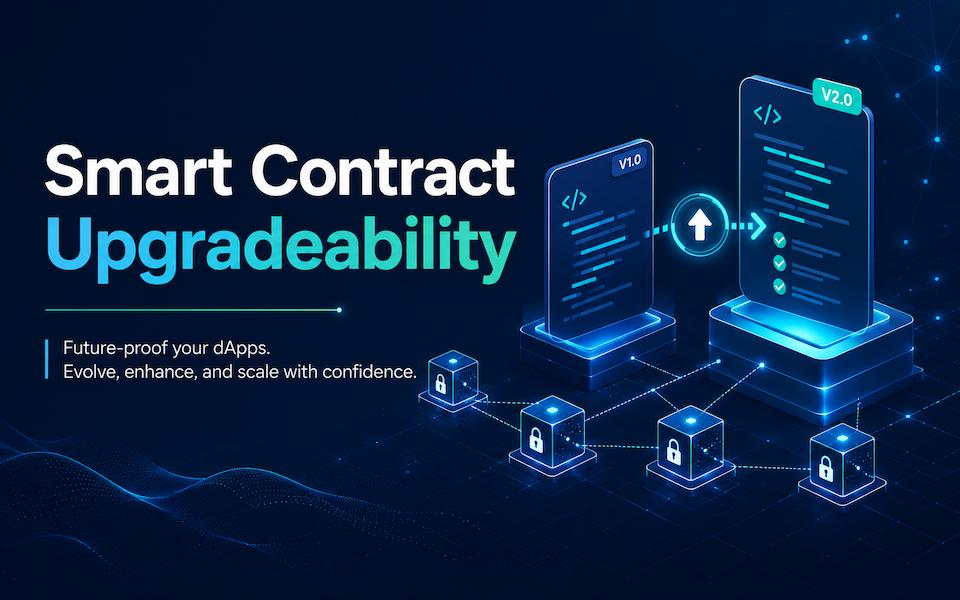
Smart contracts earn trust through permanence. Once deployed, their code sits on-chain for anyone to inspect, and users know the rules cannot change without a clear upgrade path. That trust helps DeFi apps, NFT platforms, DAOs, and token projects attract users and partners. But founders face a real challenge. Products change, bugs appear, and user needs shift. A feature that works at launch can feel limited after 10,000 users start using it. Smart contract upgradeability helps solve this gap by letting teams update contract logic after launch while preserving key data such as balances, permissions, liquidity, and contract records.
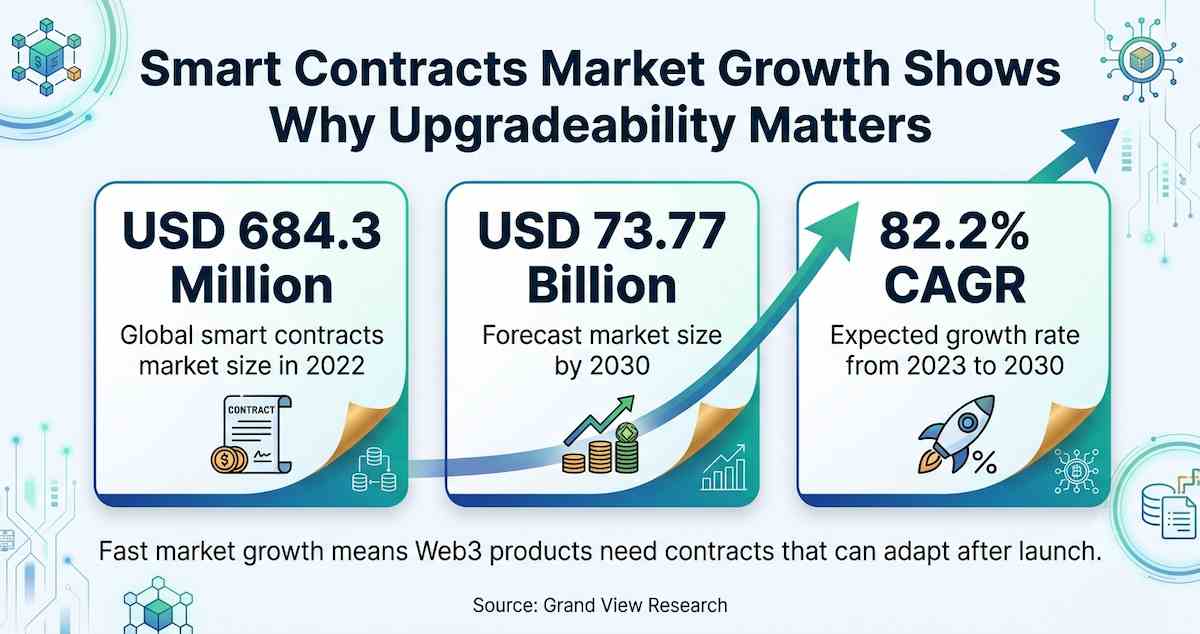
The business case is growing fast too. Grand View Research valued the global smart contracts market at USD 684.3 million in 2022 and expects it to reach USD 73.77 billion by 2030, with 82.2% CAGR from 2023 to 2030. That growth shows why founders need contract systems that support live users, future upgrades, and stronger security needs. Upgradeable smart contracts help teams fix bugs, add features, reduce migration risk, and protect integrations. For Web3 businesses, upgradeability is not just a technical choice. It is a business decision that affects trust, safety, growth, and product life.
What Is Smart Contract Upgradeability?
Smart Contract Upgradeability Definition
Smart contract upgradeability means a team can update contract logic after deployment and keep key on-chain data intact.
In simple terms, the contract can learn new behavior without losing its stored state. That state can include user balances, ownership records, liquidity data, voting power, or platform settings.
Many upgradeable contracts use a proxy pattern. Users interact with one contract address, called the proxy. The proxy stores data and sends calls to another contract that holds the logic.
The logic contract can change through an approved upgrade. The proxy address stays the same. Users and partner apps can keep using the same address.
This setup gives founders a practical path. They can launch, learn from real usage, and improve the product without asking every user to migrate.
Why Standard Smart Contracts Are Difficult to Change
A standard smart contract is hard to edit after launch. The blockchain stores its code, and that code usually stays fixed.
This design protects users. No single team can quietly rewrite the rules after people commit funds. That is one reason smart contracts became trusted tools for digital assets.
The same strength can become a product risk. A small bug can lock funds, block features, or break user flows. A missing function can limit growth. A poor design choice can create extra cost.
Without upgradeability, the team often needs a new contract. Then users must move assets or accept a fresh address. Partners need to update wallets, dashboards, bots, and trading tools.
That process creates cost and confusion. It can hurt trust, especially during an emergency. Users may wonder why the team did not plan better.
Upgradeable smart contracts reduce this risk. They give founders a controlled way to repair and improve live systems.
Upgradeability vs. Immutability
Upgradeability and immutability pull in different directions.
Immutability gives users confidence. The rules stay fixed. No hidden party can rewrite the contract after launch.
Upgradeability gives teams flexibility. The product can improve, bugs can be fixed, and new features can go live without a full migration.
The risk comes from too much control. A team with unrestricted upgrade power can change fees, permissions, or core logic. Users may see that as a trust problem.
Strong upgrade design solves part of this issue. Founders can use governance votes, multisig approvals, time delays, public upgrade notices, and independent audits.
A timelock gives users time to review planned changes. A multisig reduces the risk tied to one private key. Governance lets token holders or members approve major updates.
The goal is balance. Founders need enough flexibility to improve the product. Users need enough protection to trust the system.
Why Do Founders Need Upgradeable Smart Contracts?
Fix Bugs Without Relaunching the Product
Bugs can appear after launch, even after testing and audits. Smart contracts interact with wallets, tokens, bridges, oracles, and other protocols. Each connection adds risk.
Upgradeable smart contracts help teams patch logic without relaunching the full product. This can reduce downtime and prevent rushed migrations.
For example, a DeFi protocol may discover a fee calculation issue. A gaming contract may need a corrected reward rule. A DAO may need a voting logic update.
With upgradeability, the team can repair the logic through a planned upgrade. Users can keep the same address and stored data.
That speed can protect reputation. Users judge Web3 projects during hard moments. A clear upgrade process shows the team planned for real-world issues.
Add Features After Launch
Founders often start with an MVP. That is common in Web3. Teams launch a focused version, watch real usage, then improve the product.
Upgradeable smart contracts support this model. A team can add features after launch without replacing the full system.
This works well for DeFi protocols that add new pool types, NFT platforms that expand royalties or staking, and gaming projects that add rewards or assets. DAOs can upgrade voting rules. Tokenized asset platforms can add compliance checks or new transfer logic.
The key is control. Every new feature should pass review, testing, and audit checks. A bad upgrade can create more risk than the original contract.
Used well, upgradeability gives founders room to build in stages. They can launch faster, learn from users, and improve the product with less disruption.
Preserve User Balances, Liquidity, and Contract Addresses
Contract addresses matter in Web3. Users bookmark them. Wallets display them. Exchanges, dashboards, indexers, and partner apps track them.
A new contract address can break that trust chain. Users may send funds to the old address. Partners may need engineering time. Market data may split across old and new contracts.
Upgradeable contracts help keep the same address in use. The proxy remains the main point of contact. The logic behind it can change through the upgrade process.
This protects user balances and live data. It also protects liquidity, listings, analytics, and integrations.
For founders, this means fewer support tickets and fewer migration risks. For users, it means the product feels stable.
Support Long-Term Product Scalability
A Web3 product must grow with its users. Early contract logic may not support future revenue models, asset types, compliance needs, or governance rules.
Upgradeable smart contracts give founders more room to adapt. The product can support new markets, new user flows, and new technical needs over time.
This matters for long-term platforms. A token project may need new transfer rules. A DeFi protocol may need better risk controls. A DAO may need more advanced voting. A game may need new asset mechanics.
Upgradeability does not remove the need for careful design. It makes careful planning more valuable. Founders should decide who controls upgrades, how upgrades get approved, and how users receive notice.
The best upgradeable systems feel stable to users and flexible for builders. That balance can help a Web3 product stay useful long after launch.
Ready to build upgrade-ready smart contracts?
Blockchain App Factory helps startups and enterprises create smart contracts with safer upgrade paths, clear governance, and strong audit support.

How Smart Contract Upgradeability Works
Proxy Contract and Implementation Contract
Upgradeable smart contracts often use a two-contract setup. One contract handles users and data. The other contract handles the logic.
The proxy contract receives user interactions. It stores state, such as balances, roles, ownership records, and protocol settings. Users interact with this proxy address through wallets, apps, and partner tools.
The implementation contract holds the business logic. It tells the system what to do after a user sends a transaction. That logic can cover transfers, fees, staking rewards, voting rules, minting, or lending actions.
The proxy forwards user calls to the implementation contract. The user sees one main address. The logic behind that address can change through an approved upgrade.
This structure gives founders a practical setup. The product keeps its live data, and the team can improve contract behavior after launch.
What Happens During an Upgrade?
A smart contract upgrade follows a clear path.
- The team writes a new implementation contract.
- Developers test the new logic.
- Auditors review the upgrade.
- An approved admin, multisig, or governance contract updates the proxy pointer.
- The proxy starts using the new implementation.
The state remains inside the proxy. User balances stay in place. Liquidity stays connected. Wallets and partner apps keep using the same proxy address.
This is the main business value of smart contract upgradeability. The team can fix or expand the product without forcing users through a migration.
A smooth upgrade feels simple to users. They open the app, sign a transaction, and continue using the same product.
Delegatecall Explained Simply
Delegatecall is the Ethereum instruction that makes proxy upgrades work.
The proxy runs logic from the implementation contract. The data still lives in the proxy contract. This lets one address keep the state and borrow logic from another address.
Think of a storefront. The signboard, door, and customer records stay the same. The owner updates the operating manual behind the counter. Customers still visit the same shop, but the staff follows new instructions.
That is how delegatecall works in simple terms. The proxy keeps the address and storage. The implementation contract supplies the instructions.
This design gives upgradeable smart contracts their main strength. Logic can change, but stored data remains in place.
Why Storage Layout Matters
Storage layout is the order of variables inside a smart contract. It controls where the blockchain stores each piece of data.
Upgradeable contracts need careful storage planning. A wrong change can break live data. Reordering variables, deleting variables, or changing variable types can create serious errors.
For example, a storage slot that once held a user balance can later be read as an admin role. A slot that held a fee value can turn into a token address. This can corrupt balances, permissions, liquidity data, or protocol settings.
This problem is called a storage collision. It is one of the biggest risks in upgradeable smart contracts.
Founders should treat storage layout as a product safety issue. Every upgrade needs storage checks, tests, and audit review. One careless change can damage user trust faster than a poor feature choice.
Key Proxy Patterns in Smart Contract Upgradeability
Transparent Proxy Pattern
The Transparent Proxy Pattern separates admin functions from user functions. Users interact with product features, and admins handle upgrades. This split helps prevent function conflicts and keeps the upgrade path clear. It is common in DeFi protocols, token contracts, payment systems, and enterprise blockchain apps. The main trade-off is higher gas use compared with leaner proxy models.
UUPS Proxy Pattern
UUPS stands for Universal Upgradeable Proxy Standard. Here, upgrade logic sits inside the implementation contract, so the proxy stays smaller. This can reduce gas use and give developers more control over upgrades. The risk is access control. A weak permission check can expose the upgrade function, so UUPS needs strong Solidity review, testing, and audits.
Beacon Proxy Pattern
The Beacon Proxy Pattern uses one beacon contract to manage implementation addresses for many proxies. Each proxy checks the beacon to know which implementation to use. This works well for NFT collections, gaming assets, staking pools, token factories, and launchpads. It saves work across similar contracts, but one faulty beacon upgrade can affect every linked proxy.
Diamond Proxy Pattern
The Diamond Proxy Pattern splits logic across multiple contracts called facets. Each facet handles a group of functions, such as tokens, rewards, or governance. This model suits large DeFi systems, DAOs, gaming platforms, and enterprise blockchain products. It offers strong flexibility, but it adds technical complexity and requires deeper audits.
Minimal Proxies and Clones
Minimal proxies, or clones, create lightweight contract copies at lower deployment cost. They are more useful for replication than full upgradeability. Teams use them in wallet factories, NFT contracts, staking pools, launchpads, and token deployment tools. Some teams pair clones with Beacon Proxies for shared upgrades.
Transparent Proxy vs. UUPS vs. Beacon vs. Diamond
| Proxy pattern | Best use case | Complexity | Gas use | Main risk | Founder fit |
|---|---|---|---|---|---|
| Transparent Proxy | DeFi, tokens, payments, enterprise apps | Medium | Higher | Admin misuse or function conflicts | Best for business-critical systems |
| UUPS Proxy | Lean upgradeable contracts | Medium | Lower | Weak access control | Best for strong Solidity teams |
| Beacon Proxy | Many similar contracts, such as NFTs, games, and factories | Medium | Low per proxy | One bad beacon upgrade affects many proxies | Best for repeatable product models |
| Diamond Proxy | Large modular protocols | High | Varies | Hard audits and facet conflicts | Best for advanced engineering teams |
When to Use Transparent Proxy
Use a Transparent Proxy for business-critical contracts that need a mature upgrade model. It suits DeFi platforms, token contracts, payment apps, and enterprise systems. The gas cost is higher, but teams gain clear admin separation, common tooling, and strong audit support.
When to Use UUPS Proxy
Use a UUPS Proxy for projects that need lower gas use and a cleaner proxy design. It suits teams with strong Solidity skills and strict upgrade controls. A missed permission check can expose the upgrade path, so audits and access reviews matter.
When to Use Beacon Proxy
Use a Beacon Proxy for platforms that deploy many similar contracts. NFT projects, gaming platforms, staking systems, marketplaces, and token factories fit this model. One beacon can update many proxies, but one bad upgrade can affect every linked contract.
When to Use Diamond Proxy
Use a Diamond Proxy for large protocols with many modules and frequent product changes. It suits complex DeFi, DAO, gaming, and enterprise systems. This model gives deep upgrade flexibility, but it needs a strong engineering team and deeper audits.
Industry Use Cases of Smart Contract Upgradeability
DeFi Platforms
DeFi platforms need quick updates for lending logic, staking rules, rewards, fees, and liquidation settings. Upgradeable smart contracts help teams improve these rules without asking users to move funds. This matters for protocols that manage deposits, loans, collateral, and liquidity. Each upgrade should include testing, audits, multisig approval, and clear user notices.
NFT Marketplaces and Gaming Platforms
NFT and gaming products often add features after launch, such as royalty logic, rewards, trading tools, and gameplay rules. Upgradeable smart contracts help teams add these features while keeping user assets connected to the same system. Beacon proxies work well here, since many asset contracts can follow shared logic from one beacon.
DAOs and Governance Platforms
DAOs need flexible rules for voting, proposals, treasury control, and membership. Upgradeable smart contracts help communities improve governance without losing old records. Public proposals, time delays, audits, and voting records help protect trust. A DAO upgrade should feel like a community-approved change.
Real-World Asset Tokenization
Real-world asset tokenization needs room for legal and compliance updates. Upgradeable smart contracts help platforms adjust transfer rules, KYC checks, investor permissions, lockups, and redemption logic. This is useful for bonds, real estate, funds, and invoice-based assets. Strict admin checks and legal review should guide every upgrade.
Stablecoins and Payment Systems
Stablecoins and payment systems need careful control over minting, burning, treasury rules, fees, and compliance hooks. Upgradeable smart contracts help teams update these functions without disrupting users or partners. Since these products handle money at scale, upgrades need audits, monitoring, multisig approvals, time delays, and public change logs.
Business Benefits of Smart Contract Upgradeability
Faster Product Iteration
Founders rarely launch a perfect Web3 product on day one. Real users expose gaps that testnets miss.
Upgradeable smart contracts let teams improve the product after launch. They can add features, refine rules, and fix weak points without rebuilding the full system.
This helps teams launch a focused first version. Then they can improve based on usage, feedback, and market needs.
The result is a better product path. Founders get speed without throwing away the first contract system.
Lower Migration Risk
Contract migrations create friction. Users need instructions. Wallets need updates. Partners need engineering work. Support teams receive more questions.
Upgradeable contracts reduce this risk. The proxy address stays live, and the contract state remains in place.
Users do not need to move assets every time logic changes. Liquidity pools, ownership records, rewards, and permissions can stay connected.
This protects the user experience. It also reduces the chance of lost funds, wrong transfers, and partner delays.
Better User and Partner Continuity
Web3 products depend on many outside tools. Wallets, indexers, analytics platforms, exchanges, marketplaces, and partner apps track contract addresses.
A new address can break this chain. Data can split between old and new contracts. Users may question which address is correct.
Upgradeable smart contracts help preserve that continuity. The same proxy address remains the main access point.
This helps founders protect user trust, liquidity, token listings, dashboards, and partner links. It keeps the product easier to find and use.
Continuity matters for growth. Users want a product that feels stable. Partners want contracts that do not change addresses every few months.
Longer Product Lifecycle
A smart contract product can run for years. User needs, compliance rules, revenue models, and security practices change during that time.
Upgradeable smart contracts help products stay useful longer. A team can add new features, update rules, and remove weak logic as the product matures.
This is useful for DeFi, NFTs, DAOs, stablecoins, games, and tokenized asset platforms. These products often grow through phases.
A longer lifecycle can protect the original investment in code, audits, brand, liquidity, and community. It helps founders build beyond the first release.
Stronger Security Response
Security incidents move fast in Web3. A contract issue can put user funds at risk within minutes.
Upgradeability gives teams a faster response path. They can patch exposed logic, pause risky actions, or route users through safer contract behavior.
This does not replace good security work. Teams still need audits, tests, monitoring, bug bounties, and clear access controls.
Upgradeability works best as part of a broader safety plan. It gives founders one more way to protect users during high-pressure moments.
Want the right proxy pattern for your Web3 product?
Should Every Web3 Project Use Upgradeable Smart Contracts?
When Upgradeability Makes Sense
Upgradeable smart contracts suit products that need long-term change. They work best where the product has many users, live value, or growing feature needs.
Good fits include:
- DeFi lending, staking, and trading platforms
- NFT marketplaces and gaming ecosystems
- DAOs and governance platforms
- Real-world asset tokenization systems
- Stablecoins and payment products
- Platforms with changing compliance needs
- Products that plan new features after launch
Founders should choose upgradeability early in product design. It affects architecture, audits, admin roles, governance, and user trust.
The best use case is clear: long-term products need room to improve without breaking live users.
When Immutability Is Better
Not every smart contract needs upgrades. Some products gain more trust from fixed rules.
Simple fixed-supply tokens can work well without upgradeability. A contract with one clear purpose may not need future changes.
Immutable contracts suit systems where users expect no changes after launch. This can include basic token contracts, escrow tools, vesting contracts, or limited-purpose vaults.
Immutability can make trust simpler. Users know the rules cannot change. The team has less power, and that can increase confidence.
Founders should choose immutability for products with permanent rules and limited features.
Hybrid Approach
Many Web3 products use a mixed model. Some modules stay upgradeable, and key rules stay fixed.
For example, a DeFi protocol can keep core token supply rules immutable. It can still upgrade reward logic, fee settings, or risk modules.
A tokenized asset platform can make ownership records stable. It can still upgrade compliance checks or transfer rules.
This model balances flexibility with user trust. Founders keep room to improve the product, and users gain clear limits around what can change.
The best choice starts with a simple question: which rules must never change? Those rules should stay fixed. The parts that need product growth can use upgradeability.
Conclusion
Smart contract upgradeability gives founders a practical way to improve Web3 products after launch, protect live contract data, and reduce user disruption. Proxy patterns such as Transparent, UUPS, Beacon, Diamond, and clones give teams different paths for upgrades, based on product size, risk, and technical depth. The right model should match the business goal, contract value, security needs, and user trust requirements. For projects that manage funds, assets, governance, payments, or compliance rules, upgradeability can support faster fixes and longer product life. Blockchain App Factory provides smart contract development services for startups and enterprises that want secure, scalable, and upgrade-ready blockchain products. With the right architecture, audits, and governance process, founders can build contracts that stay trusted today and adapt to business needs tomorrow.

Vimal J is the Head of Sales at Blockchain App Factory, with 10+ years of experience in sales, client strategy, and Web3 business growth. He helps startups, enterprises, and project founders choose the right blockchain solutions for their goals, bringing a practical market perspective to topics like token development, crypto launches, and Web3 adoption.