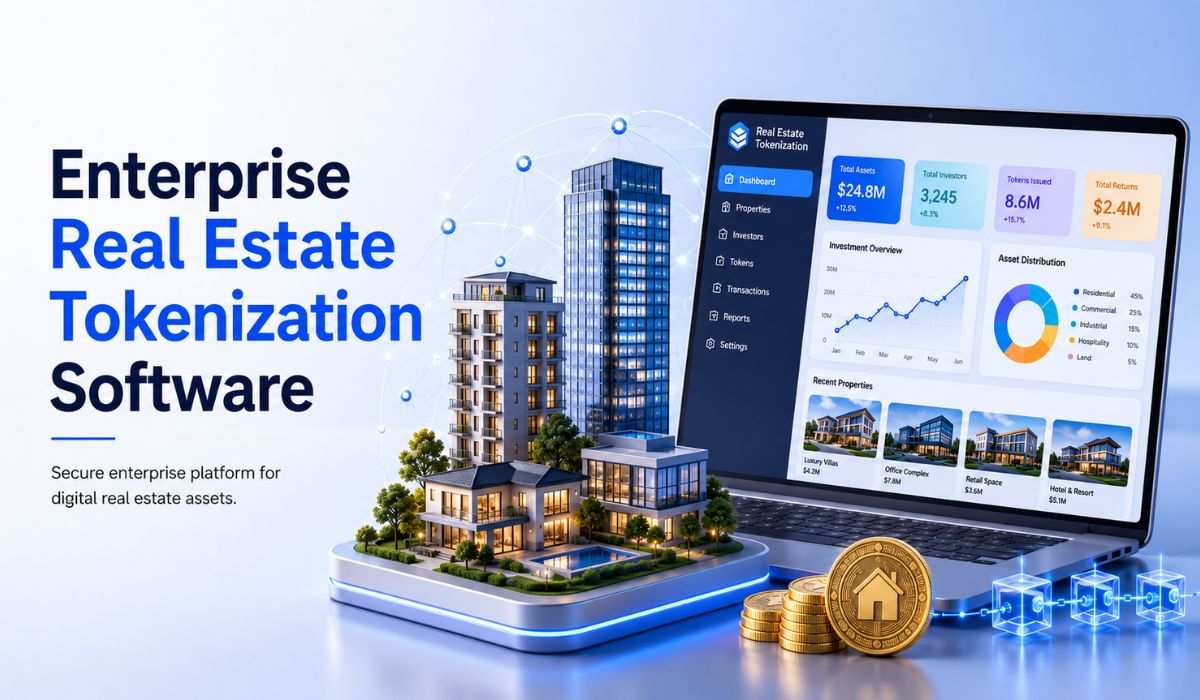
Real estate still attracts capital for one simple reason. It holds value and pays income over time. Yet the investment process often feels stuck. Firms juggle PDFs, email threads, wet signatures, and manual cap table updates. A deal can take weeks to close, even after terms are settled.
The market data explains why firms now pay attention to tokenization. Deloitte projects tokenized private real estate funds could reach US$1 trillion by 2035, with 8.5% market penetration for that segment. A separate 2026 market study puts the real estate tokenization market at US$3.73 billion in 2025, and forecasts US$23.99 billion by 2035 at a 21.0% CAGR. These numbers signal a clear shift: more firms want digital ownership records and faster fundraising workflows.
Investor expectations changed too. People manage money from a phone and expect quick confirmations. They want a clean view of what they own, what it pays, and what changed this month. Firms feel it on the operations side. Teams spend too many hours chasing documents, updating cap tables, and answering the same ownership questions.
How Blockchain Changes the Way Ownership Gets Recorded
Ownership in real estate often sits in scattered places. One part sits with lawyers, another with administrators, and another inside spreadsheets. When investors join or exit, staff update records across systems. Small mismatches lead to big headaches during audits or payout cycles.
Blockchain keeps a shared record that updates with each approved transaction. Instead of five versions of the truth, there is one record that participants can check. A firm can tie ownership units to tokens, then track transfers through the same system. The property stays physical, yet the ownership record becomes easier to follow.
This shift matters most when a deal has many investors. The more names on the cap table, the more chances for confusion. With blockchain-based tokens, firms can track who holds which portion at any moment, without digging through old email chains.

Real Estate Tokenization in Simple Terms
Tokenization means turning ownership rights into digital tokens recorded on a blockchain. Think of a building as a pie. Instead of selling the whole pie to one buyer, the firm slices it into many pieces. Each piece becomes a token. If you own 50 tokens out of 10,000, you own that fraction of the investment.
Those tokens are not just placeholders. They represent real rights tied to the asset. The rights depend on how the deal is structured, but they often relate to income, profit share, and ownership interest through a legal entity that holds the property. The token acts like a digital record of that stake, and the platform tracks who holds it.
How Property Rights Become Digital Tokens
The process starts with a property the firm wants to offer to investors. The firm defines the ownership structure, then connects it to tokens on a blockchain. The platform issues the tokens and records ownership as investors buy in. When an investor sells or transfers tokens under the platform rules, the ownership record updates at the same time.
This setup reduces the back-office load. Staff no longer need to update ownership records in multiple places after each change. The platform keeps the ledger current and makes it easier to confirm holdings during reporting cycles, payouts, or audits.
Fractional Ownership Makes Real Estate Easier to Buy Into
Traditional property investing often starts with one blunt fact. Many investors cannot afford the minimum check size. Buying an entire building takes serious capital, and even joining a private deal can demand a large commitment. That reality blocks a lot of interested investors at the door.
Tokenization supports fractional ownership by splitting the investment into smaller units. Investors can buy a slice that matches their budget, instead of stretching for a full stake. For firms, this opens the investor list. A deal no longer needs only a handful of large checks. It can accept many smaller ones, as long as the legal structure and compliance rules allow it.
How Tokens Tie Back to a Real Asset
A token lives on a blockchain, but the property sits in the real world. The link between the two comes from legal setup. In many structures, a company or trust holds the property. Investors own tokens that reflect shares or rights connected to that holding entity. The token records who owns what portion, and the legal documents define what that portion means.
This is why tokenization is not a replacement for real estate law. It works alongside it. The token provides a digital record of ownership units, and the legal structure backs those units with real rights tied to the property.
Traditional Real Estate Investing vs Tokenized Real Estate
Traditional real estate investing usually runs on paperwork and patience. A firm forms an SPV, collects signatures, wires funds, and updates ownership records by hand. Transfers take time and often need lawyers, administrators, and banks to line up. Even simple changes, like an investor selling part of a position, can turn into a long process.
Tokenized real estate keeps the property physical, yet it records ownership in digital units. Investors buy tokens that represent their share under the deal terms. The platform tracks holdings, transfers, and history in one place. That changes day-to-day operations. A firm can answer ownership questions faster, run reports with fewer manual checks, and reduce the mess that builds up over time.
Why Traditional Models Feel Restrictive
Conventional real estate deals come with high minimums, limited access, and slow exits. Many investors sit on positions for years, not by choice, but since selling is hard. A buyer has to show up at the right time, agree on price, pass checks, and complete paperwork. That friction keeps the market quiet between major events like refinancing or sale.
Liquidity is the big pain point. Real estate is valuable, yet it rarely trades like other assets. Investors often plan for a long hold, then learn they have fewer options when life changes or capital needs shift.
How Tokenization Adds Flexibility
Tokenization breaks ownership into smaller pieces, and that changes who can participate and how they can exit. Investors can buy smaller portions, and firms can manage larger investor groups without drowning in admin work. Can tokenization make real estate trade like a stock? Not fully, and it does not need to. It can still make exits easier by supporting token transfers within platform rules and compliance checks.
The result is a more accessible format for investors and a cleaner ownership system for firms. It does not remove the need for legal structure or regulation. It makes the ownership record easier to manage, and that alone can remove a lot of daily friction.
Why Tokenization Is Getting Attention
Real estate firms are not adopting tokenization for hype. They adopt it to solve familiar problems that cost time and money. One problem is access. Many deals still reach the same small circle of investors. Another problem is speed. Raising funds, updating ownership records, and sending reports can drag on longer than it should.
Tokenization helps by packaging ownership into digital units and keeping those units in a single record. Firms can accept more investors without turning operations into chaos. Investors get a clearer view of what they own and when it changes. This matters most in deals with frequent reporting, multiple distributions, or investor turnover.
A second reason is reach. A tokenized offering can attract investors outside the firm’s usual network, depending on the legal setup and marketing rules in each region. That wider reach can help fill a raise faster, especially for mid-size projects that sit between private friends-and-family rounds and large institutional funding.
What Enterprise Real Estate Tokenization Software Is
Enterprise tokenization software is a platform that helps a real estate firm convert a property investment into tokens, then manage that investment over time. It handles the pieces that usually sit across many tools, such as property onboarding, investor checks, token issuance, and ongoing ownership tracking.
Think of it as the operating system for a tokenized real estate deal. The platform stores asset details, runs investor onboarding, tracks token ownership, and supports distributions and reporting. Some platforms also support secondary transfers, so investors can sell tokens to other approved participants.
How the Software Works Day to Day
A firm starts by registering the asset and uploading the property documents and deal structure. The platform then creates the token rules through smart contracts. After that, investors sign up, complete identity checks, and review the offering materials. Once they invest, the platform issues tokens to their accounts or wallets and records ownership.
After fundraising, the same system supports investor updates, income distributions, and ownership changes. When an investor transfers tokens under the allowed rules, the platform updates the ownership record right away. That reduces the back-office workload and keeps reporting aligned with the actual cap table.
Why Real Estate Firms Are Adopting Solutions from Enterprise Real Estate Tokenization Software Provider?
Many real estate firms run into the same ceiling. Traditional syndication works, but it is slow and hard to manage at scale. Every new investor adds more admin work. Every ownership change adds more paperwork. Over time, the back office becomes the bottleneck, not the deal flow.
Tokenization platforms change the ownership format. Instead of treating ownership as a stack of signed documents, the firm treats it as digital units tied to the same legal structure. That makes ownership easier to track and easier to update when investors buy, sell, or transfer their stake under the deal rules.
From Syndication Paperwork to Digital Ownership Units
Syndication often relies on spreadsheets, investor portals, and manual checks. Even well-run firms spend time reconciling records. A small error can lead to wrong distributions or confused investors, and fixing it takes even more time.
With tokenization, the platform records ownership as tokens. When an investor enters the deal, the platform issues tokens that match the investment amount. When an investor exits through an approved transfer, the platform updates the ownership record at the same time. The firm still uses legal documents and compliance rules, but the ownership register stops living in disconnected files.
Fractional Investment Becomes Easier to Offer
Fractional real estate is not new. What changes is how cleanly a firm can structure and manage it. Tokens represent small ownership units, so firms can set lower entry amounts and accept more investors without losing control of the cap table.
This can be useful for premium assets too. A luxury residential project or a prime commercial building may attract interest, yet the minimum check size pushes many investors away. Tokenization gives firms a way to offer smaller positions without manually managing dozens or hundreds of tiny allocations.
New Ways Firms Can Earn Fees
Tokenization platforms can create more fee points across the life of a deal. The firm can charge setup fees for structuring a tokenized offering, admin fees for managing investors, and platform fees tied to transfers or secondary trades, if the platform supports them. The exact fee model depends on the firm and the rules in its market, but the broader point stays the same. A tokenized format can support more repeat activity than a one-time syndication raise.
Firms also use tokenization to package assets in different ways. Some tokenize a single property. Others bundle a set of rentals into one offering. These structures can support fresh products that fit different investor appetites and check sizes.
Reaching More Investors and Filling Raises Faster
Many firms raise capital through a familiar network. That works until it does not. If a project needs more investors than usual, the firm has to expand outreach, and that takes time. A tokenized offering can reach a wider audience through a digital portal, as long as marketing rules and investor eligibility rules are followed.
Speed matters during a raise. Investors want quick access to deal materials, quick identity checks, and quick confirmation after they invest. A good platform reduces delays between “I want in” and “your stake is recorded.” That can shorten the raise window, which helps developers hit timelines for land purchase, permits, and construction milestones.
Less Manual Work in the Back Office
Investor onboarding often eats up hours. Staff chase documents, verify details, and update records across systems. Tokenization platforms reduce this workload by keeping onboarding, ownership tracking, and reporting inside one system.
Many platforms also automate recurring tasks like updating investor dashboards after a distribution, logging transfers, and generating basic reports. The firm still needs oversight and compliance review, but the day-to-day admin burden drops, and teams can focus on deals and investor relations instead of spreadsheets.
Ready to launch your own tokenized real estate platform?
Get a platform that supports asset onboarding, investor checks, token issuance, ownership tracking, distributions, and reporting in one place.

Core Features of Enterprise Real Estate Tokenization Software
Enterprise tokenization software is not just a “token maker.” It works like a control room for a tokenized property deal. The best platforms cover the full routine, from uploading property files to handling payouts and ownership changes. Below are the features that matter most for real estate firms that run multiple assets and investors.
Asset Tokenization and Asset Data Setup
Every platform starts with an engine that turns a real property deal into tokens. The firm sets the total token supply, the ownership logic, and the link between tokens and the legal holding structure. This part decides what one token means in real terms, such as a percentage of ownership or a defined economic right.
Before tokens go out, the platform also needs the property details in one place. Firms upload documents like title records, valuation reports, lease summaries, and the deal’s structure. Keeping this data together helps teams answer investor questions faster and keeps reporting consistent across the life of the investment.
Smart Contracts, Issuance, and Ownership Records
Smart contracts act as the rulebook. They control how tokens get issued, how transfers happen, and how payouts get calculated. A good platform gives firms a controlled way to generate these contracts based on the deal terms, then deploy them to the chosen blockchain.
Once the contracts are live, the platform issues tokens to investors after they invest and pass checks. It also keeps an updated ownership register. When tokens move between approved investors, the register updates at the same time. This replaces the manual share register many firms still maintain for syndications and SPVs.
Investor Onboarding, KYC, and Ongoing Management
Investor onboarding is where many deals slow down. Tokenization platforms reduce that drag by providing an investor portal where people register, submit documents, and complete identity checks. The platform connects with KYC and AML providers to verify identity and screen participants. The firm can also set rules on who can invest, based on the offering and the region.
After onboarding, the investor management module stores profiles, investment history, token holdings, and communication logs. Most platforms also include dashboards so investors can see their holdings, distributions, and transaction history without emailing the fund manager every month.
Compliance, Payouts, Governance, and Secondary Transfers
Compliance features matter more than fancy UI. A serious platform helps the firm track eligibility, monitor limits, and store the records needed for audits and filings. Some systems include jurisdiction-based settings, so the platform can apply different rules for different investor groups.
Many platforms also automate common actions through smart contracts. Rental income or profit share can be calculated and distributed based on token ownership at a set time. Ownership transfers can follow preset restrictions, so tokens only move between approved parties. Some deals also include voting, where token holders vote on items like asset sale decisions or major capex plans, and the platform records the result.
If the platform supports secondary transfers, it may include a controlled marketplace or peer-to-peer transfer tools. The goal is not to mimic public stock trading. The goal is to let eligible investors trade positions with less friction, with settlement recorded in the same system.
Reporting, Analytics, and Valuation Tracking
Real estate firms live on reports. Tokenization software usually includes performance reporting for each asset and each investor. The platform can show distribution history, current ownership, and basic performance metrics tied to the deal’s reporting model. Many also track valuation updates, so investors see when the firm updates the asset value and how that affects the investment view.
Key Technologies Behind Real Estate Tokenization Platforms
Tokenization platforms rely on a small set of technologies that work together. The value comes from how well the platform ties them into the real estate workflow.
Blockchain Networks and Ownership Records
Blockchain acts as the record keeper for token ownership and transactions. Platforms may use public networks or private networks. Public networks allow broader visibility of transactions, while private networks restrict participation to approved parties. Firms pick based on their compliance needs, data privacy preferences, and the platform’s design.
Once recorded on a blockchain, transactions are hard to change. That helps keep ownership history consistent across time, which is useful for audits, disputes, and investor reporting.
Smart Contracts for Deal Rules
Smart contracts store and execute the rules of the token. They can handle issuance, transfer restrictions, and distribution logic. This reduces manual processing, but firms still need careful review at setup, since the contract follows the terms written into it. In practice, smart contracts work best when the platform keeps the contract templates controlled and tied to the deal documents.
Identity Checks, Wallets, and System Connections
Most real estate token offerings require investor verification. Platforms connect with identity and screening providers for KYC and AML checks, then attach the verified identity to the investor profile inside the platform.
Wallet support is another building block. Investors hold tokens in a connected wallet, and the platform tracks those holdings. Some platforms offer custodial wallet options, while others support investor-managed wallets. Either way, the wallet is the tool used for token receipt and transfer.
Enterprise platforms also rely on APIs so they can connect with the firm’s current systems. Common links include CRM systems for investor communication, accounting tools for financial records, and property management software for rent and operating data. These connections reduce double entry and help the platform reports match the firm’s financial books.
Types of Real Estate Assets That Can Be Tokenized
Tokenization works across many property categories. The main requirement is a clean legal structure and a deal model that can be split into ownership units.
Residential and Rental Portfolios
Residential assets are common starting points. Apartment buildings fit well since they generate predictable cash flows and have familiar reporting metrics. Luxury residential projects also show up, mostly since tokenization helps spread a large ticket asset across more investors. Some firms tokenize a basket of rentals as one offering, which gives investors exposure across multiple properties instead of one address.
Commercial and Industrial Properties
Commercial assets like office buildings and retail centers can also be tokenized, especially when leases and tenant income provide steady reporting data. Industrial assets have grown in interest, including warehouses, distribution centers, and logistics-linked facilities. These properties often run on longer leases, which can suit investors who want stable income structures.
Hospitality and Development Projects
Hotels, resorts, and vacation rentals can be tokenized too, though returns can swing more with seasonality and occupancy. Development projects are another category, including pre-construction raises where investors fund early stages of a build. Some large projects tied to infrastructure or mixed-use development also fit the model, as long as the legal and compliance setup supports a token offering.
Key Factors to Consider When Choosing Enterprise Real Estate Tokenization Software Provider
Picking a tokenization platform is not like choosing a new investor portal. Once you issue tokens and onboard investors, switching systems gets painful. So it pays to pressure-test the platform before you commit, not after the first raise goes live.
Security and Blockchain Setup
Start with how the platform protects assets and records. Ask where tokens live, how wallets are handled, and who controls private keys. If the platform offers custody, check what that custody model looks like and what happens if a user loses access. If investors self-custody, check what wallet types the platform supports and how transfers get approved.
Look at the blockchain choice too. The network needs predictable performance and a clean transaction history. It also needs rules that match the offering, such as transfer restrictions for regulated tokens. A platform can look great on the surface and still be weak under the hood if it relies on brittle wallet logic or poor key management.
Reliability, Uptime, and Operational Safety
Real estate firms do not need the platform to handle millions of trades per hour. They do need it to work every day without glitches. Investors will log in during funding windows, distribution periods, and tax season. If the system slows down or goes offline, trust drops fast.
Ask about uptime history, backups, incident response, and monitoring. Also ask how the platform handles peak events, such as a busy raise close or a large distribution run. The boring answers matter here. That is what keeps the platform steady in real life.
Compliance Fit for Your Market
Most tokenized real estate offerings sit under securities rules. That reality shapes everything. The platform should support investor eligibility checks, document collection, audit trails, and transfer controls that match the rules in the regions where you operate.
Good platforms treat compliance as part of the workflow, not a separate checklist. Investor screening, transaction logs, and offering documents should live inside the same system that issues tokens and tracks ownership. This reduces the chance of gaps between what the firm promised and what the platform recorded.
Flexibility Across Deals and Asset Types
Real estate firms rarely run one deal type forever. Today you may raise for an apartment building. Next quarter you may bundle rentals. Next year you may launch a fund format. The platform should handle different asset categories and deal structures without forcing awkward workarounds.
Focus on how the platform models ownership rights, payouts, and transfer rules. If you cannot represent your deal terms cleanly, you will fight the system every month. A platform that fits your deal model saves time long after the raise closes.
Investor Experience That Reduces Support Tickets
Investor experience sounds like a soft feature, but it hits the team every day. If onboarding feels confusing, you will answer the same questions over and over. If dashboards feel incomplete, investors will request extra reports. If payments feel unclear, you will spend hours reconciling messages.
Look for a simple onboarding flow, clear investor dashboards, and plain transaction history. Investors should understand what they bought, what they hold, and what they received in distributions. If they cannot see that in two minutes, your support load rises.
Integration With Your Existing Systems
Most real estate firms already run CRMs, accounting tools, and payment rails. A tokenization platform should fit into that stack. Check whether it can sync investor data with your CRM, push reporting data into finance systems, and connect to payment providers you already use.
Integration matters most for reporting and operations. If staff re-enters the same data in three places, mistakes creep in. A platform that connects well reduces manual work and keeps records consistent across teams.
Enterprise Use Cases for Real Estate Tokenization Platforms
Tokenization platforms show their value when a firm runs repeated raises, manages many investors, or needs tight ownership tracking across time. Different real estate players use these platforms in slightly different ways.
Real Estate Investment Firms and Fund Managers
Investment firms use tokenization software to manage ownership across multiple assets without drowning in admin work. A portfolio with five properties and hundreds of investors can become a record-keeping nightmare in a traditional setup. Token-based ownership records reduce that friction and keep holdings current as investors enter, exit, or rebalance.
Some firms also package assets into a fund format, where investors buy tokens tied to a pool rather than a single building. This structure can suit firms that want to offer diversified exposure and run recurring fundraising rounds.
Property Developers Raising Project Capital
Developers care about timing. Land deals, permits, and contractor schedules do not wait. Tokenization platforms can shorten the path from investor interest to recorded ownership, which can help developers close funding windows faster.
This model also suits phased projects. A developer can structure separate offerings for different stages, then track ownership and payouts through the same system. The platform becomes the place where investor records live across the full build cycle.
Asset Management and Investor Reporting Teams
Asset managers spend a lot of time on reporting, distributions, and ownership tracking. Tokenization software keeps the ownership register current and ties it to reporting outputs. That makes it easier to generate investor statements, track who qualifies for which payout, and maintain a clean history for audits.
For firms that manage many small investors, this use case matters most. When manual tracking breaks, reporting breaks too. A system that keeps holdings updated prevents that chain reaction.
Crowdfunding and Investment Platforms
Crowdfunding platforms use tokenization to offer property investments through a digital interface that investors already understand. Investors browse deals, pass checks, invest, and then see their holdings on a dashboard.
The platform operator benefits from cleaner ownership tracking and fewer manual steps. Investors benefit from a more structured view of what they own and what they earned. This model still depends on compliance rules, but it can support a larger volume of smaller investments.
How Much Does It Cost to Build Enterprise Real Estate Tokenization Software?
Cost depends on what you want the platform to do on day one. A simple issuance portal with onboarding and basic reporting costs far less than a full enterprise setup with transfer rules, payouts, secondary trading, and deep integrations. The other big cost drivers are your compliance scope (one country vs many), custody model (custodial vs investor wallets), and the blockchain choice (public vs private network plus hosting).
Below is a practical breakdown of common modules. The time ranges assume an experienced team (product, backend, frontend, blockchain, QA, DevOps) working in parallel. Costs are rough development ranges in USD, not including licensing fees for third-party KYC providers, infrastructure bills, legal work, or ongoing support.
| Feature / Module | Description | Development time (range) | Development cost (USD range) |
|---|---|---|---|
| Product discovery + technical architecture | Requirements, user flows, data model, threat model, chain choice, sprint plan | 2–4 weeks | $15,000–$40,000 |
| UI/UX design | Investor portal, admin console, dashboards, style system, clickable prototype | 3–6 weeks | $12,000–$35,000 |
| Asset onboarding + document vault | Property profile, document upload, versioning, permissions, audit logs | 3–6 weeks | $25,000–$70,000 |
| Token model + issuance workflow | Token supply setup, allocation rules, issuance events, cap table logic | 4–8 weeks | $40,000–$110,000 |
| Smart contract development | Contract logic for issuance, transfers, restrictions, admin actions, upgrades | 4–10 weeks | $50,000–$140,000 |
| Smart contract testing + audit readiness | Unit tests, integration tests, testnets, audit fixes, formal review prep | 3–8 weeks | $25,000–$90,000 |
| Investor onboarding portal | Signup, investor profiles, document capture, e-sign flow hooks | 3–6 weeks | $20,000–$65,000 |
| KYC/AML integration | Provider integration, screening, risk flags, review queue, logs | 3–7 weeks | $25,000–$80,000 |
| Compliance rules engine | Eligibility rules, investment limits, transfer checks, jurisdiction settings | 4–8 weeks | $45,000–$130,000 |
| Payments and settlement layer | Fiat rails (ACH/wire/cards where allowed), reconciliation, receipts | 4–9 weeks | $50,000–$150,000 |
| Wallet connection (non-custodial) | Wallet connect, signing, token receipt, transfer flow, safe UX checks | 3–7 weeks | $25,000–$85,000 |
| Custody module (optional) | Custodial wallets, key management, role controls, recovery flows | 6–12 weeks | $90,000–$250,000 |
| Distribution engine (rent/dividend) | Snapshot ownership, calculate payouts, payment runs, statements | 4–9 weeks | $55,000–$160,000 |
| Ownership transfer workflow | Transfer requests, approvals, restriction checks, on-chain update | 4–8 weeks | $40,000–$120,000 |
| Investor dashboards | Holdings, distributions, documents, transaction history, alerts | 3–6 weeks | $20,000–$70,000 |
| Reporting and exports | Admin reports, investor statements, CSV/PDF exports, audit trails | 3–7 weeks | $25,000–$85,000 |
| Admin console | Asset controls, investor management, approvals, logs, settings | 4–8 weeks | $40,000–$120,000 |
| Secondary marketplace (basic) | Listings, matching, compliance checks, settlement flow | 8–16 weeks | $120,000–$350,000 |
| Liquidity controls (marketplace add-on) | Trading windows, whitelists, circuit limits, fee rules | 4–10 weeks | $60,000–$180,000 |
| Integrations (CRM/ERP/property mgmt) | API connectors, webhooks, data sync, mapping, retries | 3–10 weeks | $30,000–$140,000 |
| Security hardening | Rate limits, secrets handling, logging, pentest fixes, WAF setup | 3–8 weeks | $30,000–$120,000 |
| DevOps + production deployment | CI/CD, environments, monitoring, backups, disaster recovery | 3–7 weeks | $30,000–$100,000 |
Step-by-Step Process of Tokenizing a Real Estate Asset
Tokenizing a property follows a fairly steady path. The details change by region and deal type, but the major stages stay consistent across most enterprise projects.
Evaluate the Asset and Set the Deal Structure
The firm starts with valuation, ownership checks, and financial modeling. It defines the investment terms, the expected income sources, and how returns will be shared. This stage also sets the ownership model that tokens will represent, such as shares in a holding entity or a defined economic interest.
This is also where firms decide token supply and minimum investment size. Those choices shape investor access and the way ownership gets tracked over time.
Prepare Legal Documents and Compliance Rules
Next comes legal setup. The goal is to connect token ownership to real rights tied to the property through a structure that holds up under local law. Many deals use an entity that holds the property, with tokens representing shares or rights connected to that entity.
Compliance rules are set at the same time. The firm defines who can invest, what checks apply, what limits apply, and what disclosures investors must accept. This stage often includes investor eligibility rules, document templates, and internal review steps.
Create Tokens and Deploy Smart Contracts
Once the structure is ready, the platform creates the token model and deploys smart contracts to enforce the rules. These contracts set how issuance works, how transfers work, and how payouts get calculated.
Teams review this part carefully. A smart contract follows the rules written into it. If the setup is wrong, fixing it later can be messy.
Onboard Investors and Run the Fundraise
The platform opens onboarding. Investors register, submit documents, and complete identity checks. Once approved, they review offering materials and invest through the platform’s payment flow. After funds settle, the platform issues tokens and records ownership.
This phase is where investor experience matters most. If onboarding drags, the raise drags. If the dashboard feels confusing, support volume spikes.
Support Transfers and Manage Liquidity
After fundraising, the firm runs ongoing investor management. That includes updates, reporting, and distributions. If the platform allows token transfers, it applies the transfer rules and updates ownership records when trades occur between approved participants.
Some platforms support a controlled marketplace where investors can list tokens for sale. Others support direct transfers. Either way, the main value is a smoother path for ownership changes, without rewriting the cap table by hand every time someone exits.
Conclusion
Real estate tokenization is gaining ground for a simple reason: it helps firms manage ownership, fundraising, reporting, and investor activity with less friction than old methods. A good platform keeps asset records in one place, tracks holdings without messy spreadsheets, applies investor checks during onboarding, and supports payouts and approved transfers without constant manual follow-ups. Firms still need solid legal work and compliance discipline, but the day-to-day running of a deal becomes easier to control and easier to explain to investors. If your firm is planning to issue tokenized real estate offerings or upgrade an existing setup, Blockchain App Factory is a Enterprise Real Estate Tokenization Software Provider and they cover platform development, token issuance workflows, investor onboarding flows, and ongoing management features designed for real estate investment operations.

Vimal J is the Head of Sales at Blockchain App Factory, with 10+ years of experience in sales, client strategy, and Web3 business growth. He helps startups, enterprises, and project founders choose the right blockchain solutions for their goals, bringing a practical market perspective to topics like token development, crypto launches, and Web3 adoption.