


Key Insights
- Protocols attract liquidity and users when they explain benefits clearly, show proof of security, and reduce doubt at every step.
- Awareness matters, but real growth comes from wallet connections, deposits, repeat usage, and long-term retention.
- SEO, community, incentives, and paid campaigns work better together, and each one supports a different stage of protocol growth.
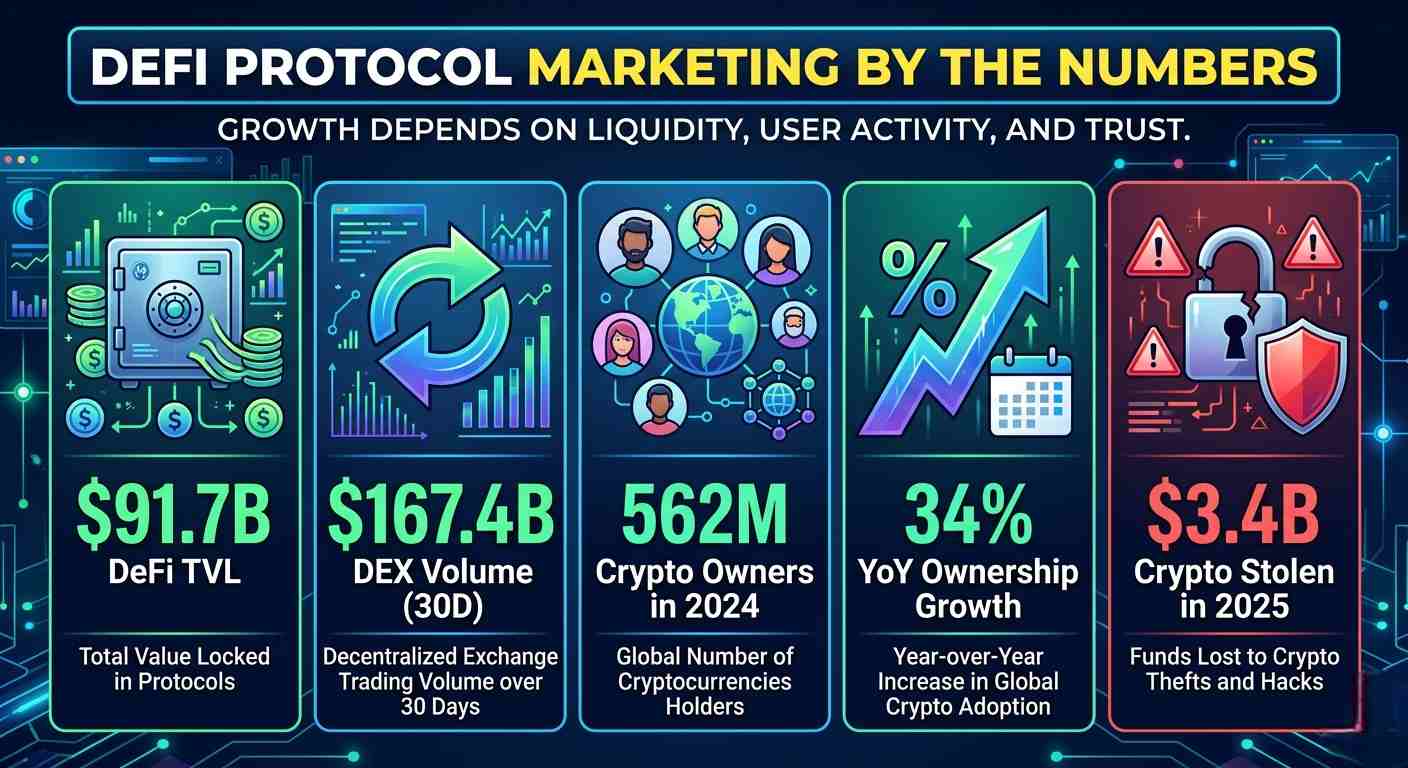
DeFi has become a crowded market, so protocols can no longer rely on novelty alone. Today, they compete for the same capital, wallets, and attention across thousands of protocols and hundreds of chains. DefiLlama reports around $91.7 billion in DeFi TVL and about $167.4 billion in DEX volume over the last 30 days, while Triple-A says global crypto ownership reached 562 million in 2024. In this environment, growth depends on two things: liquidity and active usage. Marketing helps protocols explain their value, attract attention, and turn interest into deposits, trades, and long-term activity.
This is harder in DeFi because users can join fast and leave just as fast. Trust must come from public proof such as audits, dashboards, community updates, and visible execution. Chainalysis reported more than $3.4 billion in crypto stolen in 2025, which shows why trust and security matter so much. That is why DeFi marketing is more than promotion. It is a growth system built around TVL, activation, retention, and revenue.
What Is DeFi Protocol Marketing? A Business Perspective
DeFi protocol marketing is how a decentralized finance product attracts users and capital through trust, education, incentives, and clear positioning. In simple terms, it helps a protocol get discovered, understood, used, and revisited. The real goal is not just traffic. It is meaningful on-chain activity such as wallet connections, deposits, liquidity, trading volume, governance participation, and revenue.
A strong DeFi marketing plan ties every campaign to a business result. Content explains the product and reduces confusion. Community efforts build trust and visibility. Token campaigns encourage first-time use. Partnerships expand reach. Retention messaging keeps users active after their first deposit or trade. Every channel should support one outcome: moving users closer to real participation.
Definition and Core Objectives
DeFi protocol marketing promotes a decentralized product to users who can access it directly from their wallets. To do this well, teams must explain the protocol clearly, show its value, address risk, and prove why it deserves capital over other options.
The main goals usually fall into four areas: liquidity acquisition, user onboarding, retention, and long-term growth. Protocols need capital in pools, vaults, or markets to stay useful. They need simple onboarding to turn interest into action. They need retention so users stay beyond short-term rewards. And they need steady growth in TVL, activity, governance, and fees.
Key Stakeholders in DeFi Marketing
DeFi marketing speaks to different groups with different priorities. Liquidity providers look for yield, safety, and risk clarity. Traders and yield farmers focus on speed, efficiency, and opportunity. Token holders want utility and reasons to stay involved. Institutions want stronger data, reporting, and risk controls.
Because of this, messaging must fit the audience. Retail users may respond to simple APY comparisons and guides. Governance users may care more about token utility and voting power. Institutions usually look deeper at liquidity, audits, and market structure.
Why DeFi Marketing Is Different
DeFi marketing works in a fast-moving, permissionless market. Users can join quickly and leave just as quickly. That makes trust essential. Unlike traditional finance, DeFi protocols must build confidence in public through audits, dashboards, documentation, governance transparency, and consistent execution.
Token incentives also make DeFi unique. Emissions, staking rewards, points, and governance rights can drive growth, but they can also attract short-term users. So marketing must do more than promote rewards. It must explain utility, timing, and long-term value.
Understanding the DeFi Growth Funnel
A DeFi protocol does not grow from traffic alone. It grows through a sequence of actions that starts with attention and ends with users keeping capital active in the product. That is why strong teams track a full growth funnel, not just clicks or impressions. In DeFi, the funnel usually moves from awareness to website visit, wallet connection, first deposit, active use, and repeat participation.
This funnel matters because users can leave at any step. A visitor may bounce in seconds. A wallet may connect but never deposit. A user may join for rewards and disappear after a week. So marketing must do more than attract attention. It must turn curiosity into action and action into habit.
The Modern DeFi Conversion Funnel
The funnel starts with awareness through search, social media, PR, partnerships, and community discussion. Then comes the website visit, where the protocol must explain its value quickly and clearly. After that, wallet connection shows intent, but real activation happens only when a user makes a deposit, stake, trade, or liquidity action.
The next goal is active usage. Protocols want users to return, claim rewards, rebalance, vote, borrow again, or trade more often. Retention is the final stage, and it drives lasting TVL, stronger market activity, and more stable revenue.
Key Metrics That Drive Growth
TVL is one of the first numbers teams track because it shows how much capital is deposited in the protocol. But TVL alone is not enough, since short-term incentives can inflate it. Teams also need to track cost per wallet acquisition, liquidity depth, utilization rate, and repeat usage.
Retention is often the clearest signal of strength. It shows whether users stay after rewards slow down and whether the protocol delivers lasting value instead of short-term attraction.
Mapping Marketing Channels to Funnel Stages
Different stages need different channels. At the top, SEO, PR, and content marketing build awareness and bring targeted traffic. In the middle, landing pages, community channels, and onboarding content help users understand the product and reduce friction.
At the bottom of the funnel, incentives and product experience influence conversion. Rewards, fee discounts, and partner campaigns can drive deposits, but strong UX matters just as much. A clear flow, simple messaging, and smooth wallet support often improve conversion more than hype alone.
Core Strategies to Attract Liquidity Providers
Liquidity providers are not passive spectators. They are capital allocators, and they compare every protocol against risk, yield, lock-up terms, and trust. That means a protocol cannot attract strong liquidity through promotion alone. It needs a compelling offer, a clear capital story, and proof that the team knows how to protect funds. Marketing must present that case in simple, credible language.
Yield Optimization and Incentive Design
Liquidity mining still works, but only when it supports a larger goal. A protocol can use token rewards to attract early liquidity, improve pool depth, and increase visibility. Yet reward programs fail fast when emissions are too high or the exit pressure starts early. Users join for the yield, collect rewards, and leave. That cycle creates shallow TVL and weak loyalty.
That is why teams now compare token rewards with real yield. Token rewards come from emissions. Real yield comes from actual protocol revenue, such as fees, interest spreads, or liquidation income. Many liquidity providers view real yield as more credible since it reflects business activity, not just token printing. Marketing should explain this difference clearly. It helps users see whether returns come from temporary subsidy or actual product demand.
Dynamic APY models can help keep programs sustainable. A protocol can adjust incentives based on usage, capital needs, or pool imbalance. That gives teams more control over costs and capital placement. It can raise rewards where liquidity is thin and lower them where TVL is already strong. Marketing should not present APY as a static promise. It should present yield as part of a capital model with clear rules and visible logic.
Trust and Security Positioning
For LPs, trust often matters as much as yield. Many users will accept a lower return from a protocol that feels safer and more transparent. That is why security messaging must be front and center. Audits, bug bounty programs, public code reviews, incident response plans, and reserve data all shape first impressions.
A strong protocol shows audit reports clearly and explains what those audits cover. It publishes risk disclosures in plain English. It tells users what can go wrong, what safeguards exist, and what limits remain. That level of honesty builds more confidence than vague claims about safety. Trust grows faster when teams speak plainly and back each statement with proof.
Proof of reserves, treasury visibility, and smart contract transparency add another layer. LPs want to know where the protocol stands, how funds move, and whether the team has handled risk with discipline. Security-first messaging should not read like fear marketing. It should show maturity. It tells the market that the protocol takes user capital seriously and plans for stress, not just growth.
Institutional Liquidity Strategies
Large liquidity providers play by different rules. Funds, market makers, and high-net-worth allocators look past headline APY and study execution details. They want data access, deeper reporting, operational support, and capital terms that fit larger position sizes. A DeFi protocol that wants institutional liquidity must market itself with that audience in mind.
Partnerships with crypto funds, market makers, and treasury managers can bring immediate credibility. These groups can seed pools, support liquidity depth, and attract smaller LPs who follow large capital. Publicizing these relationships can help, but the messaging should stay precise. Institutions care less about hype and more about infrastructure, governance standards, and risk controls.
API integrations and advanced tools matter too. Large providers often want dashboards, reporting layers, fast execution tools, and stable access to market data. Protocols that offer this can stand out from retail-first competitors. Custom incentives can seal the deal. These can include volume-based rewards, longer lock bonuses, treasury partnerships, or co-marketing campaigns tied to capital commitments. The message is simple: large LPs want more than yield, and the protocol must speak their language from the first touchpoint.
Want to grow your DeFi protocol faster?
Bring in more liquidity providers and active users with a marketing plan built for DeFi growth.

Proven Tactics to Acquire DeFi Users
User growth in DeFi comes from a mix of trust, education, timing, and product value. Users usually do not deposit after one brand impression. They read, compare, ask questions, and watch how a team acts in public. That is why strong acquisition strategies combine content, community, creator partnerships, and incentives.
SEO and Content Marketing
SEO helps protocols reach users who are already searching for DeFi solutions. Good content includes guides, explainers, comparison pages, and risk-focused articles. These pages answer real questions and move readers toward product use. Comparison content works especially well because users often compare protocols on yield, fees, security, and chain support. Search traffic also compounds over time, which makes SEO a durable growth channel.
Community-Led Growth
Community is a major growth engine in Web3. Users often judge a protocol by its Discord, Telegram, or X presence before using the product. Fast replies, clear updates, and visible team activity build trust. AMAs, governance calls, and small reward events can deepen engagement. Strong moderation also matters because scam prevention and public security updates help protect user confidence.
Influencer and KOL Marketing
Influencer marketing can drive reach, but audience fit matters more than follower count. Smaller creators with focused DeFi audiences often perform better than large general accounts. Strong campaigns track results such as wallet connections, deposits, retention, and fees, not just views or likes. The best approach often mixes paid promotion with genuine organic advocacy.
Airdrops and Incentivized Campaigns
Airdrops can quickly attract users, but they also risk bringing in short-term participants. The best campaigns reward meaningful actions such as deposits, swaps, votes, or repeat use. Gamified systems like quests and milestone rewards can keep users engaged longer. Still, teams need to manage token dilution carefully and plan for retention after incentives end.
Pre-Launch vs Post-Launch Marketing Strategies
DeFi marketing changes across a protocol’s lifecycle. What works before launch often fails after. Early-stage teams focus on attention and trust, while live protocols focus on deposits, usage, and retention. Strong teams treat these as two separate phases.
Pre-Launch Marketing: Awareness and Community
Before launch, there is no product data, so marketing focuses on education and credibility. The whitepaper explains the concept, but teams must turn it into simple content like posts, threads, videos, and interviews.
Waitlists and beta programs help capture early users and feedback. These users often become strong advocates. PR, partnerships, and media mentions also help build trust and expand reach before launch.
Post-Launch Marketing: Adoption and Retention
After launch, users expect proof. Marketing shifts from promises to real results like TVL, activity, and product updates. Liquidity campaigns and rewards help attract early deposits, but they must be clear and easy to use.
Product updates drive ongoing growth. New features, pools, or changes should be shared clearly to show progress. Retention becomes critical through emails, notifications, community updates, and user education.
Key Differences
Pre-launch marketing builds awareness and community. Post-launch marketing drives usage and retention. The first phase sells the idea, while the second proves real value. Successful teams plan this shift early and adjust messaging based on real user activity.
Need better user traction for your protocol?
Tools and Technologies for DeFi Marketing Success
DeFi marketing works best with clear data and fast feedback. Teams need to know where users come from, what they do on-chain, and what makes them return. Guesswork wastes budget. Strong tooling gives teams a sharper view of traffic, wallet activity, retention, and campaign performance.
The right stack does more than collect numbers. It helps teams spot drop-offs, test offers, and react faster. A protocol that tracks user behavior well can change a landing page, adjust rewards, or fix onboarding friction before growth slows.
Analytics and Tracking Tools
On-chain analytics platforms sit at the center of DeFi marketing data. These tools show wallet flows, TVL changes, pool activity, token movements, and protocol usage. They help teams see which campaigns drive deposits, which pools attract capital, and which wallets stay active after the first touch. This matters in DeFi, where the real conversion event often happens on-chain, not inside a normal web app.
User behavior tracking tools add another layer. Website analytics can show which pages attract the most visits, where users leave, and how many reach the wallet connect step. Heatmaps, session recordings, and event tracking can reveal small UX issues that block deposits. A confusing call-to-action or a weak trust section can reduce conversion fast. Strong tracking helps teams fix those issues with evidence, not instinct.
The best teams connect off-chain and on-chain data. They track the path from article visit to landing page click, then from wallet connection to deposit and repeat use. That full view helps them judge which channel brings real users, not just empty traffic.
Marketing Automation for Web3
Marketing automation gives DeFi teams more control over follow-up and retention. A visitor who reads a guide, joins a waitlist, or starts onboarding should not disappear into silence. Smart workflows can keep that person engaged with the next message at the right time.
CRM systems adapted for crypto can help teams organize contacts, segment users, and track campaign history. In DeFi, segments often look different from Web2. A team may group users by wallet status, chain activity, LP behavior, governance participation, or deposit size. That allows more precise messaging. A new user needs onboarding content. A dormant LP needs a reason to return. A governance voter needs a proposal alert.
Automated campaigns can support these stages. Teams can send product updates, staking reminders, governance prompts, quest announcements, and reactivation messages through email, push alerts, social channels, or community bots. The point is simple: keep users engaged without turning every campaign into manual work.
Growth and Community Tools
Community growth needs its own tool set. Discord bots can handle role assignment, quest tracking, moderation, and event reminders. Governance tools can help users vote, delegate, and follow proposals with less friction. These tools matter since a strong community often drives the first wave of trust in DeFi.
Referral and affiliate systems can push user growth further. A good referral program gives current users a reason to invite others, and it makes those invites measurable. Teams can track which partners, creators, or community members bring new wallets, deposits, and repeat usage. That turns word-of-mouth into a channel with clear data.
The value of these tools comes from fit, not volume. A protocol does not need every new app on the market. It needs a stack that tracks behavior, supports communication, and helps the team act fast.
Organic vs Paid DeFi Marketing: What Works Best?
This is one of the biggest questions in DeFi marketing. Should a protocol focus on organic growth or pay for reach? The best answer is not one or the other. It is knowing what each channel does best and where each one fits in the growth cycle.Organic channels build trust and lasting visibility. Paid channels create faster reach and campaign momentum. A protocol that knows how to use both can grow with more control and less waste.
| Aspect | Organic Marketing Channels | Paid Marketing Channels |
|---|---|---|
| Core role | Builds trust, visibility, and steady long-term growth | Creates fast reach, awareness, and campaign momentum |
| Main strength | Compounds over time and keeps delivering value after the campaign ends | Delivers speed and supports time-sensitive growth pushes |
| Best for | Education-heavy products that need user trust and context before commitment | Launches, staking events, token listings, liquidity campaigns, and short-term promotions |
| Common channels | SEO, content marketing, social media, blog posts, educational threads, community engagement | Crypto ads, creator sponsorships, newsletter placements, exchange promotions, paid community pushes, retargeting |
| Time to results | Slower to build, but stronger over the long term | Faster to activate, but often short-lived without follow-up |
| Cost efficiency | Often lowers acquisition cost over time as content and brand authority grow | Can be effective for quick gains, but costs can rise fast without strong targeting and conversion setup |
| Best stage of growth | Early-stage protocols building brand, trust, and foundational visibility | Live protocols that need quick traffic, momentum, or support for a specific campaign |
| Overall value | Creates long-term durability | Creates short-term speed |
Conclusion
DeFi protocol marketing works best when it connects trust, education, liquidity growth, and user retention into one clear plan. Protocols that speak to the right audience, track real on-chain actions, and build strong community ties have a better chance of growing TVL and keeping users active over time. From SEO and content to incentives, analytics, and lifecycle campaigns, every part of the strategy should push toward steady adoption and stronger protocol revenue. For businesses that want to grow faster in this space, Blockchain App Factory provides DeFi marketing services that help attract liquidity providers, acquire users, and build long-term protocol visibility.

Vimal J is the Head of Sales at Blockchain App Factory, with 10+ years of experience in sales, client strategy, and Web3 business growth. He helps startups, enterprises, and project founders choose the right blockchain solutions for their goals, bringing a practical market perspective to topics like token development, crypto launches, and Web3 adoption.
Article Reviewed by:
Arun Kamala Santhanath
Marketing Head, Blockchain App Factory


