Key Insights
- Real estate tokenization gives crypto entrepreneurs a practical way to enter the market with asset-backed digital investments. It connects blockchain with property value, rental income, and fractional ownership.
- A successful tokenization business needs the right legal structure, token model, blockchain network, and smart contracts. Skipping these steps can create compliance, security, and investor trust issues.
- Growth depends on clear deal structuring, strong investor communication, and a focused go-to-market plan. Entrepreneurs who start with one solid project can expand into a wider real estate token portfolio.
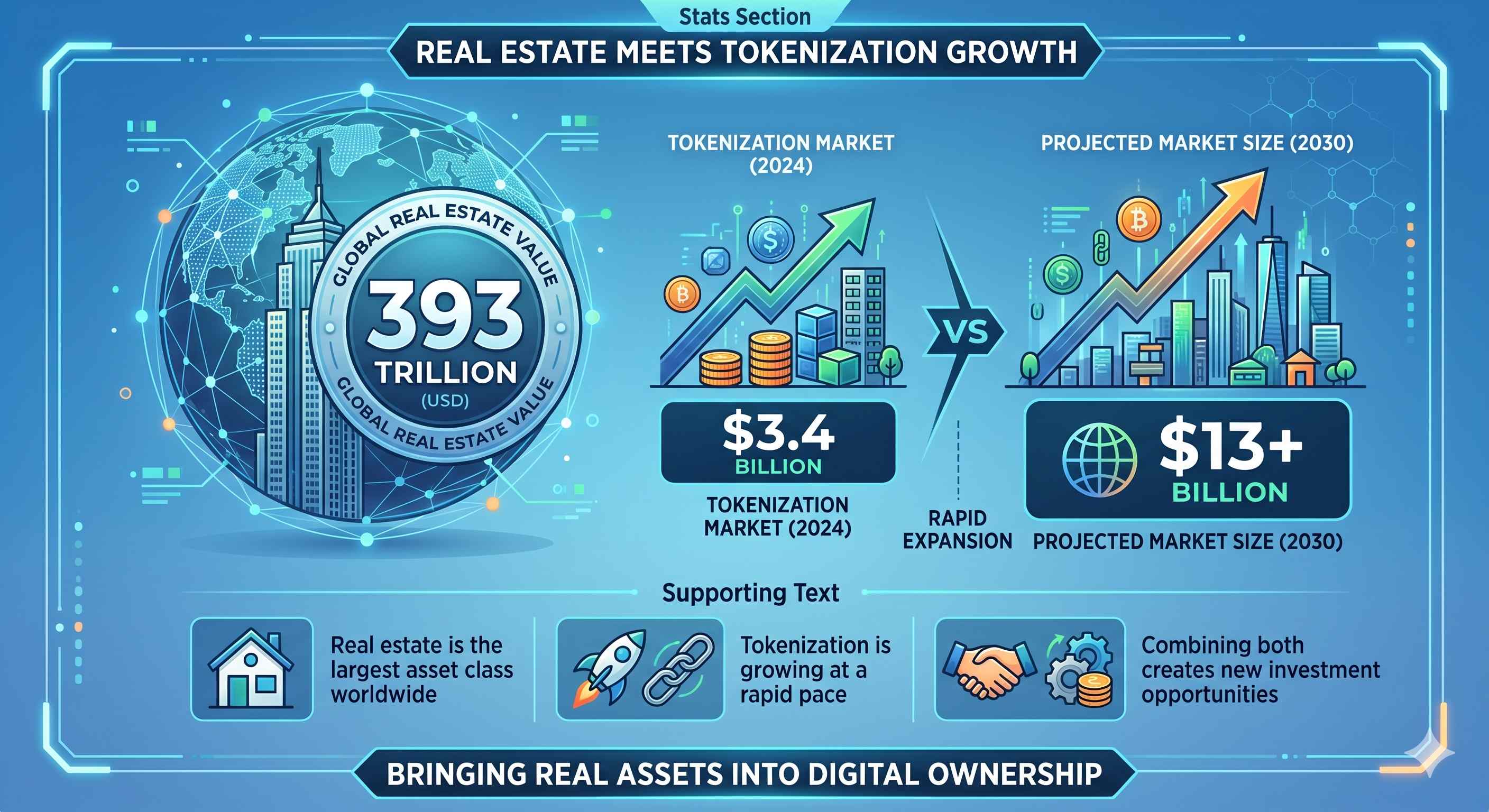
Real estate is not just a large market. It is the biggest store of wealth in the world. Recent estimates place global real estate value at around 393 trillion dollars. That is far larger than the total crypto market. At the same time, the tokenization market is growing fast, with projections rising from about 3.4 billion dollars in 2024 to over 13 billion dollars by 2030.
When these two areas come together, the result feels more practical. Instead of buying tokens with no real backing, investors hold digital shares linked to actual buildings, land, and rental income. This connection makes the concept easier to understand and trust.
This link changes how people view digital assets. A person may not fully understand crypto tokens, but they understand property. They know how rent works. They know property prices move over time. That familiarity reduces hesitation and builds confidence.
A Safer Bet Compared to Pure Crypto Volatility
Crypto prices can change within hours. This attracts traders but can discourage long-term investors. Real estate behaves differently. Prices move at a slower pace, and rental income provides regular cash flow.
Tokenization brings this steady nature into a digital format. Investors still face risk, but it is tied to something tangible. That balance makes the investment feel more stable.
Why 2026 Is the Right Time
The environment today looks very different from a few years ago. Governments have started to define rules for digital assets. More platforms now support tokenized investments. People understand wallets and exchanges better than before.
This creates a window of opportunity. The market has matured enough to reduce confusion, yet it still offers room for early entrants to grow.
Building a Business Around Real Assets
Tokenization is not limited to investing. It opens multiple business paths. You can list properties, manage investor access, or provide services such as compliance and marketing.
Each property can generate income through rent, fees, and transactions. Instead of chasing short-term trends, you build a model around assets that people already value.
Understanding the Business Model Behind Tokenized Real Estate
Turning Property Into Digital Shares
Tokenization breaks a property into small digital units. Each unit represents a fraction of ownership. A building worth one million dollars can split into thousands of tokens. Investors buy these tokens based on their budget.
This method lowers the entry barrier. Someone who cannot afford full property ownership can still take part. It works in a way that feels similar to buying shares in a company.
How Money Is Made in This Model
Revenue comes from several streams, not just one. A well-structured project often includes:
- Fees when investors buy or sell tokens
- A share of rental income paid to token holders
- Gains when property value increases
- Charges for listing and managing assets
These streams create both short-term and ongoing income. A single project can keep earning long after launch.
B2B vs B2C Approaches
You can serve individual investors or businesses. A B2C model focuses on people who want to invest small amounts. This requires simple design and clear communication.
A B2B model works with property developers or real estate firms. You provide the system they use to tokenize assets. Fewer clients are involved, but each deal carries higher value.
Recurring Income vs One-Time Gains
Some businesses earn from launching projects and move on. Others build systems that keep generating income over time. Rental payouts, platform fees, and trading activity create repeat earnings.
Think of it like owning a rental property instead of selling it. One gives a quick return. The other builds income month after month.
Identifying High-Value Opportunities in the Tokenization Space
Spot Markets Others Ignore
Not every region gets equal investor attention. Some cities show rising property demand but lack easy access to funding. This gap creates a clear opening. Tokenization allows you to connect global investors with these markets.
Focus on places where prices show steady growth and rental demand stays consistent. For example, tier-2 cities in Asia or Eastern Europe often fit this pattern. Local buyers may struggle with funding, yet international investors see value. That gap is where tokenized assets can perform well.
Choose the Right Property Type
Each property type behaves differently. Your choice should match your investor profile and return expectations.
- Residential units bring steady rental income and lower vacancy risk
- Commercial spaces can yield higher returns but depend on business tenants
- Mixed-use projects spread risk across residential and commercial income
Keep your structure simple. Investors prefer clarity over complex asset mixes.
Balance Emerging and Developed Markets
Emerging markets attract attention due to lower entry costs. A property priced at $80,000 in one region may cost five times more in another. This difference allows higher percentage returns.
Yet risks exist. Currency changes and local regulations can affect profits. Developed markets provide more stability and clear legal systems. Returns may look lower, but predictability is higher.
A balanced portfolio often works best. Mix stable assets with higher growth opportunities to spread risk.
Look at Niche Segments With Clear Demand
Some segments attract focused investor interest. These niches often show consistent demand and strong pricing power.
- Co-living spaces for young professionals in urban areas
- Short-term rentals in tourist cities with high occupancy rates
- Fractional ownership of luxury villas or premium apartments
These segments attract investors who look for specific returns. A clear niche helps you build a focused investor base and repeat participation.
Choosing Your Role in the Tokenization Ecosystem
Start With What You Do Best
The tokenization space offers multiple entry points. You do not need to handle everything at once. The first step is to decide where your strengths lie. This decision shapes your time, cost, and risk.
Asset Owner: Use What You Already Have
If you own property, you already hold an advantage. You can divide ownership into tokens and sell portions to investors. This method helps raise funds without selling the full asset.
It works well for developers who want to fund new projects or reduce debt. Instead of waiting years for returns, you bring in capital early.
Platform Builder: Create the System
If your strength lies in technology, building a platform can be a strong move. You provide the tools that allow others to tokenize property. Revenue comes from usage fees, subscriptions, or service charges.
The challenge is trust. Property owners and investors must believe in your system. Once they do, growth can follow quickly.
Marketplace Operator: Focus on Trading Volume
A marketplace connects buyers and sellers of property tokens. Your goal is to keep activity high. More trades mean more fees.
Liquidity becomes your focus. Investors want to enter and exit positions without delay. A smooth trading experience keeps users active.
Service Provider: Support the Growing Market
Many businesses succeed without owning property or building platforms. Service providers fill important gaps.
- Legal structuring and compliance
- Smart contract development
- Marketing campaigns and investor outreach
- Property valuation and due diligence
These services remain in demand as more projects enter the space. A focused service business can grow steadily.
Hybrid Model: Combine Roles With Care
Some entrepreneurs combine roles to increase earnings. You might own assets and run a platform. You might provide services and operate a marketplace.
This path can increase revenue streams, but it requires a capable team. Managing multiple roles adds complexity. Start small, then expand once your base is stable.
Legal Strategy: Structuring a Compliant Crypto Real Estate Business
Why Legal Planning Deserves Early Attention
Legal work is not something to delay. In tokenized real estate, one mistake can stop your project. Regulators often treat these tokens as investment products. That means strict rules apply from day one.
If you skip this step, problems appear later. You may face fines, blocked transactions, or even a shutdown. A clear legal setup protects both your business and your investors.
Security vs Utility Tokens
Start with token classification. This decision affects everything that follows.
- Security tokens represent ownership or profit rights
- Utility tokens give access to a service or platform
Most real estate tokens fall under the security category. They promise income or asset ownership. That places them under investment laws. You need proper registration, disclosures, and investor checks.
Choose a Jurisdiction That Supports Your Model
Your business location affects operations, taxes, and investor access. Some countries offer clear rules for digital assets. Others still lack guidance or impose strict limits.
Entrepreneurs often choose regions with defined crypto laws and investor protection. This helps attract global investors who look for safety and clarity before committing funds.
Handle Cross-Border Investments With Care
Tokenization allows investors from different countries to join a single project. That sounds simple, but each country has its own rules.
You need to think about:
- Tax reporting for different regions
- Who is allowed to invest
- Currency exchange and transfer limits
Ignoring these details creates delays and legal risks. Proper planning avoids future issues.
KYC and AML Checks Are Required
Identity checks play a big role in investor onboarding. You must verify who invests in your project and where funds come from.
These checks help prevent fraud and illegal activity. They also build trust. Investors feel safer when they know the platform follows strict rules.
Work With Legal Experts From the Start
Legal work can feel complex, but handling it alone is risky. A legal team can guide you through setup, documentation, and compliance steps.
The cost may seem high at first. Yet it is far lower than fixing mistakes later. A proper structure makes your business easier to manage and more attractive to investors.
Ready to turn your real estate into digital investment assets?
Take the next step with a team that understands both real estate and blockchain. From planning and compliance to launch and investor onboarding, get the support you need to bring your project to life.

Building a Tokenization Infrastructure That Can Grow With You
Understand the Basic Setup
A tokenization system involves more than one tool. Each part plays a role in daily operations.
- A blockchain network where tokens exist
- Smart contracts that handle ownership and transactions
- A dashboard for investors to view holdings and returns
- Payment systems for buying tokens and receiving income
All parts must work together without delays. A smooth system improves investor experience and reduces support issues.
White Label or Custom Build
You have two main options when starting.
- White label platforms allow quick launch with less technical effort
- Custom builds give more control but require time and skilled developers
A ready solution works well for early testing. It helps you launch faster and gather feedback. As your business grows, a custom system may offer better flexibility.
Connect Wallets and Payment Systems
Investors need simple ways to manage funds. Your platform should support digital wallets for storing tokens. It should also accept payments through crypto and, if possible, traditional methods like bank transfers.
If trading is part of your model, you need links to exchanges or an internal trading system. Easy access keeps users active.
Focus on Security at Every Step
Security affects trust. A weak system can damage your reputation in a single incident.
Key areas to protect include:
- Smart contracts through regular audits
- User accounts with secure login systems
- Data storage to prevent leaks
- Protection against hacking attempts
Investors expect their funds and data to stay safe. Strong security builds confidence.
Plan for Growth Early
Your first project may involve one property and a small group of investors. Growth can change that quickly. More users and assets increase system load.
Ask yourself early. Can your system handle ten times the activity? Planning ahead saves time and cost later. Fixing issues after growth becomes harder and more expensive.
Selecting the Right Blockchain for Business Growth
Match the Network With Your Business Goals
Choosing a blockchain shapes how your project runs day to day. It affects costs, investor experience, and even how people view your brand. A low-cost network may look appealing, but trust plays a big role. Investors often prefer networks they already know.
At the same time, high fees can push users away. If a small investment comes with high transaction costs, many will hesitate. You need a balance between trust and usability.
Compare Popular Blockchain Options
Several networks support real estate tokenization. Each one serves a different need.
- Ethereum has a large user base and strong developer support
- Polygon offers lower fees and faster transactions
- Solana focuses on speed and high throughput
- Avalanche supports flexible project setups
- BNB Chain provides cost efficiency and active users
Your choice depends on your audience and budget. A network that works for one project may not fit another.
Keep an Eye on Fees and Speed
Transaction cost plays a direct role in user experience. A person investing a small amount should not lose a big portion to fees. Fast transaction times also matter. Delays can frustrate users and reduce activity.
Simple rule. If the process feels slow or expensive, users will look elsewhere.
Think About Multi-Chain Expansion
Starting with one network keeps things simple. As your user base grows, you may consider adding support for other chains. Some investors prefer one network over another based on cost or familiarity.
A multi-chain setup can widen your reach. Still, adding too many options early can create confusion. Start with what your audience trusts, then expand step by step.
Choose a Network That Will Last
Real estate projects often run for years. Your blockchain should support that timeline. Look at factors such as:
- Active developer community
- Security record
- Liquidity and user activity
- Support from institutions
You are not just picking a network for today. You are choosing where your project will live long term.
Structuring Deals That Attract Investors
Present the Property Like a Clear Investment
Investors look at numbers before anything else. Your property should feel like a well-structured deal, not just an idea. Share details such as location, valuation, rental income, and expected returns.
Clarity builds confidence. If investors understand the numbers, they are more likely to move forward.
Keep the Offer Simple
Complex structures slow down decisions. A good deal answers one basic question fast. What will the investor gain?
Explain ownership in simple terms. Show how income is shared. Outline how and when returns are paid. The easier it feels, the quicker people act.
Set the Right Pricing Model
Token pricing depends on the total value of the property and your target audience. You can split ownership into many small units or fewer large ones.
- Smaller units attract retail investors
- Larger units appeal to institutions
Your pricing should match the group you want to reach. A mismatch can limit participation.
Build Trust With Fair Terms
Returns matter, but so does protection. Investors want to know how their money is handled. Clear terms help build that trust.
- Regular updates on income and performance
- Fixed payout schedules
- Voting rights for major decisions
- Defined rules for resale
When expectations are clear, investors feel more comfortable.
Be Honest About Risk
Every investment carries risk. Real estate includes factors such as vacancy, maintenance costs, and market shifts. Ignoring these points can damage credibility.
State the risks clearly. This builds respect and shows professionalism. Investors prefer honest projects over exaggerated promises.
Designing Profitable Tokenomics for Real Estate Projects
Keep Token Design Simple and Clear
Tokenomics defines how your token works financially. In real estate, it should feel straightforward. Each token must represent something clear, such as ownership share, rental income, or profit rights.
If investors need too much time to understand the model, they may lose interest. Keep it simple. A clear structure builds confidence and speeds up decisions.
Set Token Supply Based on Real Value
Start with the property’s actual value. Then divide it into tokens that match your funding goal. For example, a one million dollar asset can split into 100,000 tokens priced at ten dollars each.
Avoid creating excess supply. Too many tokens can reduce perceived value and make pricing harder to manage. Keep supply aligned with the asset and your long-term plan.
Distribute Tokens in a Fair Way
Token allocation matters. Investors want to know who holds what and why.
Common distribution groups include:
- Public or private investors
- Founders and project operators
- Property owners
- Advisors or partners
- Reserve pool for future use
Balance is important. If insiders control too much, investors may worry about sudden selling or lack of fairness.
Define Revenue Flow Clearly
Income is a major reason investors join these projects. Make sure the flow of funds is easy to understand.
- Rental income distribution schedule
- Profit share from property sale
- Expenses deducted before payouts
State these points clearly. Investors should know when they get paid and how amounts are calculated.
Reward Early and Long-Term Participation
Early investors take more risk. Offering incentives can help attract them.
- Discounted entry price
- Bonus tokens
- Priority access to future listings
Long-term holders can receive benefits such as reduced fees or voting privileges. Keep rewards balanced so they do not reduce overall value.
Add Governance Without Slowing Decisions
Some level of investor voting can improve engagement. It works well for major actions like selling a property or changing management.
Keep it limited. Too many voting steps can slow operations and create delays.
Protect Against Dilution
Dilution reduces value when too many tokens enter the market. Set clear rules from the start.
- Fix total supply or define limits
- Avoid frequent new token releases
- Protect investor ownership rights
A stable structure helps maintain trust and keeps pricing steady.
Creating and Auditing Smart Contracts for Trust and Automation
Let Code Manage Daily Operations
Smart contracts act as the system that runs your project. They record ownership, process transactions, and distribute income. Once deployed, they follow fixed rules without manual control.
For example, rental income can be shared with token holders automatically. No manual calculations are needed.
Automate Key Functions
A strong smart contract handles multiple tasks at once:
- Track ownership and transfers
- Distribute rental income or dividends
- Apply compliance checks before transactions
- Record all activity for audit purposes
Automation reduces delays and lowers the chance of human error.
Audit Contracts Before Launch
Even a small issue in code can lead to losses. External audits help prevent this. Security firms review the contract and test for weaknesses.
Fixing issues early is far easier than dealing with problems after launch. This step protects both your funds and your reputation.
Reduce Operational Effort Over Time
Once contracts are active and tested, they require less manual input. You do not need a large team to handle routine tasks.
This reduces running costs and allows you to focus on growth and new projects.
Build Trust With Open Access
Investors value clarity. When contracts are visible and transactions are recorded on-chain, they can verify details themselves.
They can check ownership, payments, and activity without relying on reports. This level of access builds confidence and encourages long-term participation.
Raising Capital: Funding Your Tokenization Venture
Choose the Funding Path That Fits Your Stage
Every project starts with one question. Where will the money come from? The answer depends on your stage and risk level.
You have a few common paths:
- Bootstrapping with personal funds or early revenue
- Venture capital from crypto or fintech investors
- Token sales where investors buy into your project
Bootstrapping gives full control but limits growth speed. Venture capital can bring large funding, yet it often involves giving up a share of the business. Token sales can attract a wide group of investors, but they require careful legal setup and planning.
Structure Your Token Offering With Care
If you choose token sales, structure matters. You need to decide how and when tokens will be sold.
- Private sales target early investors with better pricing
- Public sales open access to a larger audience
Timing plays a big role. Launch too early, and you may struggle to gain trust. Wait too long, and you may lose momentum. Pricing and allocation must feel fair to all participants.
Attract the Right Investors
Not all investors look for the same thing. Some want stable income and low risk. Others look for growth and early access.
- Institutional investors focus on compliance and steady returns
- Retail investors look for easy access and clear potential
Your pitch should match your audience. Clear communication builds trust and helps investors make quick decisions.
Tell a Story That People Understand
Numbers alone do not convince people. They need a reason to believe in your project.
Explain why your platform exists. Show the problem you solve. Connect real estate value with digital access. Keep the message simple and honest. When people understand the idea, they are more willing to invest.
Go-to-Market Strategy for Crypto Entrepreneurs
Stand Out With a Clear Identity
The crypto space is crowded. Many projects sound similar, which makes it hard to gain attention. Your brand needs a clear direction.
Decide your focus early. Are you offering affordable property access? High-end real estate? Cross-border investment? Pick one and stay consistent. A focused message is easier to remember.
Define What Makes You Different
Every project claims to offer value. Few explain it clearly. Your message should answer one simple question fast. Why should someone choose your platform?
This could be:
- Lower entry cost for investors
- Better property selection
- Simple user experience
- Clear legal structure
Keep it direct. If people understand your value within seconds, you have their attention.
Build Trust Through Content
People invest in what they understand. Content helps bridge that gap.
You can use:
- Blog articles that explain your model
- Short videos that show how the platform works
- Webinars that answer common questions
- Case studies that show real examples
Over time, this builds credibility. Investors feel more confident when they see consistent information.
Launch With a Clear Plan
A launch should guide people step by step. Start with early access or a waiting list. This builds interest before the full release.
You can also create limited offers to bring in early investors. Clear communication is important here. People should know what to do and when to act.
Keep Users Engaged After Launch
The work does not stop once your platform goes live. Regular updates keep users interested.
- Add new property listings
- Share performance updates
- Engage with your community
Active users are more likely to invest again. A strong community builds long-term growth.
Step-by-Step Execution Plan for Entrepreneurs
Start With Validation, Not Assumptions
Every successful project begins with a simple check. Does your idea actually solve a real problem? Before spending money, test your concept with real people.
You can do this in practical ways:
- Create a basic landing page and track interest
- Run small surveys with potential investors
- Present your idea in communities and gather feedback
If people show interest or commit early, that is a positive sign. If not, adjust your idea before moving forward.
Choose a Focused Business Model
Once your idea shows demand, decide your role. You might tokenize your own property, build a platform, or offer services. This decision affects your costs, team, and timeline.
Keep it simple at the start. A focused model is easier to manage and test. You can expand later once your base is stable.
Set Up Legal and Compliance Early
Legal work comes before launch, not after. Define your token type, investor rules, and business structure.
Set up:
- KYC checks for investor identity
- AML procedures for fund tracking
- Proper documentation for ownership and rights
A clear setup builds trust and avoids future issues.
Build or Choose Your Technology Stack
Now you move into execution. Decide whether to use an existing platform or build your own system.
Focus on the basics first:
- Token creation and tracking
- Investor dashboard
- Payment and wallet connection
Do not try to add too many features at once. A simple system that works well is better than a complex one with issues.
Secure and Structure Real Estate Assets
Your project depends on the quality of your assets. Choose properties that show stable income or growth potential.
Then structure them properly:
- Use legal entities to define ownership
- Document every detail clearly
- Set clear rights for investors
Investors need to know exactly what they are buying.
Launch With Clear Messaging
When your setup is ready, move to launch. Explain the opportunity in simple terms. Show how the investment works and what returns investors can expect.
Use a mix of content, outreach, and community engagement to attract attention. Early traction helps build momentum.
Grow Step by Step
After your first project, focus on steady growth. Improve your platform, add new properties, and strengthen investor relationships.
Do not rush expansion. Each new project gives you a chance to refine your process. Over time, this approach can turn a single property into a full portfolio.
Conclusion
Real estate tokenization brings together the reliability of property investment and the flexibility of digital assets. It allows entrepreneurs to enter the crypto space with a model that people already understand and trust. From choosing the right role to setting up legal structure, building technology, and attracting investors, each step plays a part in long-term success. The process may look complex at first, but with the right planning, it becomes manageable and rewarding. If you are ready to move forward, Blockchain App Factory provides Real Estate Tokenization Services that help you turn property assets into compliant and investor-ready digital offerings.

Vimal J is the Head of Sales at Blockchain App Factory, with 10+ years of experience in sales, client strategy, and Web3 business growth. He helps startups, enterprises, and project founders choose the right blockchain solutions for their goals, bringing a practical market perspective to topics like token development, crypto launches, and Web3 adoption.