Key Insights
- Real estate tokenization helps property owners reach more investors by dividing assets into smaller digital shares. This makes real estate investment more accessible and easier to manage online.
- A successful token offering needs proper legal planning, smart token economics, and a reliable investor platform. These elements help build trust and reduce launch risks.
- Marketing should focus on simple messaging, investor education, and regular updates. Clear communication can turn early interest into long-term investor confidence.
Real estate has always been one of the most trusted asset classes. People like it because they can see it, rent it, value it, and pass it on. The problem is access. Buying property needs large capital, legal work, bank checks, and months of waiting. Many investors want real estate exposure, but they do not want to buy a full apartment, office, or rental unit.
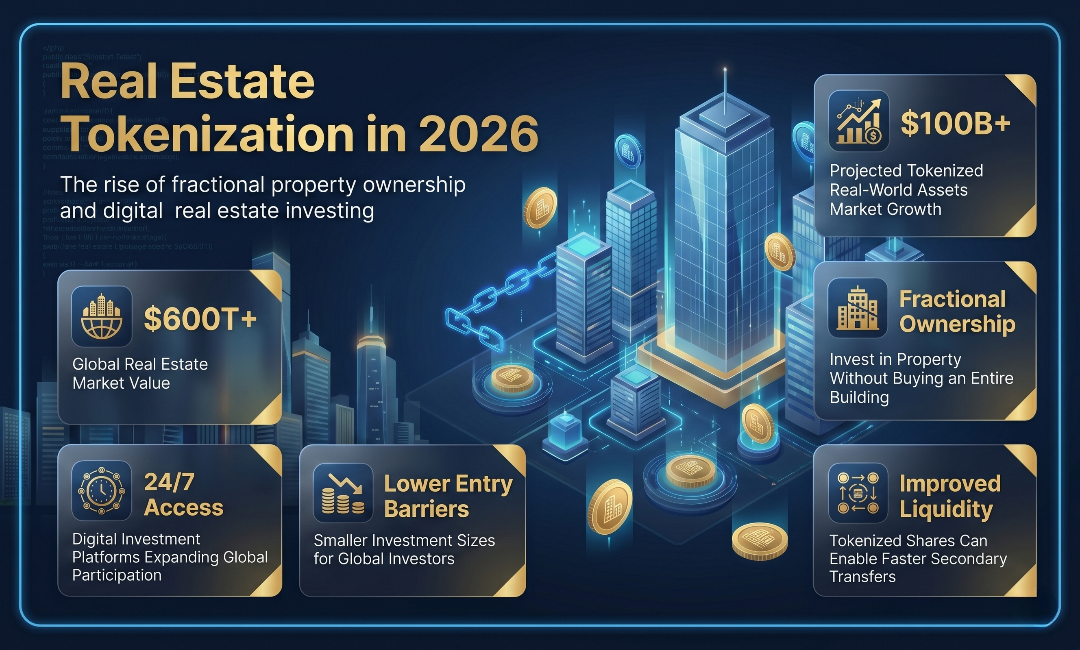
Real estate tokenization answers that problem with digital ownership. A property can be divided into small digital units, and investors can buy a portion based on their budget. A person no longer needs to buy an entire building to take part in the opportunity. They can own a smaller share and still benefit from rental income or future resale value.
From Traditional Property Ownership to Digital Access
Traditional real estate investment works well for wealthy buyers and large firms. It does not work as easily for small investors. High entry costs keep many people away. Paperwork slows the process. Legal checks take time. Exit options are limited.
Tokenized real estate gives investors a simpler way to enter the market. The property is linked to digital tokens. Each token represents a defined interest in the asset or the entity that owns it. Investors can review the offer online, complete identity checks, and purchase tokens through a digital platform.
This model does not remove the need for legal work or proper asset checks. It changes how investors access the deal. The process becomes easier to understand, easier to join, and easier to manage online.
Making Real Estate More Liquid
Real estate is valuable, but it is not easy to sell quickly. A property owner may wait months to find a buyer. Price negotiations can take longer. Legal transfer can slow things down again. This is why real estate is often called an illiquid asset.
Tokenization gives investors a better exit path. Instead of selling the full property, investors can sell their tokenized share through an approved marketplace or transfer system, subject to legal rules. This gives them more flexibility than traditional ownership.
For project owners, this can make the offer more attractive. Investors like income, but they also care about exit options. A token offering that explains liquidity rules in plain language can gain more trust from the start.
Understanding Investor Behavior in 2026
Investors in 2026 are more selective. They want access, control, and easy tracking. They do not want long forms, hidden fees, or confusing terms. They want to know what they are buying, how returns work, and how they can exit.
Many investors now compare property tokens with stocks, REITs, crypto assets, and private real estate deals. They look for lower entry amounts, verified property data, rental income potential, and access to markets outside their home country.
This change in behavior is pushing real estate companies to rethink fundraising. A token offering can appeal to investors who want property-backed value without the burden of full ownership.
Who Should Launch a Real Estate Token Offering
A real estate token offering suits property developers, asset managers, real estate investment firms, and property owners who want access to a wider investor base. It can also help startups raise funds for property-backed projects.
The model works best for businesses with a real asset, proper legal structure, sound financial planning, and a serious investor communication plan. Tokenization is not a shortcut for weak property deals. It works when the asset, documents, pricing, and investor rights are presented with care.
Understanding Real Estate Tokenization in Plain Terms
Real estate tokenization means dividing property rights into digital tokens. These tokens are recorded on a blockchain and sold to investors. Each token can represent ownership rights, income rights, debt rights, or another legally defined interest.
The idea sounds technical, but the logic is simple. A property is too expensive for many investors to buy alone. Tokenization divides the investment into smaller parts. More people can join, and the project owner can raise funds from a broader market.
What Real Estate Tokens Actually Represent
A real estate token is not just a random digital coin. It must be connected to a real asset, legal agreement, or investment structure. The token may represent a share in a company that owns property. It may represent a right to rental income. It may represent repayment rights under a loan structure.
The exact meaning depends on how the offering is structured. That is why legal planning matters from the beginning. Investors must know what the token gives them and what it does not give them.
Explaining Fractional Ownership
Fractional ownership means several investors share rights in one asset. Instead of one person buying a property worth $1 million, the asset can be divided into many smaller units. An investor can buy a small portion and take part at a lower entry amount.
This makes real estate more accessible. A new investor can start with a smaller budget. A seasoned investor can spread money across multiple properties. The project owner can reach more investors without selling the entire asset to one buyer.
Fractional ownership also makes portfolio building easier. Investors can choose different property types, cities, and income models. This gives them more control over how they spread risk.
Differentiating Equity and Debt Tokens
Equity tokens give investors an ownership-linked interest. They may receive a share of rental income. They may benefit from future property value growth. They may also get voting rights, depending on the structure.
Debt tokens work more like lending. Investors provide capital to the project and receive fixed or scheduled returns. They do not usually own part of the property. Their return comes from repayment terms agreed at the start.
Both models can work. Equity tokens suit investors who want long-term upside. Debt tokens suit investors who prefer fixed income and defined repayment terms. The right choice depends on the property, investor profile, legal rules, and fundraising goal.
How Blockchain Supports Property Investment
Blockchain records token ownership and transaction history in a digital ledger. This helps investors track ownership records with less confusion. It also gives project owners a better way to manage token transfers, investor records, and payout activity.
For real estate token offerings, blockchain is the record layer. It supports digital ownership tracking, but it does not replace legal documents. The legal agreements still define investor rights. The blockchain records activity linked to those rights.
Using Blockchain for Record Keeping
Property investment involves many records. These include ownership details, transfer records, investor lists, payment history, and income distribution logs. Manual records can create delays and errors.
Blockchain can record token transfers and ownership changes in a way that is easier to verify. This helps reduce disputes between investors and platform operators. It also gives the project team a cleaner record of who owns what at a given time.
Automating with Smart Contracts
Smart contracts are pieces of code that run agreed actions. In real estate tokenization, they can support token transfers, investor restrictions, payout rules, and voting activity.
For example, a smart contract can help distribute rental income based on token holdings. It can update ownership records after an approved transfer. It can restrict transfers to verified investors only.
Smart contracts do not remove the need for human oversight. They reduce manual work in repeatable tasks. This helps the platform run with fewer delays and fewer record-keeping errors.
Tokenized Real Estate vs REITs vs Traditional Syndication
Real estate investors already have several options. They can buy property directly, invest in REITs, join syndication deals, or buy tokenized real estate. Each model has a different structure.
Tokenized real estate gives investors access to a specific property or portfolio through digital tokens. REITs give investors shares in a company that owns or manages real estate assets. Syndication brings investors together to fund a property deal, usually through a private structure.
Comparing Investment Models
Tokenized real estate gives investors more direct exposure to a property or defined asset pool. It can offer lower entry amounts and digital access. The investor experience usually happens through an online platform.
REITs are easier for many investors to understand. They are traded in public markets in many cases, and they often pay regular dividends. The trade-off is limited control over the exact properties inside the REIT.
Traditional syndication often gives access to private real estate deals. It can offer attractive returns, but the entry amount is usually higher. Lock-in periods can be long, and exit options are often limited.
Weighing Benefits and Drawbacks
Tokenized real estate offers flexible entry, digital records, and access to specific property opportunities. It also requires careful legal structuring and investor checks.
REITs offer easier access and a familiar investment format. They may not give investors direct control over asset choice.
Syndication offers access to private deals and professional management. It often comes with longer holding periods and less liquidity.
For a project owner, the right model depends on the target audience. If the goal is to reach digital-first investors with smaller ticket sizes, tokenization can work well. If the audience prefers traditional public market products, a REIT may be easier to sell.
Market Opportunity Analysis Before You Launch
A real estate token offering should not start with the token. It should start with the market. Investors care about the asset, the location, the income plan, and the exit route. A weak property will not become attractive just because it is linked to a token.
Market research helps you answer basic questions early. Is there demand for this property type? Who will invest? What return range feels realistic? What are other platforms offering? These answers help you design a better offer before spending money on legal work, tech, and marketing.
Identifying High-Demand Property Niches
Not every property works well for tokenization. Some assets are easier to explain, easier to rent, and easier to value. These are the ones investors usually understand faster.
Residential properties attract investors who want steady rental income. Apartments, rental homes, and student housing often feel familiar. Commercial spaces can offer higher income, but vacancy risk can be higher too. Vacation rentals can bring good seasonal returns, but income can change from month to month. Industrial properties, such as warehouses and logistics spaces, appeal to investors who follow e-commerce and supply chain demand.
The best property niche depends on your investor type. New investors often prefer simple assets with rental income. More experienced investors may accept higher risk for higher possible gains.
Studying Yield Potential and Growth Potential
Yield means the income an asset can produce. Growth potential means how much the property value can rise over time. Some properties offer steady rent but limited price growth. Others may sit in growing areas where resale value can improve later.
A good token offering should explain both sides. Investors want to know how much income the property can produce today. They also want to know what may increase its value later. New roads, business zones, universities, tourism growth, and population movement can all affect demand.
Do not oversell future value. Use real market data, rental history, and comparable property prices. A grounded offer earns more trust than big promises.
Finding Emerging Micro-Markets and Global Hotspots
Large cities often get attention, but smaller markets can offer better entry prices. A micro-market can be a neighborhood, business district, tourism pocket, or upcoming residential zone. These areas may attract investors if the price is fair and rental demand is visible.
Global investors often look for markets with stable laws, rental demand, and growth potential. They may also prefer locations where property management is easy and reporting is professional.
The goal is not to chase popular cities blindly. The goal is to find assets where the numbers make sense and the story is easy to explain.
Understanding the Investor Personas You Should Target
A real estate token offering needs the right audience. You cannot speak to every investor in the same way. A crypto investor, a family office, and a cross-border investor all ask different questions.
Retail crypto investors may like digital access and smaller entry amounts. They often want simple onboarding, quick updates, and easy token management. Institutional investors focus more on compliance, legal structure, asset quality, and reporting. Cross-border investors care about access, currency options, tax clarity, and asset protection.
Your messaging should match each group. Retail investors need simple education. Institutions need documents and risk controls. Global investors need confidence in legal and payment processes.
Reaching Retail Crypto Investors
Retail crypto investors already understand wallets, tokens, and digital platforms. That gives you a starting point. Yet real estate is different from speculative crypto assets. These investors need to understand rental income, property risk, legal rights, and holding periods.
Use simple content to explain how the token links to the property. Show the income model. Show the risks. Show how exits work. This group responds well to clarity, speed, and regular updates.
Engaging Institutional Investors Entering Web3
Institutional investors do not invest based on hype. They review documents, legal structure, asset records, audits, and reporting systems. They also check who manages the property and how investor money is protected.
To attract this group, your offer needs a professional setup. That means proper contracts, verified property records, third-party valuation, audit reports, and compliance checks. A clean data room can make a big difference.
Attracting Cross-Border Investors
Cross-border investors want access to property markets outside their own country. Tokenization can make that easier, but legal and tax questions still matter.
These investors want to know whether they are eligible to invest. They also want to know how payments work, which currency is accepted, how returns are paid, and what happens during resale. A simple international investor guide can reduce doubts early.
Studying the Competitive Market in 2026
The market is becoming crowded. Many platforms now claim to offer property-backed tokens. Some focus on rental income. Some focus on luxury real estate. Others focus on commercial assets or development projects.
Study what these platforms do well. Check their onboarding, property pages, fees, documents, investor updates, and community activity. Then study where they fail. Many platforms lose trust through vague property details, weak reporting, poor support, or unclear exit rules.
This research helps you position your offer better. You do not need to copy competitors. You need to give investors what others are missing.
Creating a Better Position for Your Offering
A good market position is simple to understand. It tells investors what the asset is, why it matters, how returns work, and why your platform is worth trusting.
You can stand out through better property selection, better reporting, lower entry amounts, stronger legal setup, or better investor education. Pick the area where you can truly deliver.
Do not try to sound bigger than you are. Investors prefer a focused offer with real numbers over a grand promise with little proof. A tokenized real estate project wins attention when the property, pricing, and communication all make sense.
Legal and Regulatory Foundations You Cannot Ignore
Legal planning decides whether your project survives or shuts down. A real estate token offering deals with money, ownership rights, and investor expectations. That puts it under financial regulations in most regions. If you ignore this step, even a good property deal can face penalties, blocked funds, or investor complaints.
A well-structured legal setup does two things. It protects your business, and it gives investors confidence. Without that, marketing and technology will not matter much.
Understanding Jurisdiction-Specific Regulations
Each region treats tokenized real estate differently. In the United States, many offerings fall under securities law. That means strict rules on who can invest and how funds are raised. In Europe, regulations are becoming more structured, with a focus on investor protection and reporting. Asian markets vary. Some countries support digital assets, while others restrict them. The Middle East is gaining attention, especially in zones that support financial innovation.
Before choosing where to launch, you need to check where your project can operate legally and without constant risk. This depends on your target investors, property location, funding size, and token structure.
Choosing the Right Regulatory Environment
A supportive legal environment can save time and reduce stress during launch. Look for regions that offer clear guidance on digital assets and allow compliant fundraising. Avoid chasing the cheapest option. A low-cost setup without legal clarity can create bigger problems later.
Pick a jurisdiction that balances investor protection and business flexibility. This makes your offering easier to manage and easier to explain.
Structuring Your Offering for Compliance
Legal structure is not just about paperwork. It defines what your token represents and how investors interact with your project.
Choosing Between Security Tokens and Utility Tokens
Some projects try to label their tokens as utility tokens to avoid regulation. That rarely works if investors expect income or ownership benefits. Regulators look at the actual function, not the label.
Security tokens represent financial rights. These can include rental income, ownership shares, or profit participation. Utility tokens give access to a platform or service, not investment returns.
For real estate projects, most offerings fall into the security category. Accepting this early helps you plan properly and avoid confusion later.
Setting Up KYC and AML Checks
Investor verification is a must. KYC checks confirm identity. AML checks reduce the risk of illegal funds entering your project. These steps may slow onboarding slightly, but they add credibility.
A proper system collects identity documents, screens investors against restricted lists, and monitors suspicious activity. This protects your business and shows regulators and partners that your project follows proper standards.
Working with Legal Experts and Tokenization Platforms
Legal work in tokenized real estate is not simple. It involves property law, securities law, and digital asset rules. Trying to handle this without expert help can lead to costly mistakes.
Avoiding Legal Shortcuts
Skipping legal advice may seem like a way to save money. In reality, it can cost much more. Poor structuring can lead to frozen investor funds, failed listings, or legal disputes.
Work with professionals who understand both real estate and digital asset regulations. They can guide you through the setup and help avoid common errors.
Preparing the Right Documents
A compliant offering requires proper documentation. Investors expect detailed information before they commit funds. Important documents include offering memorandums, subscription agreements, token purchase agreements, risk disclosures, and property valuation reports.
You may also need smart contract audit reports and investor verification policies. These documents answer investor questions early and reduce friction during the sale.
Ready to Launch Your Real Estate Token Offering in 2026?
Turn your property assets into digitally accessible investment opportunities with a secure, compliant, and scalable tokenization strategy. From legal structuring to investor onboarding and token infrastructure, build a real estate offering designed for modern investors.

Designing Your Token Economics for Long-Term Success
Token economics explains how your token works, how investors earn, and how value moves within the project. If this part is unclear, investors will hesitate, even if the property looks good.
A good structure keeps things simple. Investors should understand how many tokens exist, how pricing works, and how returns are calculated.
Token Supply, Pricing, and Distribution Strategy
Token supply and pricing must connect to real property value. Random numbers create doubt. A clear structure builds confidence.
Choosing Fixed or Dynamic Supply
A fixed supply means the number of tokens does not change. For example, a property can be divided into a set number of tokens, each representing a small share. This is easy to explain and easy to manage.
A dynamic supply can change over time. This may suit projects that plan to add more assets or expand. Yet it can confuse investors if rules are not simple. For early-stage offerings, fixed supply is often easier to present.
Pricing Tokens for Early Investors
Token pricing should reflect property value, rental income, and expected returns. Investors want to know how you arrived at the price.
Early investors may receive a slight advantage, but pricing should still feel fair. Avoid large discounts that raise doubts. A balanced pricing model based on real data earns more trust.
Revenue Sharing and Yield Mechanisms
Returns are one of the main reasons investors join a real estate token offering. You need to explain how income flows and how often it is distributed.
Distributing Rental Income
Rental income can be shared monthly, quarterly, or at another fixed interval. The process should explain how expenses are handled before payouts. These may include maintenance costs, taxes, insurance, and platform fees.
A simple explanation of income distribution reduces confusion. Investors should know what they receive and when they receive it.
Comparing Profit Sharing and Dividend Models
Profit-sharing tokens give investors a share of net income or sale profits. Dividend-style tokens provide regular payouts based on rental income.
Both models work, but they must match your legal structure and property type. Income-focused assets suit regular payouts. Growth-focused assets may suit profit sharing linked to resale value.
Incentives That Drive Investor Retention
Keeping investors engaged matters after the initial sale. Retention strategies should be simple and linked to real value.
Using Loyalty Rewards and Staking
Loyalty rewards can encourage long-term holding. Investors may receive benefits such as early access to new projects or reduced fees. Staking can also be used, where tokens are locked for a period in exchange for benefits.
These features must be explained clearly. Rewards should connect to real project performance, not artificial promises.
Giving Investors Voting Rights
Some offerings allow investors to vote on certain decisions. This can include property sale timing or major expenses. Voting rights can make investors feel more involved.
Keep voting limited to important decisions. Too many voting options can slow operations and confuse investors.
Designing Your Token Economics for Long-Term Success
Token economics explains how your real estate token works. It covers supply, pricing, income sharing, investor rewards, and voting rights. If this part feels confusing, investors may lose interest fast. A good token model should be simple enough for a first-time investor to understand, yet detailed enough for serious buyers to trust.
Token Supply, Pricing, and Distribution Strategy
Token supply should connect directly to the property value or funding target. A fixed supply is often easier to explain. For example, one property can be divided into 100,000 tokens, with each token representing a small interest in the asset. A changing supply can work for larger portfolios, but it needs simple rules. If investors do not understand how supply changes, they may worry about dilution.
Pricing should feel fair and data-backed. Investors will ask how the token price was decided. The answer should include property valuation, rental income, expenses, location demand, and expected return. Early pricing can include small benefits for first buyers, but large discounts can make the offer look weak.
Revenue Sharing and Yield Mechanisms
Rental income is one of the main reasons people invest in tokenized real estate. Your offer should explain how income is collected, what expenses are deducted, and how payouts are made. Costs such as repairs, taxes, insurance, platform fees, and reserves should be shown before profit is shared.
Some projects use regular income payouts. Others focus on profit sharing after resale. A rental apartment with steady tenants may suit scheduled payouts. A development project may suit profit sharing after completion and sale. The income model should match the property, not the other way around.
Incentives That Keep Investors Engaged
Investor retention matters after the sale. Loyalty benefits can encourage people to hold tokens longer. These benefits may include early access to new properties, lower platform fees, or special reporting access. Staking can also be used, but it should be linked to real project value.
Voting rights can make investors feel more involved. Token holders may vote on major decisions, such as selling the property or approving large renovation costs. Keep voting simple. Too many small decisions can slow the project and confuse investors.
Selecting the Right Blockchain Infrastructure
The blockchain you choose affects cost, speed, access, security, and legal control. This is not only a tech choice. It affects how investors buy tokens, how transfers happen, and how records are managed. A poor setup can create high fees, slow transactions, and a bad user experience.
Public, Private, and Hybrid Chains
Public blockchains are open networks. They allow wider access and easier verification of token records. They may also support better trading options. The trade-off is that fees can rise, and extra compliance controls may be needed.
Private blockchains give more control over who can access the network. They can suit regulated offerings where only approved investors can participate. Yet they may limit market activity and feel less open to users.
Hybrid chains combine both ideas. They can offer public record benefits with permission-based controls. For many real estate token offerings, this structure can balance investor access and legal discipline.
Choosing a Blockchain Network
Do not pick a blockchain only because it is popular. Look at transaction fees, speed, wallet support, exchange access, developer community, and compliance features. Ethereum is widely used for token projects, but fees can be high. Polygon is often chosen for lower-cost activity. Other networks may suit specific use cases, but they must have enough market support.
Your investors should be able to buy, hold, and manage tokens without stress. If the wallet setup is hard or fees feel too high, many users will stop before investing.
Smart Contract Development and Auditing
Smart contracts handle token transfers, payout rules, investor restrictions, and ownership records. A small coding mistake can create major financial loss. That is why tested standards and careful reviews matter.
A third-party audit gives investors more confidence. Auditors check the code for bugs, weak logic, and possible abuse. Share audit reports where possible. It shows that the project takes investor safety seriously.
Property Acquisition and Asset Structuring
A real estate token offering depends heavily on the asset behind it. Investors may like the idea of digital ownership, but they still focus on real-world factors such as location, rental income, legal ownership, and long-term value. If the property is weak, no amount of marketing or technology will fix it. The first step is always choosing an asset that makes financial and practical sense.
Selecting Properties That Attract Token Investors
Investors look at two main things when they review a property. One is income. The other is future value. Some properties generate steady rent from day one. These include apartments, student housing, and leased commercial spaces. Other properties may not produce high income now but may gain value over time. These are often found in growing areas, near new infrastructure, or in tourism zones.
Your choice should match your offer. If you promise regular income, pick a property with stable tenants and predictable rent. If your focus is long-term growth, explain why the location has room to improve.
Risk must also be reviewed early. A simple checklist can help avoid poor assets. Check legal ownership, unpaid taxes, tenant agreements, structural condition, zoning rules, and local demand. Investors do not expect a risk-free deal, but they expect honesty. A well-reviewed property gives them confidence to move forward.
Valuation Methods That Build Investor Trust
Pricing is one of the first things investors question. If the numbers feel unclear, they may not proceed further. A good pricing model should show how the property value was calculated. This may include purchase cost, current market value, rental income, expenses, and comparable sales in the same area.
When pricing is explained step by step, investors feel more comfortable. It shows that the offer is based on real data, not guesswork.
An independent appraisal can add more confidence. A third-party expert reviews the property and provides a valuation report. This helps reduce doubts about overpricing. It also supports your legal documents and investor pitch.
Include simple summaries of rental income, occupancy rates, and local market comparisons. Do not hide weak points. A balanced view feels more reliable than a perfect one.
Structuring Ownership Through SPVs
A Special Purpose Vehicle, or SPV, is a separate legal entity that holds the property. Instead of mixing the asset with your main company, the SPV keeps ownership clean and easier to manage. This helps protect investors and simplifies accounting.
Think of the SPV as a container that holds one property or a group of properties. Investors do not buy the property directly. They buy rights linked to the SPV through tokens.
Once the SPV owns the property, tokens can represent economic rights such as rental income or sale proceeds. This setup makes the offering easier to explain. Investors understand that the asset sits inside the SPV, and their tokens represent their share in that structure.
Building a High-Converting Investor Platform
Your platform is where investor interest turns into action. Even a good property can lose attention if the platform feels confusing. Investors want a simple path from learning about the offer to completing their investment.
User Experience That Simplifies Complex Investments
A good onboarding flow should guide users step by step. First, they learn about the property. Then they sign up, complete identity checks, review documents, choose an amount, and make payment. Each step should feel simple and direct.
Avoid long forms unless required for compliance. Use plain language instead of technical terms. Investors should feel guided, not confused.
After investing, users expect a dashboard where they can track everything. This includes token balance, property details, rental income, payout schedule, and transaction history. A clean dashboard reduces support requests and helps investors stay informed without effort.
Payment Integration and Fiat-to-Crypto Access
Not all investors are comfortable using crypto from the start. Some prefer bank transfers, cards, or local payment methods. Offering both fiat and crypto options can increase participation.
The payment process should explain fees, processing time, and minimum investment clearly. If investors understand the steps, they are more likely to complete the transaction.
For global investors, payment flexibility matters even more. Different regions rely on different methods. Some prefer stablecoins. Others prefer traditional transfers. Your platform should support these options while following proper checks for investor eligibility and fund sources.
Security and Data Protection Measures
Security plays a major role in investor trust. Your platform handles personal data, payment details, and investment records. A single issue can damage confidence quickly.
Use secure storage, encryption, and access control systems. Limit internal access to sensitive data. Regular checks can help identify risks early.
A multi-layer setup adds more protection. This can include two-factor login, wallet restrictions, fraud checks, and backup systems. Investors may not know every technical detail, but they do expect their money and data to be safe.
Marketing Your Token Offering for Maximum Reach
Marketing a real estate token offering is not only about promotion. It is about trust, clarity, and steady communication. Investors want to understand what they are buying, how it works, and what they can expect. If your message feels confusing or too technical, many will lose interest before taking the next step.
Crafting a Compelling Value Proposition
Your value proposition should answer a basic question. Why should someone invest in your offer instead of another option? The answer should focus on real benefits such as lower entry amount, income potential, property-backed value, and ease of access.
Keep the message direct. Instead of describing complex systems, explain the outcome. Investors should know they can own a share of property, track their investment online, and receive income based on performance. Simple communication builds confidence faster than detailed technical explanations.
Avoid heavy jargon. Many investors do not want to read about technical layers or token standards. They want clarity on returns, risks, ownership rights, and exit options. Clear language helps them make decisions without hesitation.
Digital Marketing Channels That Work in 2026
Content plays a major role in attracting investors. Articles, guides, and videos that answer real questions can bring steady traffic. Topics such as property-backed tokens, fractional ownership, and income models can help educate potential investors before they join.
Social platforms help you stay visible and connect with your audience. LinkedIn works well for business-focused updates and investor education. Platforms like X can reach digital asset users. Video content can show property details and explain the offering in a simple way. Community channels can support direct interaction, but they need active moderation.
Partnerships can extend your reach. Working with real estate educators, financial communities, or analysts can introduce your project to a wider audience. Choose partners who value credibility over hype. Investors notice the difference.
Building Trust Through Transparency and Education
Investors rarely commit money without research. They want documents, reports, and explanations. Provide materials such as project summaries, property reports, FAQs, legal notes, valuation details, and income models.
Live sessions can also help. Webinars or Q and A sessions allow investors to ask questions directly. This creates a more personal connection and builds confidence.
Communication should continue after the sale. Share updates on property performance, rental income, expenses, and any major developments. Regular updates show that the project is active and managed properly. Silence can raise doubts, even if everything is going well.
Launch Strategy: From Pre-Sale to Public Offering
A successful launch starts long before the sale begins. Investors need time to learn about the project, review documents, and build trust. A rushed launch often leads to confusion and lower participation.
Pre-Launch Preparation
Building an audience early can make a big difference. Share property insights, market updates, and progress reports before asking for investment. This helps people understand your project and follow its development.
Creating a waitlist can help measure interest. It also gives early supporters a sense of involvement. Feedback from this group can help improve your offering before it goes live.
Testing the platform is just as important. Check account setup, identity verification, payment flow, and dashboard features. A small group of testers can help identify issues early. Fixing these problems before launch makes the process smoother for real investors.
Conducting a Successful Token Sale
Most offerings use a two-step sale process. A private phase targets early supporters or selected investors. This can help raise initial funds and build confidence. A public phase opens the offering to a wider group.
Each phase should have clear rules. Explain investment limits, pricing, payment methods, and allocation terms. Investors should not feel confused about how to participate.
If demand is high, a fair allocation system is needed. This can include waitlists, capped investments, or tiered access. A fair process avoids frustration and builds trust among participants.
Post-Launch Momentum Strategies
The work does not stop after the sale. Investors want regular updates to see how the project is performing. Share details about property operations, rental income, and future plans. This keeps investors informed and engaged.
Regular reports or investor calls can help maintain communication. These updates show that the project is active and managed with care.
Liquidity is another area investors watch closely. Some may want to exit before the full project cycle ends. Secondary market access can help, but it must follow legal rules. Be honest about what is available now and what may come later. Clear communication helps avoid unrealistic expectations.
Conclusion
Real estate tokenization in 2026 offers a practical way to bring more investors into property markets with lower entry barriers and digital access. A successful launch depends on the right mix of asset selection, legal structure, clear token design, user-friendly platform, and honest communication with investors. Each step, from choosing the property to managing post-launch updates, plays a role in building trust and long-term value. Businesses that focus on clarity, proper planning, and consistent investor engagement are more likely to gain attention in this space. For those looking to move forward with confidence, Blockchain App Factory provides real estate tokenization services that support end-to-end development, helping businesses bring their property-backed offerings to market with a structured and reliable approach.

Vimal J is the Head of Sales at Blockchain App Factory, with 10+ years of experience in sales, client strategy, and Web3 business growth. He helps startups, enterprises, and project founders choose the right blockchain solutions for their goals, bringing a practical market perspective to topics like token development, crypto launches, and Web3 adoption.