Key Insights
- Sports asset tokenization gives clubs and athletes a new way to turn fan access, rights, rewards, tickets, and collectibles into digital assets. It creates fresh revenue models while giving fans more ways to participate beyond match days.
- Fan tokens mostly focus on engagement, voting, rewards, exclusive content, and digital communities. They usually do not give club ownership, profit sharing, or control over major team decisions.
- Athlete rights tokens can connect to image rights, sponsorship income, personal brand value, or future earnings. These tokens need stronger legal terms because buyers must know exactly what rights and risks are included.
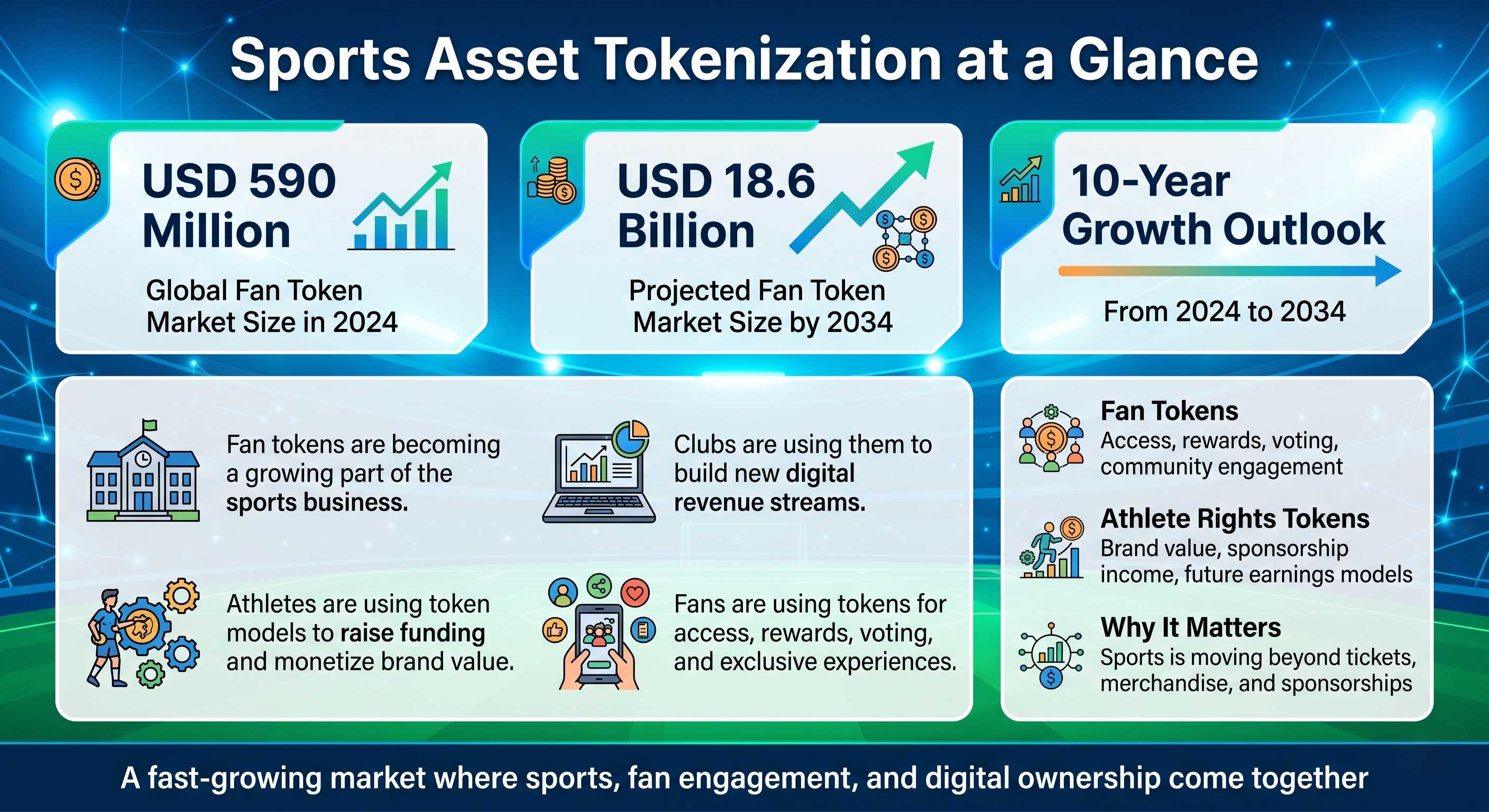
Sports is no longer just about match tickets, TV rights, and jersey sales. Fans today want a deeper connection with their favorite teams and athletes. They want access, participation, exclusive experiences, and in some cases, even a small financial interest linked to the sports world. That shift is already showing up in market growth. The global fan token market was valued at around USD 590 million in 2024 and is projected to reach nearly USD 18.6 billion by 2034, which shows how quickly token-based sports engagement is gaining attention.
Blockchain has opened the door for sports organizations to package value in digital form. Instead of offering only physical products or traditional memberships, clubs and athletes can now issue digital tokens linked to fan communities, rewards, voting rights, athlete earnings, and exclusive access. These digital assets are giving sports brands new ways to connect with supporters across the world.
Fan tokens and athlete rights tokens are gaining attention because they bring sports, technology, and digital ownership into one space. Some fans buy tokens to feel more involved with their clubs, while others view them as digital collectibles or speculative assets. Athletes, on the other side, are using token-based systems to raise funding, monetize personal branding, or build direct relationships with supporters.
In this article, you will understand how sports asset tokenization works, the difference between fan tokens and athlete rights tokens, the types of assets that can be tokenized, and the opportunities and risks linked to this growing market.
What Is Sports Asset Tokenization?
Sports asset tokenization refers to the process of converting sports-related rights or assets into digital tokens stored on a blockchain network. These tokens represent a form of value connected to a sports organization, athlete, event, or experience. Instead of dealing with paper contracts or traditional ownership systems alone, tokenization divides certain rights into digital units that people can buy, hold, or trade.
Think of it like turning a sports-related benefit into a digital chip. That chip can represent access to club voting, athlete-related earnings, event privileges, memorabilia ownership, or community membership. The token itself exists digitally, but the value attached to it comes from a real sports-related asset or right.
It is important to understand that owning a token does not always mean owning the actual team or athlete. In most cases, fan tokens provide participation benefits rather than legal ownership. Athlete rights tokens can sometimes include revenue-sharing agreements, but the structure depends on the platform and local regulations.
Sports tokenization matters because it gives clubs and athletes another way to connect with global audiences. It also gives fans new ways to participate in sports ecosystems without being physically present at stadiums or events.
Common Sports Assets That Can Be Tokenized
- Fan memberships and loyalty programs
• Athlete image and branding rights
• Match tickets and VIP access
• Sports collectibles and memorabilia
• Sponsorship-linked digital assets
• Revenue-sharing agreements connected to athletes.
The Main Types of Tokenized Sports Assets
The sports token market includes several categories, each designed for a different purpose. Some focus on fan engagement, while others involve financial rights, digital collectibles, or event access. Understanding these categories helps separate practical use cases from hype-driven projects.
Fan Tokens
Fan tokens are digital assets issued by sports clubs or leagues to increase supporter participation. These tokens often allow fans to vote on selected club activities, access rewards, participate in contests, or join exclusive communities. They are mostly utility-based assets rather than investment contracts.
Athlete Rights Tokens
Athlete rights tokens are linked to an athlete’s future earnings, sponsorship income, or personal brand value. Supporters or investors may buy these tokens in exchange for a possible share of agreed earnings or benefits. This model is more common among independent athletes looking for alternative funding sources.
Tokenized Sponsorship Rights
Some sports projects digitize sponsorship opportunities through blockchain systems. Brands may purchase digital rights connected to campaigns, fan communities, or virtual sports experiences. This creates additional marketing channels beyond traditional advertising deals.
Tokenized Ticketing and Stadium Access
Digital ticket tokens are being used to reduce fraud, stop ticket duplication, and improve event tracking. Some clubs also issue premium access tokens linked to VIP lounges, backstage experiences, or season-based memberships.
Tokenized Collectibles and Memorabilia
Sports memorabilia has entered the digital market through tokenized collectibles and NFTs. Fans can purchase officially licensed digital items such as player moments, signed artwork, limited-edition videos, or match highlights.
Revenue-Linked Sports Assets
Certain projects issue digital assets connected to future revenue streams. These may include athlete sponsorship income, media rights participation, or event-related earnings. These models usually involve more legal and financial complexity compared to fan engagement tokens.
How Fan Tokens Work
Fan Tokens as Digital Access Passes
Fan tokens are linked to clubs, teams, leagues, or sports platforms. Their main purpose is fan participation. They give supporters access to selected benefits, but they do not usually give ownership in the club.
A simple way to view them is this: a fan token works like a digital club pass. It can offer polls, rewards, private content, games, and community access. The club decides what benefits token holders receive.
How Clubs Issue Fan Tokens
A sports team usually works with a blockchain platform to release fan tokens. The platform manages token creation, sales, wallet access, and marketplace activity.
The club may set a fixed token supply or release tokens in stages. Scarcity can affect price, especially when fan demand rises. A launch is often promoted through club websites, social media, email lists, and partner apps.
How Fans Buy and Store Fan Tokens
Fans usually buy tokens through official apps, crypto exchanges, or sports token platforms. Some platforms accept card payments. Others require cryptocurrency.
After purchase, the tokens sit in a digital wallet. The wallet may be part of the platform app, or it may be a separate crypto wallet. From there, fans can hold, use, or trade the tokens on supported platforms.
How Fans Use the Tokens
Fan token holders can join polls, vote on selected club choices, claim discounts, enter contests, play prediction games, and access private content.
A club may ask token holders to vote on a goal song, training kit design, fan message, or matchday activity. These votes are usually limited to fan-facing decisions. Club owners and managers still handle major business and sporting decisions.
Why Most Fan Tokens Are Utility-Based
Most fan tokens are utility-based. This means they are made for access and use, not ownership or profit sharing.
A fan token holder does not own part of the club. The holder does not receive team revenue. The holder does not control player transfers or boardroom decisions. The main value comes from the benefits linked to the token.
What Affects Fan Token Demand
Fan token demand can rise or fall quickly. A big win, star signing, major tournament, club campaign, or popular reward can increase interest.
Poor performance, weak rewards, low fan activity, or market fear can reduce demand. Crypto market trends can affect prices too. Fans should treat token prices with care, since excitement can move faster than real value.
Ready to tokenize sports assets with real business value?
Build fan tokens, athlete rights tokens, digital collectibles, and revenue-linked sports assets with a secure tokenization model designed for real-world use.

What Fan Token Holders Can Usually Do
Fan tokens are mainly designed to keep supporters involved with their favorite clubs in more interactive ways. While benefits vary between teams and platforms, most token systems follow a similar structure focused on engagement and rewards.
Vote on Selected Club Decisions
Many sports teams allow token holders to vote on smaller fan-related choices. These may include jersey designs, goal celebration songs, training kit styles, locker room artwork, or social campaign themes. Major financial or sporting decisions usually stay under club management.
Access Exclusive Content
Token holders may receive behind-the-scenes videos, interviews, early announcements, or private digital content not available to regular followers. This helps clubs keep fans connected even outside match days.
Receive Merchandise and Reward Benefits
Some clubs offer discounts on jerseys, match tickets, or official merchandise. Others provide reward points that can be redeemed for signed items, digital collectibles, or exclusive giveaways.
Join VIP Experiences and Communities
Certain token programs include access to private meetups, stadium tours, online communities, or athlete interactions. Premium holders may also receive invitations to club events or hospitality experiences.
Participate in Games and Challenges
Fan engagement platforms often include prediction games, quizzes, fantasy-style competitions, and leaderboard systems where token holders can earn points or prizes.
Buy, Hold, or Trade Tokens
Since fan tokens are tradable assets, holders can sell them on supported exchanges if market demand increases. Prices may rise or fall depending on club popularity, tournament performance, and overall crypto market activity.
What Fan Tokens Do Not Usually Give You
Fan Tokens Have Limits
Fan tokens can be useful, but they are often misunderstood. Some buyers assume that holding a club token means owning part of the team. That is usually not true. Most fan tokens are closer to digital membership passes than legal ownership assets.
This distinction matters. A fan token can offer voting, rewards, content, and community access. It does not usually give legal claims over club revenue, property, players, or management decisions.
Before buying, a supporter should read the token terms carefully. The real value of a fan token comes from the rights and benefits listed by the club or platform. Anything not written into those terms should not be assumed.
No Ownership in the Sports Club
Buying a fan token does not make someone a shareholder. The token holder does not own part of the team, stadium, brand, training ground, or player contracts.
A fan token holder may feel more connected to the club, but that connection is based on participation benefits. It is not the same as equity ownership. The fan cannot attend shareholder meetings, claim voting power over business plans, or receive ownership rights.
This is one of the most important points in sports tokenization. Fan tokens are usually designed for engagement. They do not replace shares, private equity, or formal club ownership structures.
No Automatic Share of Team Revenue
Most fan tokens do not give holders a share of club income. A supporter who owns a token usually does not receive money from ticket sales, broadcasting deals, sponsorships, merchandise sales, or prize winnings.
This can surprise new buyers. A club may earn more money from a successful season, but fan token holders do not automatically benefit from that revenue. Their token price may move in the market, but that is different from receiving a direct share of profits.
Revenue-sharing requires a specific legal agreement. Most club fan tokens do not include that type of agreement. They focus on access and fan activity instead.
No Guaranteed Financial Return
Fan tokens can rise in value, but they can also fall quickly. There is no guaranteed profit. A token bought during a popular launch or winning streak may lose value when excitement fades.
Market price depends on many factors. Club performance, fan demand, token supply, media attention, crypto market mood, and reward quality can all affect value. A token may perform well for a short period and then drop when fewer buyers remain interested.
This is why fans should not treat fan tokens as safe investments. They are digital assets with price risk. Anyone buying them should understand both the access benefits and the possible financial downside.
How Athlete Rights Tokenization Works
Athlete rights tokenization is a system where certain rights connected to an athlete are converted into digital tokens. These rights may relate to sponsorship income, future earnings, image licensing, digital content, or other revenue-linked activities connected to the athlete’s career. Instead of relying only on agents, sponsors, or sports organizations for funding, athletes can raise money directly from supporters or investors through token sales.
In sports business, athlete rights refer to the commercial value attached to an athlete’s identity and career activities. This can include image rights, endorsement deals, social media influence, appearance fees, tournament winnings, and brand collaborations. These rights already exist in traditional sports contracts, but tokenization divides them into smaller digital units that can be sold to supporters.
Not every athlete token works the same way. Some projects focus only on community access and fan interaction, while others involve financial participation tied to future earnings. The legal agreement behind the token decides what buyers actually receive.
Image and Likeness Rights
These rights cover the commercial use of an athlete’s name, photos, videos, signatures, or public identity. Brands often pay athletes to use these rights in advertising campaigns and promotional material.
Sponsorship and Endorsement Rights
Athletes earn income from brand deals, product promotions, and sponsorship agreements. In some token models, a percentage of this income may be connected to token holders.
Future Earnings Participation
Some athlete-backed tokens involve agreements tied to future competition earnings or career revenue. Supporters fund the athlete early and may receive agreed returns later if the athlete succeeds professionally.
How Tokenization Works in Athlete Funding
Athlete rights can be divided into smaller digital portions through blockchain-based systems. These portions are issued as tokens that fans or investors can buy. The money raised may help cover training costs, travel expenses, coaching, rehabilitation, equipment, or career development.
For example, a young athlete preparing for international tournaments may release tokens connected to future sponsorship income. Supporters who believe in the athlete’s future potential may purchase these tokens as a way to participate in the athlete’s journey.
Smart contracts are often used to manage payments and agreements. If a token model includes revenue-sharing terms, the smart contract can automatically distribute payments to eligible token holders based on predefined conditions. This reduces manual processing and keeps records digitally stored on the blockchain.
Legal structure matters much more in athlete rights tokenization because financial rights are involved. A poorly written agreement can create disputes around payments, ownership claims, or sponsorship obligations. Regulations may also differ depending on whether the token is treated as a utility asset or a financial security.
Types of Athlete Rights That Can Be Tokenized
Different Rights, Different Token Models
Athlete tokenization can cover several forms of value. Some tokens focus on fan access. Some connect to brand income. Others support training expenses or career development.
The type of right matters because it changes the token’s purpose. A content-access token feels like a membership. A sponsorship-linked token feels closer to a commercial contract. A prize-money token carries performance risk. Buyers should know which category they are entering.
Image and Likeness Rights
Athletes can tokenize rights linked to their public identity. This can include name use, photos, videos, signatures, digital avatars, licensed artwork, and branded collectibles.
These tokens often work well for athletes with loyal fan bases. A popular boxer, footballer, cricketer, runner, or esports player can offer limited digital items linked to personal branding. The value comes from fan demand, official licensing, rarity, and the athlete’s public profile.
Sponsorship and Endorsement Income
Some athlete tokens can be connected to endorsement revenue. This may include brand deals, product promotions, campaign fees, or appearance income.
This model needs strict terms. The agreement should say whether token holders receive a fixed benefit, a percentage of income, or only access to sponsor-linked rewards. Without that detail, buyers may misunderstand what they are buying.
Prize Money Participation Models
Prize money participation tokens link supporters to future winnings from competitions. This model is more common in sports where athletes earn directly from tournaments, such as tennis, golf, boxing, motorsport, esports, or combat sports.
The risk is higher here. Prize money depends on performance, ranking, health, qualification, and event results. A strong season can increase returns under the agreement. A missed season can reduce or delay payments.
Training and Development Funding
Many athletes need money long before they earn from competitions. Tokenization can help raise funds for coaching, gym work, nutrition, travel, equipment, physiotherapy, and recovery.
This model can be especially useful for young or independent athletes. Supporters back the athlete early and may receive access, updates, rewards, or agreed future benefits. It creates a direct funding line between the athlete and the community.
Personal Brand Revenue
Athletes are now media brands in their own right. Many earn from social media, video content, newsletters, paid communities, personal merchandise, online training programs, and live digital events.
Personal brand tokens can connect fans to this side of the athlete’s career. Holders may receive private content, early product access, merchandise offers, digital collectibles, or income-linked rights where legally allowed.
Digital Content and Membership Access
Some athlete tokens focus only on access. They may give holders private videos, training updates, live chats, Q&A sessions, workout plans, event diaries, or early announcements.
This model is simpler than revenue-sharing. It works like a paid membership with token-based entry. The athlete keeps direct contact with fans, and supporters get content that regular followers do not receive.
Career-Based Performance Incentives
Some athlete token agreements include benefits tied to career milestones. These milestones can include tournament wins, ranking improvements, championship appearances, national team selection, sponsorship growth, or media achievements.
This model can make the token more exciting for supporters. Fans are not just watching from the outside. They are following progress closely, since certain achievements can trigger rewards or payments under the token terms.
Fan Tokens vs Athlete Rights Tokens
Although both belong to the sports token market, fan tokens and athlete rights tokens serve very different purposes. Understanding this difference is important because many people assume all sports tokens work the same way.
Fan Tokens Focus on Engagement
Fan tokens are mainly designed for participation and community interaction. Clubs use them to keep supporters involved through voting systems, rewards, digital campaigns, and exclusive access.
Athlete Rights Tokens May Include Financial Participation
Athlete rights tokens can involve future earnings, sponsorship revenue, or brand-related income. Because money-sharing agreements may exist, these tokens usually carry more legal and financial complexity.
Different Issuers Behind the Tokens
Fan tokens are commonly issued by sports clubs, leagues, or fan engagement platforms. Athlete tokens are usually connected to individual athletes, agencies, or athlete management groups.
Different Factors Affect Value
The value of fan tokens often depends on community interest, club popularity, social activity, and fan demand. Athlete rights tokens depend more on career success, sponsorship deals, tournament results, injuries, and public reputation.
Different Risk Levels
Fan tokens usually carry entertainment-focused risks linked to market volatility and engagement levels. Athlete rights tokens may involve additional financial, contractual, and regulatory risks because future earnings are part of the structure.
Different Buyer Motivations
People buy fan tokens mainly to support clubs and gain access to experiences. Athlete token buyers may be supporters, collectors, or investors looking at future earning potential connected to the athlete’s career.
The Technology Behind Sports Tokenization
Sports tokenization runs on blockchain technology, which works like a digital record book shared across a network. Every transaction, token movement, or ownership change is recorded digitally and stored in blocks of data. This helps keep a permanent history of who owns what and when transfers happen.
Unlike traditional databases controlled by a single company, blockchain records are distributed across multiple systems. This setup helps reduce data manipulation and keeps transaction records visible to participants on the network.
Blockchain as a Record of Ownership
In sports tokenization, blockchain stores ownership details connected to fan tokens, athlete rights tokens, digital collectibles, and other sports-related assets. Each token has a unique digital identity recorded on the network.
For example, if a fan buys a club token, the blockchain records the transaction and updates ownership in real time. This creates a digital trail that can be checked later.
Smart Contracts and Automated Payments
Smart contracts are digital agreements stored on the blockchain. These agreements automatically follow pre-written rules without requiring manual processing every time.
In sports token systems, smart contracts may handle:
• Reward distribution
• Voting systems
• Revenue-sharing payments
• Event access verification
• Token transfers between users
For athlete rights tokens, smart contracts may distribute agreed payments if sponsorship revenue or prize earnings are connected to the token structure.
Digital Wallets for Sports Tokens
Sports tokens are usually stored in digital wallets. These wallets act like online storage spaces that allow users to hold, send, receive, or manage their digital assets. Some sports platforms provide built-in wallets inside their apps, while experienced crypto users may prefer external wallets for additional control.
Marketplaces and Token Exchanges
Most sports tokens can be traded on crypto exchanges or dedicated sports marketplaces. These platforms allow users to buy or sell tokens based on market demand.
The price of a sports token often changes depending on:
• Fan interest
• Team performance
• Athlete popularity
• Tournament activity
• Token availability
• Crypto market conditions
Token Supply and Scarcity Models
Many sports tokens use limited supply models. When fewer tokens are available and demand rises, prices may increase. Some projects release tokens gradually, while others create a fixed amount from the beginning.
Scarcity plays a big role in digital collectibles and premium fan experiences. Limited-edition tokens often attract collectors and loyal supporters.
Transaction Visibility and Digital Records
Blockchain systems create permanent transaction histories. This means token transfers and ownership records can usually be tracked publicly on the network. Buyers can check wallet activity, transaction timing, and token movement history through blockchain explorers.
Business Models Behind Sports Asset Tokenization
Sports tokenization is not just about fan interaction. It also creates new business opportunities for clubs, athletes, sponsors, digital platforms, and investors. Different participants in the ecosystem earn revenue in different ways depending on the token structure.
Clubs Generating Revenue Through Token Sales
Sports teams can earn money by issuing fan tokens directly to supporters. Some clubs generate additional income during token launches, while others continue earning through marketplace activity and fan engagement campaigns.
This creates a digital revenue stream beyond traditional ticketing and merchandise sales.
Athletes Raising Funding From Supporters
Athletes, especially younger or independent competitors, may use tokenization to raise money for career expenses. Fans who believe in an athlete’s future potential may purchase tokens linked to future opportunities or exclusive access.
This approach gives athletes another funding option outside sponsorships and agency deals.
Platform Fees and Marketplace Income
Sports token platforms usually earn revenue through transaction fees, trading commissions, listing charges, or marketplace activity. Every token trade or digital asset sale may generate platform income.
Some platforms also charge clubs or athletes for launching token projects.
Sponsor Campaigns Through Fan Tokens
Brands increasingly use sports tokens as part of marketing campaigns. Sponsors may offer token-based rewards, contests, digital collectibles, or special event access tied to promotional activities.
This helps brands engage directly with active fan communities instead of relying only on traditional advertising.
Premium Access and Digital Memberships
Many sports organizations use tokens as digital access passes. Fans may pay for premium communities, behind-the-scenes content, online events, or exclusive experiences connected to token ownership.
This creates subscription-style income opportunities for clubs and athletes.
Investor Participation in Sports Assets
Some buyers enter sports token markets hoping token demand will increase over time. Investor interest is often linked to athlete growth, club popularity, sponsorship activity, or digital collectible demand.
However, these assets can be highly volatile, especially during periods of market hype or reduced fan interest.
Why Sports Teams Use Fan Tokens
Sports clubs are constantly looking for new ways to connect with global audiences. Fan tokens give teams a digital channel that keeps supporters involved throughout the year, not just during live matches.
Turning Fan Attention Into Digital Revenue
Clubs already have millions of followers online. Fan tokens give teams a way to monetize this attention through digital memberships, token sales, rewards, and engagement campaigns. Instead of relying only on physical products, clubs can now offer digital experiences directly to supporters worldwide.
Keeping Fans Active Beyond Match Days
Traditional fan engagement often slows down between games or seasons. Token systems help clubs maintain daily interaction through polls, games, rewards, contests, and digital campaigns. This keeps online communities active even when no matches are being played.
Building Direct Fan Communities
Social media platforms are crowded and controlled by third-party companies. Fan token ecosystems allow sports teams to create their own dedicated communities where supporters interact directly with club activities.
This creates a more focused fan environment linked to the team’s digital ecosystem.
Loyalty Programs Based on Fan Activity
Many clubs use fan tokens as part of loyalty systems. Fans may earn rewards based on participation, token holding, event attendance, or digital engagement. These programs also help clubs collect valuable audience behavior data for future campaigns and sponsorship deals.
Selling Digital Products Without Physical Limitations
Digital assets remove many of the logistics involved in physical merchandise sales. Clubs can issue collectibles, VIP access passes, digital artwork, and token-based experiences without shipping or inventory management costs.
Strengthening Sponsor Relationships
Sponsors are interested in active fan communities. Token campaigns give clubs additional ways to offer branded contests, reward systems, and promotional activities connected directly to supporters.
This makes sponsorship packages more interactive compared to traditional banner advertising or logo placements.
Why Athletes Use Rights Tokenization
Professional sports can be financially demanding, especially during the early stages of an athlete’s career. Training costs, travel expenses, nutrition plans, coaching fees, medical recovery, and equipment can quickly become expensive. Athlete rights tokenization gives athletes another option to raise support directly from fans and backers without depending completely on traditional sports systems.
For many athletes, especially those outside major leagues, financial support is often limited. Sponsorships may not arrive until later in their careers, and some athletes struggle to secure stable funding during development years. Tokenization creates a digital route where supporters can participate in an athlete’s journey much earlier.
Early Financial Support for Career Growth
Young athletes often need funding long before reaching professional levels. Through tokenized systems, athletes can raise money from supporters who believe in their future potential.
The funding may help cover:
• Coaching and training programs
• International tournament travel
• Fitness and nutrition expenses
• Medical treatment and recovery
• Equipment and facility access
This model works somewhat like community-backed sports funding, but in digital form.
Less Dependence on Traditional Gatekeepers
Many athletes rely heavily on sponsors, clubs, agents, or sports organizations for financial support. Rights tokenization gives them another way to raise money independently.
Instead of waiting for large sponsorship contracts, athletes can build direct relationships with supporters who want to follow and support their careers from an early stage.
Direct Monetization of Personal Brand Value
Athletes today often have large social media audiences and digital communities. Tokenization allows them to turn this popularity into digital products, memberships, or revenue-linked assets.
Some athletes offer:
• Exclusive content access
• Private fan communities
• Training sessions and updates
• Signed digital collectibles
• Personalized fan experiences
This gives athletes more control over how they monetize their personal image and audience.
Building a Long-Term Supporter Community
Athlete token systems are not always about money. Many projects focus on building loyal communities around the athlete’s career journey.
Supporters may feel more emotionally connected when they participate directly in an athlete’s growth. This creates a deeper relationship compared to simply following someone on social media.
Managing Career Expenses More Efficiently
Athletes in individual sports often face ongoing expenses without guaranteed income. Travel schedules, event participation, and recovery programs require constant financial support.
Token funding can help athletes manage:
• International competition costs
• Accommodation and travel planning
• Coaching staff payments
• Rehabilitation and injury recovery
• Daily training expenses
Income Beyond Tournament Earnings
Competition winnings are unpredictable. Injuries, poor performance, or missed qualifications can affect earnings quickly. Rights tokenization gives athletes additional income opportunities outside direct sports results.
Revenue may come from:
• Digital memberships
• Sponsored token campaigns
• Content subscriptions
• Community events
• Merchandise collaborations
Real-World Use Cases of Sports Tokenization
Sports tokenization is already being used in different parts of the sports industry. Some projects focus on fan engagement, while others deal with ticketing, collectibles, athlete funding, or digital experiences.
Although the market is still developing, practical use cases are growing across clubs, leagues, athletes, and sports technology platforms.
Club Fan Tokens for Engagement and Rewards
One of the most common examples is club-issued fan tokens. Sports teams use these tokens to involve supporters in digital activities such as polls, contests, loyalty programs, and reward systems.
Fans may receive:
• Voting access for selected club activities
• Merchandise discounts
• VIP experiences
• Exclusive digital content
• Participation rewards and giveaways
These systems help clubs maintain fan interaction throughout the season.
Athlete Funding Tokens
Some athletes release tokens to raise funding for training and career development. This model is especially useful for younger athletes or independent competitors who lack major sponsorship support.
Supporters may contribute funding in exchange for:
• Community access
• Exclusive updates
• Digital rewards
• Revenue-linked agreements in certain cases
Tokenized Ticketing Systems
Sports organizations are also testing blockchain-based ticket systems. Digital ticket tokens help reduce:
• Fake ticket sales
• Duplicate ticket usage
• Unauthorized reselling
• Scalping issues
Blockchain records can verify ticket authenticity and ownership history more effectively than many traditional systems.
NFT Sports Collectibles
Digital collectibles remain one of the most popular sports token categories. Fans can buy officially licensed NFTs connected to:
• Match highlights
• Athlete moments
• Signed artwork
• Limited-edition collectibles
• Digital trading cards
These assets function like modern digital memorabilia collections.
Token-Gated Sports Communities
Some clubs and athletes create private communities where only token holders can participate. These communities may include:
• Exclusive live streams
• Fan discussions
• Q&A sessions
• Early announcements
• Premium content access
This creates a membership-style environment tied directly to token ownership.
Revenue-Linked Sponsorship Campaigns
Brands are increasingly using token systems for promotional campaigns connected to sports audiences. Sponsors may launch digital contests, token rewards, or collectible campaigns linked to athlete partnerships or sporting events.
This gives companies another way to interact with active fan communities online.
Virtual Stadium and Metaverse Experiences
Some sports projects are experimenting with digital stadiums and virtual fan experiences. Token holders may gain access to:
• Virtual sports events
• Interactive fan zones
• Digital meet-and-greets
• Online merchandise stores
• Immersive sports entertainment spaces
While still developing, virtual sports environments are becoming part of the wider sports token economy.
Conclusion
Sports asset tokenization is opening a new way for clubs, athletes, fans, and investors to take part in the sports economy. Fan tokens mainly give supporters access, rewards, voting rights, and community benefits, while athlete rights tokens can connect to image rights, sponsorship income, brand value, or future earnings under agreed terms. The opportunity is real, but so is the risk. Buyers need to understand what each token represents, what rights are included, and whether the value comes from utility, collectibles, or income participation. For sports brands and businesses planning to enter this space, Blockchain App Factory provides RWA Tokenization Services to create tokenized asset models for real-world rights, fan engagement programs, athlete-backed tokens, and revenue-linked digital assets.

Vimal J is the Head of Sales at Blockchain App Factory, with 10+ years of experience in sales, client strategy, and Web3 business growth. He helps startups, enterprises, and project founders choose the right blockchain solutions for their goals, bringing a practical market perspective to topics like token development, crypto launches, and Web3 adoption.