Key Insights
- Projects win faster when they explain token value clearly, reduce confusion, and show proof that the team is credible.
- Telegram, Discord, X, influencers, and media coverage help bring attention, build interest, and attract first-time holders.
- Exchange listings, liquidity support, landing page clarity, and retention campaigns help turn attention into real market activity.
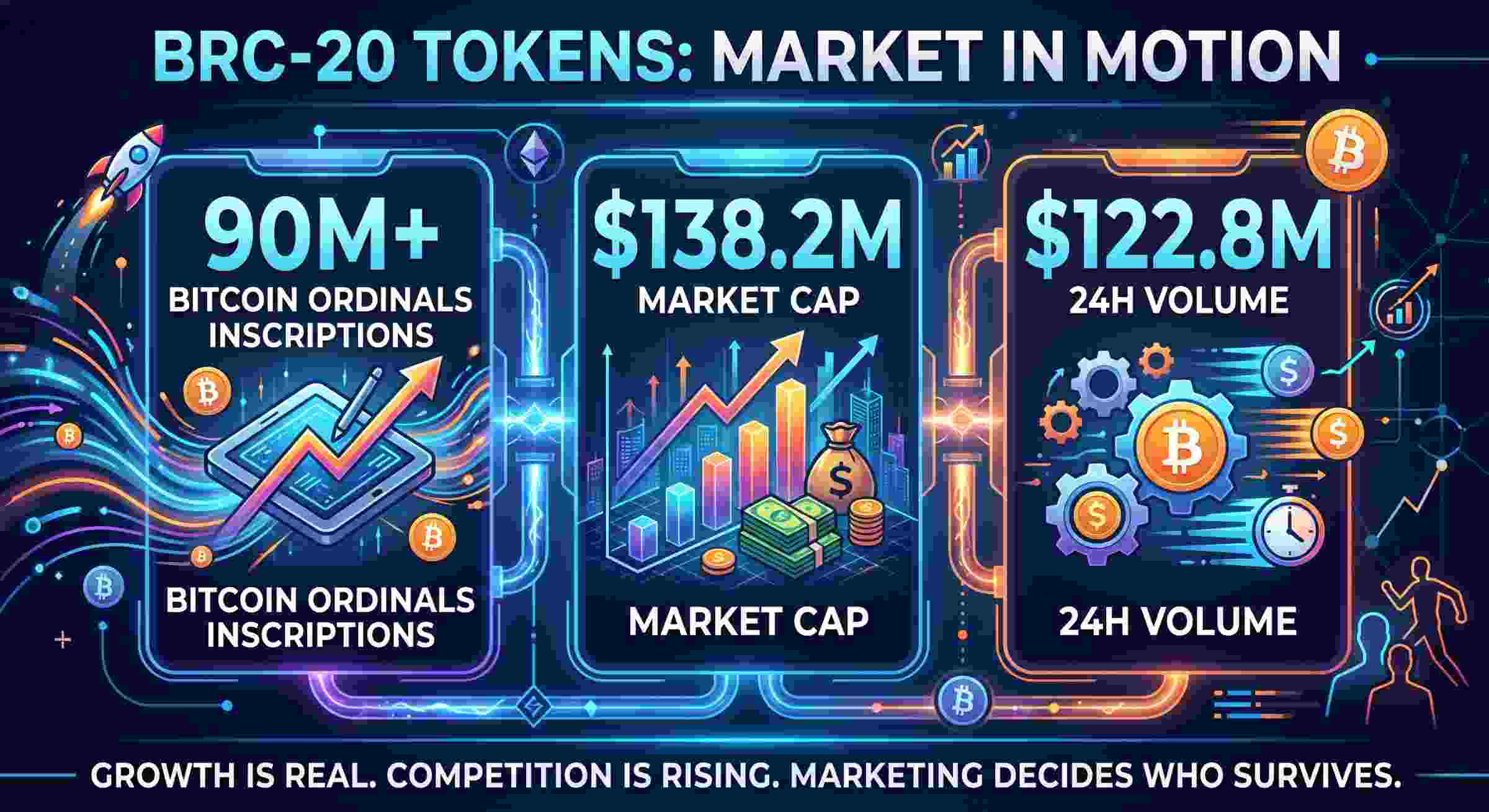
BRC-20 tokens pushed a new wave of activity into the Bitcoin economy after Ordinals made it possible to inscribe data onto individual satoshis. While the standard is still experimental, it opened the door for fungible tokens on Bitcoin and gave builders a new way to launch token-based projects on the network. That early movement has scaled quickly. The broader Ordinals ecosystem has crossed 90 million inscriptions, and CoinMarketCap’s BRC-20 category shows about $138.2 million in market cap with roughly $122.8 million in 24-hour trading volume. These numbers show that BRC-20 is no longer just a novelty story. It is now a live and competitive market with tradable assets, active communities, and growing pressure on projects to stand out.
This is why marketing matters so much for BRC-20 projects. A token can launch fast, but adoption does not happen on its own. Projects need visibility, exchange support, liquidity, and a clear reason for traders or holders to stay involved after the first wave of speculation fades. Trading volume keeps the market active, while user adoption builds a base of holders, traders, and supporters who can sustain attention over time. Without both, a BRC-20 token can lose momentum quickly. In an emerging Bitcoin-based token market shaped by technical limits, fragmented liquidity, and trust concerns, strong marketing gives a project a sharper story, wider reach, and a clearer path to long-term adoption.
What Are BRC-20 Tokens? A Business-Focused Overview
BRC-20 tokens are fungible tokens built on Bitcoin through Ordinals inscriptions. They use JSON data written onto satoshis to define token deployment, minting, and transfer activity. This differs from Ethereum-style token systems, where smart contracts handle token logic directly on-chain. In BRC-20, token balances usually depend on off-chain indexers that read and track inscription data.
From a business view, that distinction matters. ERC-20 and BEP-20 ecosystems have deeper tooling, broader exchange coverage, and mature DeFi support. BRC-20 lives in a younger market with fewer standards and less infrastructure, but that same immaturity creates room for early brand building. A new project that enters a less saturated niche can capture attention faster if it has a clear message and a strong community.
Understanding the BRC-20 Standard
The BRC-20 standard is a token format built on top of Bitcoin’s Ordinals system. Ordinals assign identity to satoshis, and inscriptions attach data to them. BRC-20 uses that mechanism to represent fungible tokens through text-based data, not through smart contracts. That is the core idea behind the standard.
The gap between BRC-20 and ERC-20 is important for marketers too. ERC-20 tokens usually plug into a mature app layer with wallets, DeFi protocols, and automated smart contract logic. BRC-20 tokens sit closer to Bitcoin culture, Bitcoin liquidity, and Bitcoin-native speculation. So the story around them often leans on Bitcoin identity, scarcity narratives, community momentum, and early access to a fresh asset class rather than advanced application logic.
Market Opportunity for Businesses
For businesses, BRC-20 offers early-mover upside. The market is smaller than Ethereum token markets, but smaller markets often reward strong positioning. A project that enters early can build brand recognition, secure exchange attention, and attract a community before the space becomes too crowded. That is one of the main business attractions today.
Investor interest adds another layer. Live market cap and trading data show that BRC-20 tokens still attract speculative capital, and top assets such as ORDI helped keep the category visible across major exchanges and tracking platforms. That interest can help new projects, but it raises the bar for differentiation. A token now needs a stronger narrative, better liquidity planning, and clearer demand drivers than it did in the earliest phase of the trend.
Key Use Cases of BRC-20 Tokens
The first major use case is still meme tokens and community coins. These projects often grow through culture, humor, identity, and social momentum. In fast-moving crypto markets, that alone can drive trading volume for a period of time. Yet attention fades fast, so meme-led projects still need strong community management and listing strategy to last.
Utility tokens are another path. A platform can use a BRC-20 token for access, rewards, participation, or ecosystem-level incentives. This is more demanding than a meme-led model, but it gives the token a clearer reason to exist. Governance tokens add a third path. Projects can use them to signal voting rights, treasury input, or community control over future decisions. For businesses, these use cases matter since they turn a token from a tradable item into a tool that supports a broader product or ecosystem.
Why Marketing Is Critical for BRC-20 Token Success
BRC-20 tokens operate in a young and fast-moving market, which creates both opportunity and strong competition for attention. A token can launch on Bitcoin and still struggle to gain holders, traders, or liquidity. Marketing helps close that gap by explaining the token, building trust, and driving action. This matters even more in BRC-20 because many users still do not fully understand inscriptions, transfers, or what makes one project stand out.
Adoption in this space starts with education. Projects need simple content such as guides, explainer threads, videos, and wallet tutorials that show how the token works, where to use it, and why it matters. Marketing also supports trading volume and liquidity by improving visibility across search, social media, community channels, and crypto platforms. At the same time, trust is essential in such a speculative market. Clear updates, transparent communication, and active communities help projects build credibility and keep users engaged.
BRC-20 Token Growth Funnel: Awareness to Trading Volume
A BRC-20 token does not grow through one event. Growth happens in stages. A person first hears about the token, then joins the community, then becomes a holder, then a trader, and in the best cases, a long-term supporter. This path is the real growth funnel, and each stage needs a different message.
The funnel matters since user attention alone does not create a healthy token market. Projects need people who move from passive interest to active participation. That shift is what turns a launch into a market with real depth and staying power.
Funnel Breakdown
The first stage is awareness. This is where people discover the token through crypto media, search, influencer posts, X threads, or community mentions. At this point, the goal is simple. Get the project noticed and give people a reason to learn more.
The next stage is community. A person who joins Telegram, Discord, or follows the token on X shows a deeper level of interest. This is where trust starts to form. Community spaces let users ask questions, follow updates, and watch how the team handles public discussion.
Then come wallet holders. These are users who have moved past curiosity and bought or received the token. This stage matters since holder count often reflects market reach better than raw impressions. After that comes active traders. They bring liquidity, volume, and daily market activity. The final stage is long-term holders, who keep the token stable through continued belief, utility, rewards, or community ties.
Key Metrics to Track
Holder count is one of the clearest early signals. It shows how many wallets have taken action and joined the token base. A rising holder count often points to growing awareness and stronger market reach.
Daily trading volume tracks real market activity. It tells the team whether attention is turning into actual buying and selling. Low volume can make the token look weak, even with a strong community. High volume can attract fresh traders, market makers, and listing interest.
Liquidity depth and spread matter for trade quality. Deeper liquidity makes it easier for traders to enter and exit. Tighter spreads make the market feel healthier and more attractive. These numbers often shape trader confidence more than social noise does.
Social engagement and community growth help complete the picture. Follower growth, post reach, chat activity, AMA turnout, and referral traffic can show whether the project is gaining momentum or losing it. These signals are not enough on their own, but they are valuable when tracked next to holder and trading data.
Mapping Channels to Funnel Stages
Each part of the funnel needs a channel that fits the goal. Awareness works best through PR, influencer campaigns, and SEO-focused content. PR gives outside visibility. Influencers bring targeted reach. SEO helps the token appear in search when people look for BRC-20 projects, Bitcoin tokens, or market comparisons.
Conversion needs a different set of tools. Landing pages, token utility messaging, wallet guides, and exchange instructions help people move from interest to action. This stage should answer the big questions fast. What is the token for? Why does it matter? How do I buy it? What makes this project worth backing?
Retention depends on reasons to stay. Staking, governance rights, reward programs, community status, and ecosystem benefits can all help keep holders active. A token that gives people a role after purchase has a better chance of building long-term value than a token built only for short-term trading.
Core Marketing Strategies to Drive BRC-20 Adoption
BRC-20 adoption grows through community, clear storytelling, and repeated visibility. These tokens exist in a culture-driven market where attention moves fast and new projects appear every day. A token that wants lasting traction needs more than launch hype. It needs people who talk about it, trade it, and stay involved after the first wave of interest. Strong marketing starts with people, not just promotion. Projects need active communities, trusted voices, useful content, and visibility across crypto media.
Community-Led Growth
Community is the main growth driver for BRC-20 tokens. Telegram, Discord, and X are where attention builds, spreads, and turns into action. These spaces help users ask questions, react to news, share memes, and feel connected to the project. Meme culture can also expand reach, but viral attention only lasts when backed by active moderation, regular updates, and a team that keeps the conversation moving. Incentives such as quests, meme contests, referrals, and role-based perks can turn passive followers into active supporters when they reward meaningful participation.
Influencer and KOL Marketing
Influencer marketing can create fast visibility in crypto, and BRC-20 projects often benefit from that speed. The best results come from audience fit, not just follower count. A smaller creator with a real Bitcoin-native audience can outperform a larger account with weak engagement. Creator threads, videos, live spaces, and sponsored posts can support launch, minting, or listing campaigns. Teams should track clicks, community growth, holder growth, and trading activity tied to each creator, since views and likes matter less than real wallet action.
Content Marketing and SEO for BRC-20 Tokens
Content marketing helps BRC-20 projects stay discoverable over time. Users often search for answers about how BRC-20 works, how trading happens, and how one project differs from another. Blogs, beginner guides, explainer articles, and comparison pages work well because they reduce confusion and build authority. Comparison content is especially useful since traders often judge tokens by community strength, liquidity, exchange access, and use case. Strong content can keep bringing users into the funnel without relying only on paid campaigns.
PR and Media Outreach
PR helps BRC-20 tokens build credibility in a crowded market. News coverage, press releases, and feature mentions can bring attention beyond the project’s own channels. Press releases work best when tied to real events such as listings, partnerships, roadmap milestones, or product updates. Media outreach also supports trust, since appearing on known crypto platforms gives the token stronger public validation. Good PR does not replace community work, but it strengthens public image and keeps the project visible.
Want to grow your BRC-20 token faster?
Build stronger visibility, attract real holders, and increase trading activity with the right marketing plan.

Strategies to Increase Trading Volume and Liquidity
Adoption alone is not enough for token growth. A BRC-20 project needs active trading and healthy liquidity if it wants to stay relevant. Volume keeps the market alive. Liquidity makes trading easier and lowers friction for buyers and sellers. Without these two pieces, even a popular token can lose traction.
This is where marketing and market structure meet. The team must support listings, attract market participants, and create reasons for people to trade. That work should be planned early, not added after launch.
Exchange Listing Strategy
Listings are one of the clearest growth drivers for BRC-20 tokens. They increase access, bring fresh attention, and often lead to a rise in daily trading activity. A listing can expose the token to traders who would never use inscription tools or smaller Bitcoin-native marketplaces. That wider access can change the token’s entire growth path.
The choice between centralized and decentralized exchanges matters. Centralized exchanges often bring more visibility, easier access, and stronger trust for everyday traders. Decentralized venues can offer faster entry and more control during the early phase. Many projects use both over time, but the sequence matters. Teams should match listing plans to token readiness, community size, and liquidity strength.
Listing success depends on preparation. Exchanges want proof of activity, public interest, and a token that can support real trading. This is where partnerships and marketing help. A strong brand story, active social channels, and visible trading demand can make listing discussions much easier. Timing matters too. A listing campaign should align with community momentum, media exposure, and market conditions.
Liquidity Bootstrapping Techniques
Liquidity needs active planning from day one. A token with low liquidity can suffer from sharp price swings, weak confidence, and poor trader experience. Bootstrapping liquidity helps the market feel more stable and more attractive.
Liquidity pools and incentive programs can help attract early capital. A project can reward users who provide liquidity during the first stage of trading. This can improve depth and make the token easier to buy or sell. The reward structure should be simple and clear so users understand what they gain and how long the incentive lasts.
Market maker partnerships can help too. These firms support order flow, tighter spreads, and a more active trading environment. For BRC-20 tokens, this can be especially useful after a listing, where the token needs stable market activity to hold trader interest. Token distribution plays a role here as well. A project should avoid a supply structure that puts too much control in too few hands. Better distribution can support healthier trading and stronger community confidence.
Trading Campaigns and Incentives
Trading campaigns can create bursts of volume and bring fresh users into the market. Trading competitions, volume-based rewards, and time-limited promotions all give traders a reason to act now instead of later. These campaigns work well around listings, major updates, or community growth pushes.
Referral programs can add another layer. A trader who invites others into the market can help spread the token more widely, especially in social-first crypto spaces. The reward should feel meaningful, but it should not create fake activity. Real participation matters more than inflated numbers.
Fee discounts and bonuses can support short-term volume growth too. Lower trading fees, deposit bonuses, or reward tiers can make the token more attractive during a campaign window. Still, these offers should connect to a larger plan. The best trading campaigns do not just create a temporary spike. They bring in users who stay active after the reward period ends.
Pre-Launch vs Post-Launch Marketing for BRC-20 Tokens
BRC-20 token marketing changes across the life of a project. Before launch, the goal is attention and early belief. After launch, the focus shifts to trading activity, liquidity growth, and holder retention. Teams that use the same strategy for both stages often waste budget and lose momentum. Strong projects treat them as separate phases with different goals.
Pre-Launch Phase
The pre-launch phase is about building hype with purpose. A token needs a clear story, strong brand identity, and a message people can repeat easily. If users cannot explain the token in a line or two, attention fades fast.
Early community building matters most here. Telegram, Discord, and X should feel active before launch with updates, teaser posts, countdowns, and direct team interaction. Whitelists, airdrops, and early access campaigns can build momentum when they reward real participation instead of random clicks. Influencer partnerships, teaser threads, short videos, and live spaces can also expand reach and attract users who already follow Bitcoin-native token narratives.
Post-Launch Phase
Once the token goes live, the focus turns to trading volume, liquidity, and broader access. The team should speak less about future plans and more about what users can do right now. Clear trading instructions, active campaigns, and steady public updates become essential.
Driving trading volume is a top priority. Trading contests, referral rewards, and limited-time bonuses can support activity when they encourage real participation. Exchange expansion also matters because new listings improve access and can attract fresh traders. Each listing works better when supported by community updates, creator content, media coverage, and clear calls to action. Regular updates, community events, and reward programs also help keep holders and traders engaged after launch.
Key Strategic Differences
Pre-launch marketing is built around awareness, while post-launch marketing is built around performance. Before launch, the goal is reach, attention, and community growth. After launch, the goal is trading volume, holder growth, and stronger liquidity.
The first phase is community-first. The second phase is market-first. Pre-launch success looks like stronger community numbers, social reach, and waitlist growth. Post-launch success looks like healthy trading activity, better liquidity, and steady holder engagement. Projects that understand this shift can build momentum more effectively.
Organic vs Paid Marketing for BRC-20 Tokens
BRC-20 projects need both trust and visibility to grow. Organic strategies help build long-term community interest and credibility, while paid marketing helps create fast attention during key campaign moments. The table below shows how each approach supports different growth goals.
| Aspect | Organic Growth Strategies | Paid Marketing Strategies |
|---|---|---|
| Core role | Builds trust and keeps attention alive over time | Creates speed and supports key moments such as a launch or listing |
| Main strength | Strong long-term growth tool that keeps delivering value over time | Creates faster movement and pushes the token in front of large and targeted audiences quickly |
| Best for | Explaining the project, reducing confusion, attracting users who want to learn, and building loyalty | Launch windows, listing announcements, trading events, and other time-sensitive campaign moments |
| Common channels | SEO, content marketing, educational content, social media engagement, community threads, Discord, Telegram | Crypto ads, sponsored posts, exchange promotions, featured placements, trading event banners, and paid creator campaigns |
| Time to results | Takes more time, but often creates stronger long-term value | Works faster and brings immediate traffic during key campaign periods |
| Trust impact | Trust usually comes more easily through organic channels | Paid exposure works best when audience relevance is strong, but trust is usually lower than organic by default |
| Best stage of use | Best for building the project base and long-term adoption | Best for supporting major moments that need extra reach |
| Overall value | Supports long-term adoption and loyalty | Supports short-term reach and trading volume spikes |
Conversion Optimization for Token Adoption
Getting attention is only the first step. A BRC-20 token still needs to turn that attention into wallet actions, purchases, and repeat visits. This is where conversion work matters. A project can spend heavily on reach and still lose users at the final step if the page feels confusing or the buying process looks risky.
Strong conversion work removes doubt and shortens the path to action. It tells users what the token does, why it matters, and how to get started without friction. In a market like BRC-20, that clarity can lift adoption fast.
Optimizing Token Landing Pages
A token landing page should answer the biggest questions in seconds. What is this token for? Why should anyone care? What happens next? If the page buries these answers under hype or vague claims, users leave.
Clear token utility should sit near the top of the page. Visitors need to see whether the token is built for community culture, platform access, governance, rewards, or trading demand. The roadmap should support that story with visible milestones and simple language. A roadmap full of unclear promises does little. A roadmap with direct goals builds more confidence.
Trust signals matter just as much. Public team details, audit references, partner logos, media mentions, and exchange support can reduce hesitation. In BRC-20, trust is often thin at first, so visible proof matters. A clean page with real signals can outperform a louder page with none.
Simple wallet guides complete the page. Users should see how to buy, store, and move the token without searching elsewhere. Short steps, visual aids, and wallet-specific instructions can make the difference between curiosity and action.
User Onboarding Experience
A user who wants to buy a BRC-20 token should not feel lost. The onboarding path should feel clear from the first click. If the buying flow looks too technical, many new users will stop before they start.
Step-by-step buying guides help solve this. A project should explain which wallet to use, how to fund it, where to trade the token, and what to expect during the process. These guides should avoid jargon and keep the focus on real user actions. The more direct the guide, the better the conversion rate.
Beginner education adds another layer. Not every visitor understands inscriptions, Bitcoin token mechanics, or BRC-20 wallet behavior. Short explainers, FAQ sections, and simple tutorials can remove that fear. A project that teaches well often converts better than a project that only promotes.
Data-Driven Optimization
Conversion improves faster with clear data. Teams should track page visits, wallet guide clicks, community joins, exchange referrals, and buying actions where possible. These numbers show where users stop and where the flow needs work.
Analytics tools help spot weak points. A team may find that visitors read the page but do not click through. Or they may find that many users start the process and drop off at the wallet step. That kind of data helps the team fix real friction instead of guessing.
A/B testing can sharpen results further. One version of a landing page may explain token utility better. Another may place trust signals higher. Testing headlines, layouts, calls to action, and guide placement can improve conversion over time. Small changes often produce strong gains when the traffic is already there.
Need more traction for your BRC-20 project?
Retention and Community Loyalty Strategies
Adoption brings users in. Retention keeps the token alive. A BRC-20 project that only chases new buyers will often see fast exits and weak loyalty. Long-term strength comes from holders and community members who stay active after the launch window cools down.
Retention needs structure. People stay close to a token when they have a reason to return, a role in the community, and a story they still believe in. That is where incentives, regular engagement, and brand identity all come together.
Incentive-Based Retention
Rewards can keep users involved after the first purchase. Staking programs, holder perks, and token-based benefits give people a reason to hold instead of selling at the first spike. A token that creates ongoing value stands a better chance of keeping attention.
Governance participation can deepen that connection. When holders can vote on project direction, campaign ideas, treasury use, or community decisions, they feel more tied to the token. This does more than increase engagement. It gives people a sense of ownership, and that can strengthen loyalty over time.
The key is relevance. Rewards should match real community behavior and real token goals. Empty incentive loops can create noise. Clear, meaningful benefits build stronger retention.
Continuous Engagement
A quiet project often loses momentum fast. Communities need regular contact to stay active and confident. AMA sessions, product updates, roadmap check-ins, and trading milestones all help keep the token in public discussion.
Community events can support this energy. Meme contests, live chats, token quizzes, leaderboard campaigns, and social challenges give people reasons to join in. These campaigns do not need huge budgets. They need consistency and a clear link to the brand.
Regular updates matter more than flashy bursts. A team that posts clearly and often builds more trust than a team that disappears between major announcements. People want to see that the project is active, focused, and still pushing forward.
Building a Strong Brand
A strong brand helps a BRC-20 token survive beyond short-term market noise. People remember stories more than slogans. So the project needs a clear narrative that tells users what the token stands for and why it belongs in the Bitcoin ecosystem.
That story should stay consistent across the website, community posts, media coverage, and creator campaigns. If the message keeps changing, trust weakens. If the message stays clear, users can repeat it, share it, and attach themselves to it more easily.
Consistent communication strengthens that brand. The tone, visuals, updates, and public behavior of the team should feel aligned. Over time, that consistency turns a token from a tradable asset into a recognizable project with a loyal base behind it.
Conclusion
BRC-20 token marketing works best when it connects education, community growth, liquidity planning, and strong retention into one clear strategy. Projects that explain their value well, reduce onboarding friction, stay active in public, and support trading volume with the right campaigns have a better chance of building lasting adoption in the Bitcoin token market. From pre-launch hype and influencer outreach to exchange visibility, content marketing, and community loyalty programs, every step should help turn attention into holders, traders, and long-term supporters. For businesses that want to grow a BRC-20 project with a stronger market presence, Blockchain App Factory provides BRC-20 token marketing services that help drive visibility, adoption, and trading activity.

Vimal J is the Head of Sales at Blockchain App Factory, with 10+ years of experience in sales, client strategy, and Web3 business growth. He helps startups, enterprises, and project founders choose the right blockchain solutions for their goals, bringing a practical market perspective to topics like token development, crypto launches, and Web3 adoption.