
Key Insights
- Trust drives growth in Web3, and content builds that trust through clear education, honest updates, and strong proof.
- A strong crypto content marketing strategy needs full-funnel content, from beginner guides to conversion pages and community content.
- SEO and smart distribution help Web3 brands reach the right audience, gain authority, and turn traffic into users and buyers.
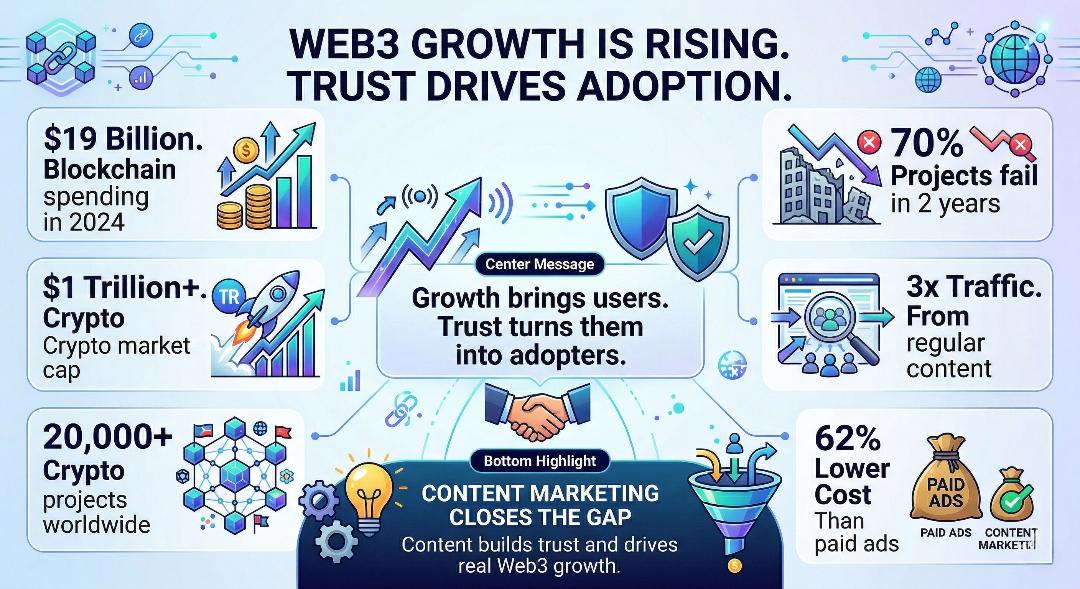
The Web3 market is growing fast. Global blockchain spending is set to pass $19 billion in 2024, and the crypto market cap has moved past $1 trillion in recent years. Demand is real, but trust still falls short. More than 20,000 crypto projects now compete for attention, and nearly 70 percent fail within two years. That gap creates a real problem for brands that want lasting growth. Users and investors do not commit on hype alone. They want proof, clear information, and honest communication. A strong content strategy helps meet that need. A useful guide, a simple explainer, or a transparent update can shape trust in a matter of seconds.
Content marketing gives crypto brands a direct way to earn attention and keep it. Brands that publish content on a regular schedule can see up to three times more traffic than inactive brands. Organic search brings in more than 50 percent of total website traffic across industries, and Web3 follows that same trend. Content marketing costs about 62 percent less than paid ads and can generate three times more leads. These numbers show why content matters. Strong content builds trust, improves search visibility, and brings in users who stay engaged longer. A clear plan turns scattered posts into a real growth system that attracts the right audience and turns interest into action.
What is Crypto Content Marketing?
Crypto content marketing focuses on creating and sharing content for blockchain and Web3 audiences. It explains complex ideas in simple terms and builds trust through clear communication. Projects use blogs, guides, whitepapers, and social content to educate users and investors. This type of marketing places strong focus on transparency and community interaction. It helps people understand how a product works and why it matters before they invest or join.
How Web3 Content Differs from Traditional Marketing
Web3 content puts the community at the center, not just the brand. Users expect open communication, real data, and clear explanations. Technical depth plays a key role since many products involve smart contracts, tokens, and decentralized systems. Content must explain these topics without confusion. Token-based ecosystems also shape strategy, as users often become stakeholders who follow updates closely and engage with content regularly.
Why Content Marketing is Critical for Web3 Authority
Content marketing plays a central role in building authority in Web3. People do not trust projects based on ads alone. They look for proof through articles, updates, and educational resources. Strong content builds credibility over time and keeps users informed. It helps projects stand out in a crowded market and creates a clear voice that people recognize and trust.
-
Building Trust in a Skeptical Market
Trust remains a major challenge in crypto. Many users have seen scams or failed projects, so they question new platforms. Clear and honest content reduces this doubt. Projects that share accurate data, explain risks, and provide regular updates earn more confidence. Simple and direct communication builds a stronger connection with users and shows that the project values transparency.
-
Educating Users and Investors
Blockchain concepts can feel complex for new users. Good content breaks these ideas into simple steps and clear examples. Guides, tutorials, and FAQs help users learn how to use wallets, trade tokens, or join platforms. Education supports faster onboarding and reduces confusion. When users understand the product, they feel more confident to take action and stay engaged.
-
Long-Term SEO and Organic Growth
Content drives long-term traffic through search engines. Articles, guides, and evergreen pages continue to attract visitors months after publication. This steady flow reduces reliance on paid ads and lowers acquisition costs. Search data shows that over half of website traffic comes from organic search. A strong content base builds visibility, improves rankings, and supports consistent growth over time.
Core Pillars of a Successful Crypto Content Strategy
A strong crypto content strategy needs content for each stage of the buyer journey. New visitors need simple education. Interested readers need proof and depth. Ready buyers need clear reasons to act. Your community needs content that keeps them involved after the first click. This mix turns content into a steady system for trust, traffic, and conversions.
Educational Content (Top-of-Funnel)
Educational content helps new users understand crypto without feeling lost. Beginner guides, glossaries, and explainers answer basic questions in plain language. Posts built around topics like “What is a crypto wallet?” or “How to buy tokens safely” pull in search traffic and build early trust. This content works best at the top of the funnel since readers want answers before they commit to a project or product.
Authority Content (Middle-of-Funnel)
Authority content shows that your brand knows the market and the product in depth. Whitepapers, research reports, and deep-dive blog posts give readers facts, analysis, and context that short social posts cannot provide. This type of content helps serious prospects compare projects, understand your thesis, and judge your credibility. It also supports thought leadership, which matters a lot in Web3 where trust often starts with expertise.
Conversion Content (Bottom-of-Funnel)
Conversion content helps interested readers take the next step. Product pages, landing pages, and token utility pages should explain value in direct language and remove doubt fast. Case studies and success stories add proof that your offer works for real users or partners. Strong bottom-of-funnel content answers buying questions, shows outcomes, and guides readers toward demos, sign-ups, or contact requests.
Community-Driven Content
Community-driven content keeps your audience active and invested in the brand. DAO discussions, governance updates, and proposal summaries make users feel part of the process, not just observers. User-generated content adds social proof and gives your brand a more human voice. This type of content works well in Web3 since many users want participation, transparency, and direct contact with the team behind the project.
Need expert help to scale your crypto marketing efforts?
Work with a skilled team to create, promote, and scale content that drives traffic, builds authority, and converts users.

SEO Strategy for Crypto and Web3 Content
SEO gives crypto brands a steady way to reach high-intent users through search. Paid traffic can rise fast in cost, but strong organic rankings keep bringing visitors over time. A focused SEO plan starts with the right keywords, then builds pages that are useful, fast, and easy to trust. For Web3 brands, SEO is not just about rankings. It is about visibility at the exact moment a user looks for answers, tools, or services.
Keyword Research for Crypto Niches
Keyword research starts with search intent. Informational keywords target readers who want to learn, such as “what is tokenomics” or “how does staking work.” Transactional keywords target readers closer to action, such as “crypto marketing services” or “blockchain SEO agency.” A strong plan uses both. Informational terms build awareness and authority, and high-intent terms attract buyers who are already searching for a provider or platform.
On-Page SEO Optimization
On-page SEO helps search engines and readers understand your content fast. Clear headings, short paragraphs, strong title tags, and useful internal links make pages easier to scan and index. Readability matters since crypto topics can become dense very fast. E-E-A-T also plays a major role here. Content should show real experience, topic knowledge, brand authority, and trust through accurate facts, expert quotes, and clear authorship.
Technical SEO for Blockchain Projects
Technical SEO gives your content a solid base. Fast load times, clean site structure, mobile performance, and proper indexing all affect how well your pages rank. Schema markup can help search engines understand products, articles, FAQs, and reviews more clearly. Blockchain brands should pay close attention to crawl issues, duplicate pages, and JavaScript-heavy designs, since these often block search visibility and hurt user experience.
Link Building and Authority Growth
Link building helps crypto brands gain trust in search results and raise domain strength over time. Guest posts on respected industry sites, digital PR, research reports, and smart partnerships can bring relevant backlinks that support rankings. The goal is not random volume. The goal is trusted links from sites that already hold weight in crypto, finance, SaaS, and tech. Strong backlinks tell search engines that your content deserves attention and can compete for harder terms.
Content Distribution Channels in Web3
Distribution decides whether great content gets seen or gets buried. A strong Web3 brand does not post in one place and wait. It publishes across owned channels, community platforms, decentralized networks, and trusted partner accounts. This wider reach helps brands meet users where they already spend time. It keeps the message consistent and gives each piece of content more chances to drive traffic, trust, and conversions.
-
Owned Media
Owned media gives your brand full control over the message, format, and timing. Blogs help you rank for search terms and explain complex topics in detail. Documentation builds trust with users who want facts, not hype. Newsletters keep subscribers engaged with product updates, market commentary, and educational content. These channels work well for long-term growth since no outside platform controls your reach or removes your content without warning.
-
Social and Community Platforms
Social and community platforms help Web3 brands stay visible and responsive. X, Discord, and Telegram are central spaces for updates, feedback, and direct conversations. People in crypto expect fast answers and regular activity, so real-time engagement matters a lot. A quiet account can raise doubt. An active community channel can build trust fast. These platforms work best for announcements, quick education, polls, community sentiment, and open discussion.
-
Decentralized Platforms
Decentralized publishing platforms give Web3 brands a place to share content that fits the values of ownership and open access. Publishing on Web3-native platforms can support stronger brand alignment and attract users who prefer blockchain-based ecosystems. These channels give creators more control over distribution and ownership, and they reduce dependence on centralized platforms that can limit reach or remove content. This makes them useful for long-form posts, thought pieces, and permanent public records.
-
Influencer and KOL Collaborations
Influencer and KOL collaborations help brands reach audiences that already trust a known voice in crypto. A respected creator can introduce your project to traders, builders, or investors faster than a brand account acting alone. This works best when the fit is real and the message is clear. Forced promotion can damage trust. Strong partnerships build credibility, expand reach, and add social proof that supports both awareness and conversions.
Want to stand out in a crowded Web3 market?
Step-by-Step Crypto Content Marketing Framework
A clear framework keeps content marketing focused and measurable. Many crypto brands post without a system, then wonder why growth stalls. A better plan starts with audience research, then moves into planning, writing, promotion, and performance review. Each step supports the next one. This creates a repeatable process that turns content into a steady driver of traffic, trust, and revenue.
Step 1: Audience Research and Segmentation
Audience research helps you speak to the right people with the right message. Web3 audiences are not one group. Retail users want simple education and proof of safety. Developers want technical depth and product details. Investors want market potential, traction, and token value. Clear segmentation helps you write content that matches real concerns, real search intent, and real buying behavior instead of broad messages that fail to connect.
Step 2: Content Planning and Strategy
Content planning gives structure to your publishing efforts and ties each topic to a business goal. A strong plan maps content to the product roadmap, launch calendar, and token lifecycle. It sets priorities for blog posts, product pages, newsletters, case studies, and social content. This keeps the brand message consistent and stops teams from posting random content that brings traffic but does not support sign-ups, retention, or sales.
Step 3: Content Creation
Content creation in Web3 needs a careful balance between accuracy and readability. The subject matter is often technical, but the writing still needs to be clear and easy to follow. Readers should not need expert knowledge to understand the value of a product. Strong content explains smart contracts, tokenomics, staking, or governance in direct language. It should stay compliant, avoid inflated claims, and present facts in a way that builds trust.
Step 4: Distribution and Promotion
Distribution and promotion give content a real chance to perform. Organic promotion includes blog publishing, internal links, social sharing, email sends, and community posts. Paid promotion can support reach for high-value pages, product launches, or lead generation campaigns. Community amplification matters a lot in crypto since active members often share content faster than brand accounts. Good distribution turns one article into traffic from several channels instead of one short spike.
Step 5: Performance Tracking and Optimization
Performance tracking shows what content drives real business results. Traffic tells you what attracts attention. Engagement shows whether people stay and read. Conversions show whether content leads to sign-ups, demo requests, wallet connections, or sales. Teams should review these numbers often and refine titles, formats, keywords, and calls to action based on real data. This steady feedback loop helps content improve over time and makes future campaigns stronger.
Conclusion
Authority in Web3 comes from trust, clarity, and consistent communication. Projects that educate users, share real updates, and stay active across channels gain attention and keep it. A focused content plan turns blogs, guides, and community posts into long-term traffic and user growth. It helps you attract the right audience, explain your value, and convert interest into action. Blockchain App Factory provides crypto marketing services that help brands build visibility, grow communities, and drive measurable results in competitive Web3 markets.