Tokenizing Real World Assets (RWAs) has become one of the most promising opportunities in blockchain technology in 2026. By converting traditional assets into digital tokens, projects can unlock liquidity and enable fractional ownership for global participants. The process of professional RWA tokenization is the definitive bridge between legacy finance and the decentralized era. Market analysts project the RWA sector to surpass 16 trillion dollars in total value by 2030, driven by institutional adoption of treasuries, real estate, and private credit on-chain.
At Blockchain App Factory, we have successfully helped numerous clients design, develop, and launch secure and compliant RWA tokenization platforms. This detailed checklist provides 12 steps that you need to follow to tokenize real world assets effectively in 2026. Following this structured approach will help you avoid common pitfalls, navigate complex global regulations, and build a professional, investor friendly tokenized asset solution. The transition from legacy spreadsheets to distributed ledgers requires an elite understanding of both physical asset management and decentralized software engineering.
The Definitive 12-Step RWA Tokenization Checklist
1 Select the Right Asset for Tokenization
The foundation of any successful RWA project is choosing the right underlying asset. Focus on assets with clear legal ownership, stable or predictable value, and strong market demand. In 2026, the most popular categories include commercial and residential real estate, U.S. Treasuries, private credit instruments, gold and other commodities, and trade invoices. Conduct thorough due diligence on legal title, valuation methodology, and potential regulatory challenges before moving forward.
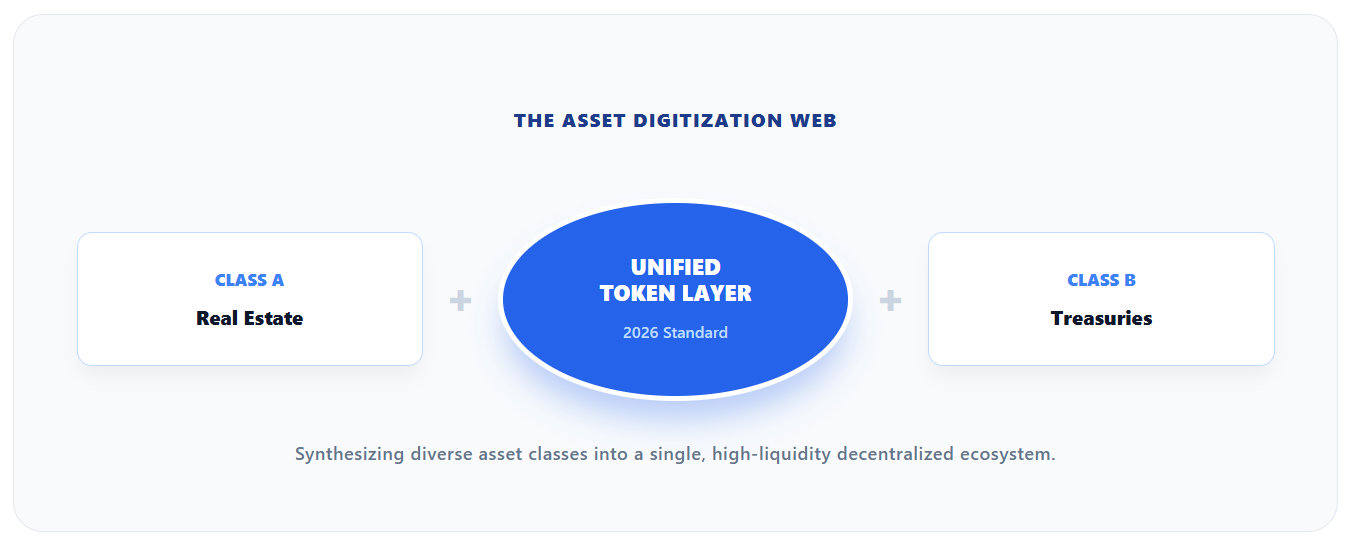
Digitalization of treasuries provides immediate yield for crypto native participants, while real estate tokenization enables small scale investors to access high value commercial properties previously reserved for institutional funds. Assets with existing revenue streams or yield potential tend to attract significantly more investor interest and maintain higher liquidity in secondary markets. Every asset class requires a specific valuation frequency, real estate might be updated quarterly whereas commodities require real time price feeds via decentralized oracles.
2 Establish Proper Legal Structure and Compliance Framework
Legal structuring is one of the most critical steps in RWA tokenization. Form a Special Purpose Vehicle (SPV) or equivalent legal entity to hold the underlying asset. Work closely with experienced legal counsel to ensure compliance with relevant regulations such as the EU MiCA framework, the US GENIUS Act, or VARA licensing in the UAE. MiCA compliance ensures your tokens are recognized across European markets, while the GENIUS Act governs how digital securities are classified under US law. Define clear rights for token holders regarding ownership, revenue share, redemption, and voting.
The legal framework must ensure bankruptcy remoteness, meaning the token holders remain protected even if the issuing company faces financial difficulty. This compartmentalization of risk is what allows institutions to trust the on chain representation of the asset. Furthermore, jurisdictional selection is vital; your chosen regulatory sandbox must support the smart contract based transfer of legal titles to avoid expensive double documentation during every trade. A properly built legal entity ensures that the digital token represents a perfect claim on the physical underlying asset.
The Institutional Compliance Pipeline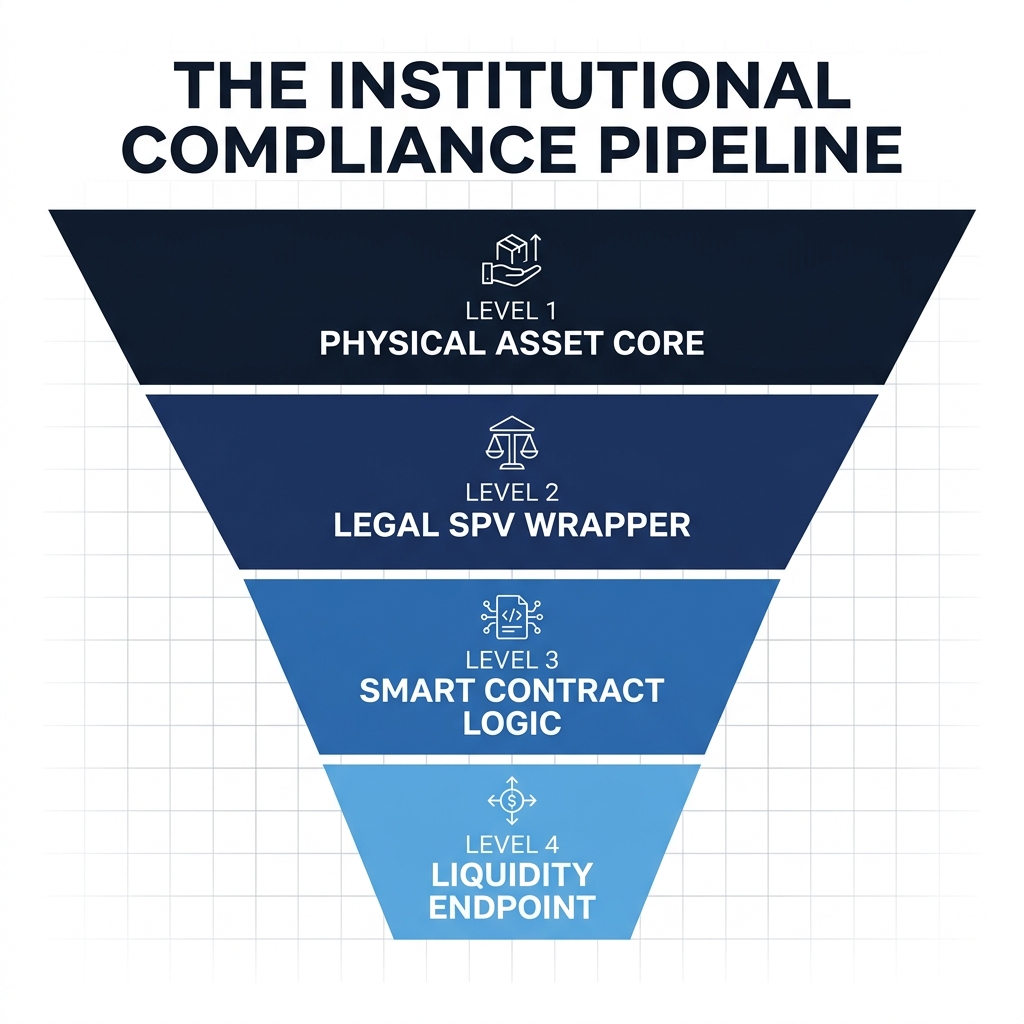
3 Design Robust Tokenomics and Token Rights
Create a clear and fair tokenomics model that aligns incentives between the project, asset owners, and investors. Decide whether your tokens will represent direct ownership, revenue participation, or utility rights. Specify total supply, allocation percentages, vesting schedules, and any transfer restrictions. In 2026, investors particularly value tokens that offer real economic benefits such as yield distribution or governance participation. Well designed tokenomics significantly improve fundraising success and long term project sustainability.
4 Choose the Optimal Blockchain Network and Architecture
Select the blockchain network based on your target audience, transaction costs, speed, and security requirements. Many projects in 2026 choose Ethereum Layer 2 solutions or Solana for their balance of security and low fees. Consider multi chain deployment from the beginning to maximize accessibility and reduce dependency on a single network. Plan for future interoperability using established bridging protocols to allow tokens to move seamlessly across ecosystems.
5 Develop and Audit Secure Smart Contracts
Build the core smart contracts using industry standard libraries such as OpenZeppelin. Implement features including minting logic, transfer restrictions, vesting schedules, and compliance hooks. Use upgradeable proxy patterns to allow future improvements without compromising security. Conduct multiple rounds of professional security audits from leading firms. In 2026, rigorous auditing has become non negotiable for gaining investor trust and reducing risk.
6 Integrate Reliable Oracles and Proof of Reserves
Connect your platform to trusted oracles such as Chainlink to provide real time verification of the underlying asset’s value and existence. Implement on chain proof of reserves mechanisms so investors can independently verify that tokenized assets are fully backed. This transparency is one of the biggest advantages of RWA tokenization and helps differentiate your project in a competitive market.
7 Implement KYC, AML, and Regulatory Compliance Tools
Add robust Know Your Customer (KYC) and Anti Money Laundering (AML) verification layers to your platform. This step is especially important if you want to attract institutional capital or operate in regulated jurisdictions. Design the system to be flexible so you can enable or disable KYC requirements based on investor type, transaction volume, and regional regulatory needs. Modern tools now utilize Zero Knowledge Proofs to verify identity without exposing sensitive user data on the public ledger.
Furthermore, automated travel rule compliance must be integrated to facilitate seamless transfers between regulated centralized exchanges and your dApp. By automating the screening of wallets against global sanctions lists, we ensure your platform remains shielded from illicit activity while maintaining a frictionless onboarding experience for legitimate investors. Compliance is not a one time hurdle but a continuous background process powered by integrated identity providers.
8 Build Secondary Market Liquidity Solutions
Plan for liquidity from the beginning. Integrate your tokenized assets with decentralized exchanges or dedicated RWA trading platforms. Provide clear redemption mechanisms so investors can convert tokens back into the underlying asset when needed. Strong secondary market support increases token attractiveness and long term holding value for all participants. In 2026, we focus on hybrid liquidity models that combine Automated Market Makers (AMMs) for retail access with institutional order books for large block trades.
By providing deep liquidity, you reduce price slippage and ensure that investors can exit their positions at fair market value. This is particularly important for fractional real estate where traditional sales can take months; on chain liquidity pools allow for near instantaneous settlement. Additionally, the integration of liquidity mining programs can incentivize early backers to provide capital to the pools, ensuring a robust trading environment from day one of the launch.
9 Develop User-Friendly Interfaces and Dashboards
Create intuitive front end interfaces that make it easy for both retail and institutional investors to buy, sell, track, and redeem tokenized assets. Include clear dashboards showing asset performance, yield distribution, and transaction history. A smooth user experience significantly improves adoption rates and reduces support queries.
10 Create a Comprehensive Go-to-Market Strategy
Develop a detailed marketing plan that educates potential investors about the benefits of tokenized assets. Use content marketing, targeted campaigns, webinars, and strategic partnerships to build awareness. Focus on transparency and real value rather than hype. A strong go to market strategy helps you reach the right audience and achieve successful initial token distribution.
11 Test Thoroughly and Prepare for Launch
Run extensive testing on testnets to validate every component of your platform. Test user flows, smart contract functionality, oracle integrations, compliance checks, and redemption processes. Conduct security stress tests and simulate various market conditions. Proper testing minimizes launch risks and builds confidence among early participants.
12 Choose the Right Development and Technical Partner
Partner with an experienced team that understands both traditional asset tokenization and blockchain technology. At Blockchain App Factory we provide complete end to end RWA tokenization services including legal guidance, smart contract development, oracle integration, compliance setup, liquidity solutions, and post launch support.
Ready to Tokenize Real World Assets in 2026?
Unlock global liquidity and fractional ownership for your assets today.
At Blockchain App Factory we possess the technical depth to guide you through every stage of the RWA tokenization journey. Whether you are digitizing real estate, treasuries, or private credit, we deliver market-ready solutions.