Key Insights
- They use quests, rewards, and gamification to drive real community participation.
- Projects can align quests, rewards, and user journeys with their own tokenomics.
- Wallet activity, protocol usage, retention, and governance participation matter most.
Your Web3 project needs more than a great product to succeed. You need active communities, engaged participants, and sustainable growth loops that keep people coming back. Generic marketing tools built for Web2 fall short in blockchain ecosystems where community ownership, token incentives, and on-chain behavior drive success.
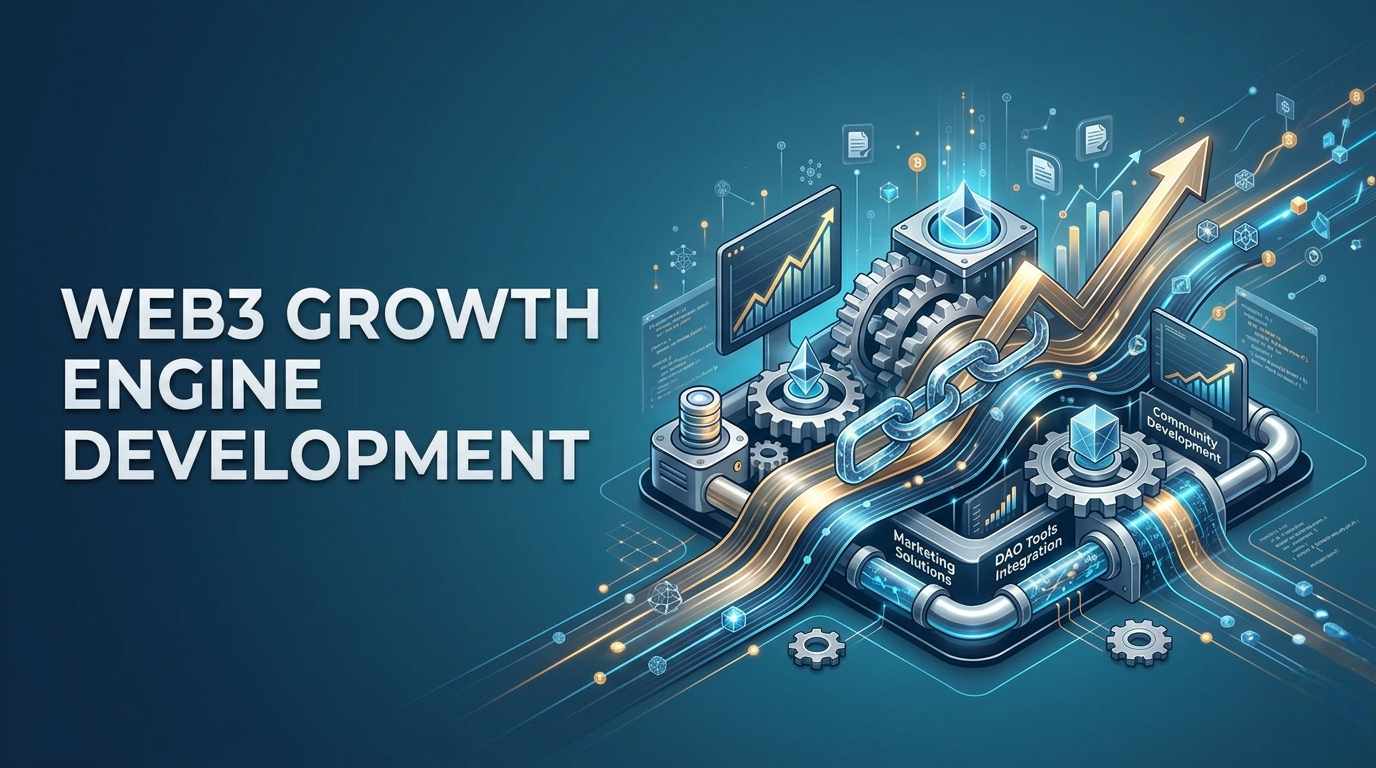
Web3 growth engines solve this problem. These custom-built platforms combine quest systems, reward mechanisms, and community gamification to create engagement loops that align with your project’s tokenomics and community goals. Instead of relying on external platforms like Galxe or Clique, you build your own growth infrastructure tailored to your specific needs.
This guide covers how to develop custom Web3 growth tools that turn passive followers into active community members and drive measurable on-chain engagement for your project.
What Is a Web3 Growth Engine?
A Web3 growth engine is a custom platform that gamifies community engagement through blockchain-native mechanics. Unlike traditional marketing funnels that focus on conversions, these tools create ongoing participation loops where community members complete tasks, earn rewards, and build deeper connections with your project.
The core difference lies in ownership and incentives. Traditional growth tools track engagement metrics. Web3 growth engines create verifiable on-chain actions that participants own and benefit from directly.
Key characteristics include:
- On-chain verification: Tasks and rewards connect to smart contracts
- Token-based incentives: Participants earn your project tokens or NFTs
- Community ownership: Participants build reputation and status within your ecosystem
- Composability: Integrates with other Web3 tools and protocols
Successful Web3 projects use growth engines to bridge the gap between initial awareness and long-term community participation. Instead of one-time campaigns, you create ongoing systems that reward valuable behaviors and strengthen your ecosystem over time.
Why Standard Marketing Doesn’t Work in Web3
Web2 marketing focuses on attention and conversion. Web3 marketing focuses on participation and retention. This fundamental difference makes traditional growth tools ineffective for blockchain projects.
Standard marketing challenges in Web3:
Audience expectations differ. Web3 participants expect to own their data, earn from their engagement, and have governance rights. Traditional email campaigns and social media ads feel extractive rather than collaborative.
Metrics don’t align. Page views and click-through rates matter less than wallet connections, on-chain transactions, and community governance participation. You need tools that track blockchain-specific behaviors.
Incentive structures clash. Web2 growth relies on psychological triggers and scarcity. Web3 growth relies on token economics and community ownership. Your growth tools must integrate with your project’s tokenomics.
Trust mechanisms differ. Web2 builds trust through brand recognition and social proof. Web3 builds trust through transparent smart contracts and verifiable on-chain history. Your growth platform needs to demonstrate these qualities.
Custom Web3 growth engines address these gaps by creating systems that feel native to blockchain ecosystems while driving the specific behaviors your project needs to succeed.
Core Components of Web3 Growth Tools
Effective Web3 growth engines combine several interconnected systems that work together to drive engagement and retention.
Quest and Task Management
The foundation of any Web3 growth engine is a flexible quest system that can track both on-chain and off-chain activities. This includes:
- Smart contract interactions: Staking tokens, providing liquidity, or using your dApp
- Social engagement: Sharing content, joining Discord, or referring friends
- Educational tasks: Completing tutorials, reading documentation, or passing quizzes
- Community contributions: Creating content, moderating discussions, or organizing events
Reward Distribution Systems
Your growth engine needs automated systems to distribute rewards based on completed tasks:
- Token rewards: Direct payments from your project treasury
- NFT badges: Collectible proof of achievement and community status
- Access rights: Exclusive channels, early product access, or governance voting
- Multipliers: Bonus rewards for consistent participation or difficult tasks
Progress Tracking and Leaderboards
Gamification elements that encourage continued participation:
- Experience points: Cumulative scoring system for all activities
- Levels and ranks: Visual progression that unlocks new opportunities
- Seasonal campaigns: Time-limited competitions with special rewards
- Team challenges: Group-based activities that strengthen community bonds
Integration Capabilities
Your growth engine must connect seamlessly with your existing Web3 infrastructure:
- Wallet connectivity: Support for multiple wallet types and blockchain networks
- Smart contract integration: Direct communication with your project’s contracts
- API endpoints: Data sharing with other tools in your ecosystem
- Analytics dashboards: Real-time insights into engagement and growth metrics
Quest Systems: The Foundation of Web3 Engagement
Quest systems transform passive community members into active participants by creating clear pathways for engagement. Well-designed quests align community actions with your project’s growth objectives.
Types of Effective Quests
Onboarding quests guide new community members through your ecosystem. These might include connecting a wallet, joining your Discord server, following social media accounts, and completing their first on-chain transaction with your protocol.
Educational quests build understanding of your project and the broader Web3 space. Examples include reading whitepapers, watching tutorial videos, participating in AMAs, or passing knowledge tests about DeFi concepts.
Social quests expand your community reach through referrals and content sharing. These work best when they feel authentic rather than purely promotional. Consider quests that reward quality contributions over quantity.
On-chain quests drive direct usage of your protocol or product. These create the most valuable engagement because they represent real adoption. Examples include making trades, providing liquidity, staking tokens, or participating in governance votes.
Quest Design Principles
Start simple, scale complexity. New participants should be able to complete basic quests immediately. Advanced quests can require multiple steps or significant time investment.
Balance effort and reward. Quest difficulty should match reward value. Simple social tasks might earn small token amounts, while complex on-chain activities should provide meaningful rewards.
Create progression pathways. Link quests together so completing one unlocks others. This creates natural engagement flows that keep participants active over time.
Include time-sensitive elements. Limited-time quests create urgency and prevent participants from indefinitely postponing engagement.
The team at Blockchain App Factory has built quest systems for projects across DeFi, GameFi, and NFT verticals, creating engagement loops that drive both short-term activity and long-term community growth.
Want to Build a Web3 Growth Engine for Your Project?
Turn your community into active participants with custom quest systems and reward loops.

Reward Mechanisms That Drive Behavior
Your reward system determines whether participants engage once or become long-term community members. Effective Web3 rewards create value that compounds over time.
Token-Based Rewards
Direct token payments work well for high-value activities like providing liquidity or participating in governance. The key is ensuring reward amounts align with the economic value created by the activity.
Consider implementing vesting schedules for larger rewards to encourage long-term participation. Immediate rewards work for smaller tasks, but significant token grants should vest over time to align participant incentives with project success.
NFT Achievements and Badges
Non-fungible tokens serve as permanent proof of community participation and achievement. Unlike tokens that get spent, NFT badges create lasting status within your community.
Design NFT rewards with multiple use cases:
- Access control: Holders get exclusive Discord channels or early product access
- Governance weight: NFT holders receive additional voting power in community decisions
- Trading value: Rare achievement NFTs can develop secondary market value
- Composability: Other projects in your ecosystem can recognize and reward your NFT holders
Progressive Reward Structures
Linear reward systems become boring quickly. Progressive structures maintain engagement by increasing rewards for continued participation.
Examples include:
- Streak bonuses: Additional rewards for completing daily or weekly tasks consistently
- Level multipliers: Higher-level community members earn more from the same activities
- Loyalty rewards: Long-term participants receive periodic bonus distributions
- Achievement unlocks: Completing certain milestones opens access to higher-value quest categories
Community-Driven Rewards
Some of the most effective rewards come from the community itself rather than your project treasury. These include:
- Peer recognition: Community voting on valuable contributions with token rewards
- Content creator programs: Revenue sharing for community members who create educational content
- Referral bonuses: Rewards for bringing new active participants to your ecosystem
- Governance participation: Token rewards for thoughtful participation in community decisions
Community Gamification Strategies
Gamification transforms routine community activities into engaging experiences that participants actively seek out. The key is understanding what motivates your specific community.
Competition and Leaderboards
Leaderboards tap into competitive instincts while showcasing top community contributors. Effective leaderboard design includes multiple categories so different types of participants can excel.
Consider these leaderboard types:
- Overall engagement: Total points across all activities
- Specialized categories: Top traders, best content creators, most helpful community members
- Team competitions: Groups competing against each other in challenges
- Seasonal resets: Regular fresh starts so new participants can compete
Social Recognition Systems
Public recognition often motivates participants more than token rewards. Your growth engine should highlight community achievements in ways that build social status.
Effective recognition mechanisms:
- Featured member spotlights: Regular highlights of outstanding community contributors
- Achievement announcements: Public celebration when someone completes difficult quests
- Contributor profiles: Permanent records of individual community contributions
- Exclusive titles: Special Discord roles or forum badges for achievement holders
Collaborative Challenges
Individual quests drive personal engagement, but collaborative challenges build community bonds. These work especially well for projects that want to strengthen community cohesion.
Examples of collaborative challenges:
- Community goals: Collective targets like “1000 new stakers this month” with shared rewards
- Knowledge building: Community-wide efforts to create educational resources or documentation
- Protocol improvement: Collaborative testing of new features with feedback rewards
- Cross-project partnerships: Joint challenges with other Web3 communities
Seasonal Events and Campaigns
Regular special events maintain community excitement and provide natural marketing moments. These should align with your project milestones or broader crypto market cycles.
Seasonal campaign ideas:
- Launch celebrations: Special quests and rewards around major product releases
- Holiday themes: Community events tied to real-world holidays or crypto-specific celebrations
- Market milestone rewards: Special bonuses when your token hits certain price levels or adoption metrics
- Anniversary events: Annual celebrations of community milestones with exclusive rewards
Technical Architecture for Growth Engines
Building a robust Web3 growth engine requires careful technical planning to ensure scalability, security, and seamless blockchain integration.
Smart Contract Infrastructure
Your growth engine needs smart contracts that handle reward distribution, quest verification, and participant tracking. These contracts must be audited for security and optimized for gas efficiency.
Core smart contract functions:
- Quest registration: Adding new quests and updating requirements
- Completion verification: Confirming participants have met quest criteria
- Reward distribution: Automated token or NFT transfers upon quest completion
- Progress tracking: Maintaining participant scores, levels, and achievement records
Off-Chain Components
While blockchain provides trust and ownership, off-chain systems handle user interfaces, complex logic, and integration with external services.
Essential off-chain infrastructure:
- Web application: User-friendly interface for viewing quests, tracking progress, and claiming rewards
- API backend: Handles user authentication, quest logic, and blockchain interactions
- Database systems: Stores user profiles, quest definitions, and engagement analytics
- Integration services: Connects with Discord, Twitter, and other external platforms
Blockchain Network Considerations
Your choice of blockchain network affects user experience, development costs, and scalability. Consider these factors:
Transaction costs: High gas fees on Ethereum can make small rewards uneconomical. Layer 2 solutions like Polygon offer lower costs while maintaining security.
Network effects: Building on networks where your target community is already active reduces onboarding friction.
Developer tools: Mature development ecosystems make building and maintaining your growth engine easier.
Interoperability: Consider whether your growth engine needs to work across multiple blockchain networks.
Security and Audit Requirements
Growth engines handle token rewards and user data, making security paramount. Plan for comprehensive security measures:
- Smart contract audits: Professional security reviews before mainnet deployment
- Access controls: Multi-signature requirements for administrative functions
- Rate limiting: Prevents abuse of quest systems and reward claiming
- Data protection: Secure handling of user information and wallet addresses
Blockchain App Factory’s development team has built secure, scalable growth engines across multiple blockchain networks, ensuring your platform can handle growth while maintaining security standards.
Custom vs. Off-the-Shelf Solutions
Choosing between building custom growth tools or using existing platforms like Galxe depends on your project’s specific needs, budget, and long-term strategy.
Benefits of Custom Development
Complete control over user experience. Custom platforms let you design every aspect of the participant journey to align with your brand and community culture. You’re not constrained by another platform’s design decisions or feature limitations.
Direct data ownership. Your growth engine collects valuable data about community engagement patterns, preferences, and behaviors. This data helps optimize your broader marketing and product strategies.
Seamless ecosystem integration. Custom tools integrate perfectly with your existing smart contracts, tokenomics, and community infrastructure. Participants don’t need to learn new platforms or create additional accounts.
Unique competitive advantages. Custom growth engines can implement novel gamification mechanics that differentiate your project from competitors using standard platforms.
When Off-the-Shelf Makes Sense
Limited development resources. If your team lacks blockchain development expertise or needs to launch growth campaigns quickly, existing platforms provide immediate functionality.
Testing growth concepts. Before investing in custom development, you might use existing platforms to validate which types of quests and rewards resonate with your community.
Cross-project collaboration. Some growth campaigns work better on shared platforms where participants can discover multiple projects simultaneously.
Budget constraints. Custom development requires significant upfront investment, while existing platforms typically charge based on usage.
Hybrid Approaches
Many successful projects start with existing platforms for initial growth campaigns, then develop custom tools as their communities mature and requirements become clearer.
This approach lets you:
- Validate demand for growth gamification before major development investment
- Learn from community feedback about preferred quest types and reward structures
- Build technical expertise gradually while maintaining growth momentum
- Plan custom features based on real usage data rather than assumptions
Development Process and Timeline
Building a custom Web3 growth engine typically takes 3-6 months depending on complexity and feature requirements. Understanding the development process helps you plan launches and allocate resources effectively.
Discovery and Planning Phase (2-4 weeks)
Requirements gathering: Define your growth objectives, target behaviors, and success metrics. This includes understanding your community’s preferences and technical constraints.
Technical architecture design: Plan smart contract structure, off-chain components, and blockchain network selection. Consider scalability requirements and integration needs.
User experience design: Create wireframes and user flows that make quest completion intuitive and rewarding. Plan for both new and experienced Web3 participants.
Tokenomics integration: Ensure reward mechanisms align with your project’s broader token economics and don’t create unintended incentives.
Development Phase (8-16 weeks)
Smart contract development: Build and test core contracts for quest management, reward distribution, and progress tracking. Include comprehensive unit tests and security measures.
Frontend development: Create responsive web applications that work across devices and wallet types. Implement real-time updates and smooth user interactions.
Backend systems: Develop APIs, databases, and integration services. Build monitoring and analytics capabilities for ongoing optimization.
Third-party integrations: Connect with Discord, Twitter, and other platforms your community uses. Implement wallet connectivity and blockchain interaction features.
Testing and Security Phase (2-4 weeks)
Smart contract auditing: Professional security reviews identify potential vulnerabilities before mainnet deployment. Address any issues discovered during audits.
User acceptance testing: Community beta testing ensures the platform works well for real participants. Gather feedback on user experience and quest difficulty.
Performance testing: Verify the platform can handle expected user loads and transaction volumes. Test blockchain interactions under various network conditions.
Bug fixes and optimization: Address issues discovered during testing and optimize performance based on real usage patterns.
Launch and Iteration (Ongoing)
Soft launch: Begin with limited features and a small group of community members. Monitor performance and gather detailed feedback.
Feature expansion: Add new quest types, reward mechanisms, and gamification elements based on community response and usage data.
Analytics and optimization: Use engagement data to refine quest design, adjust reward amounts, and improve user experience.
Community feedback integration: Regular updates based on participant suggestions and changing community needs.
Measuring Success: Key Metrics
Effective Web3 growth engines require different metrics than traditional marketing campaigns. Focus on blockchain-specific engagement indicators that align with your project’s goals.
Engagement Metrics
Active participants: Track daily, weekly, and monthly active participants in your growth engine. Look for consistent engagement rather than just one-time participation.
Quest completion rates: Monitor which types of quests see high completion rates and which are abandoned. This data helps optimize quest design and difficulty.
Repeat engagement: Measure how often participants return to complete new quests. High repeat engagement indicates your gamification mechanics are working.
Time to completion: Track how long participants take to complete different quest types. This helps identify friction points and optimize user experience.
On-Chain Impact Metrics
Protocol usage increase: Measure whether growth engine participants increase their usage of your core product or protocol after completing quests.
Transaction volume: Track the total value of on-chain transactions generated through growth engine activities.
Retention rates: Monitor whether participants who engage with your growth engine remain active in your ecosystem longer than those who don’t.
Conversion to core activities: Measure how many growth engine participants become regular protocol users, token holders, or governance participants.
Community Health Indicators
Quality of contributions: Assess whether growth engine participants contribute valuable content, provide helpful support, or improve community discussions.
Social network effects: Track whether active growth engine participants successfully refer new community members.
Governance participation: Monitor whether engaged community members participate more actively in project governance and decision-making.
Cross-platform engagement: Measure whether growth engine participants become more active across your entire community ecosystem.
Economic Impact
Cost per engaged user: Calculate the token cost of acquiring and maintaining engaged community members through your growth engine.
Lifetime value: Estimate the long-term value created by participants who engage with your growth tools.
ROI on rewards: Compare the cost of reward distributions to the value created through increased protocol usage and community growth.
Token holder growth: Track whether growth engine participation leads to increased token ownership and longer holding periods.
Conclusion
Custom Web3 growth engines create sustainable competitive advantages by turning your community into active participants rather than passive followers. While platforms like Galxe provide quick solutions, custom tools offer complete control over user experience, data ownership, and ecosystem integration.
The development process requires careful planning, experienced blockchain developers, and ongoing optimization based on community feedback. When done correctly, these platforms drive measurable increases in protocol adoption, community engagement, and long-term participant retention.
Ready to build a growth engine that transforms your Web3 community? Learn more at www.blockchainappfactory.com to discuss your project’s specific needs and development timeline.
FAQs
How much does it cost to develop a custom Web3 growth engine?
Development costs vary significantly based on features, complexity, and blockchain network requirements. Basic growth engines with standard quest and reward functionality typically start around $50,000-$75,000. More complex platforms with advanced gamification, multi-chain support, and extensive integrations can cost $100,000-$200,000 or more. The investment often pays for itself through improved community engagement and protocol adoption.
What blockchain networks work best for growth engines?
The choice depends on your community and cost considerations. Ethereum provides the largest Web3 audience but high gas fees can make small rewards uneconomical. Polygon offers lower costs while maintaining Ethereum compatibility. Binance Smart Chain, Avalanche, and Solana each have active communities and lower transaction costs. Many projects choose networks where their target audience is already active.
How do you prevent gaming and abuse of quest systems?
Effective anti-abuse measures include wallet verification requirements, rate limiting on quest completion, human verification for complex tasks, and community reporting mechanisms. Smart contract design should include safeguards against automated abuse, while monitoring systems can detect unusual patterns. The key is balancing security with user experience to avoid creating friction for legitimate participants.
Can growth engines integrate with existing community tools?
Yes, well-designed growth engines integrate seamlessly with Discord servers, Telegram groups, Twitter accounts, and other community platforms. API connections allow automatic verification of social tasks, while webhook integrations can announce achievements and create cross-platform engagement loops. The goal is enhancing your existing community infrastructure rather than replacing it.
How long does it take to see results from a Web3 growth engine?
Initial engagement typically appears within days of launch, but meaningful community behavior changes usually take 4-8 weeks to develop. Participants need time to understand the system, complete initial quests, and develop habits around regular engagement. Long-term impact on protocol adoption and community health becomes measurable after 3-6 months of consistent operation.
What makes Web3 growth engines different from traditional loyalty programs?
Web3 growth engines provide participants with actual ownership of their achievements and rewards through blockchain technology. Unlike traditional programs where points exist only in company databases, Web3 rewards are tokens and NFTs that participants truly own. This creates stronger incentive alignment and allows rewards to have value beyond your specific project ecosystem.
Do you need smart contract audits for growth engine contracts?
Yes, smart contract audits are essential for any system handling token rewards or user funds. Even simple reward distribution contracts should undergo professional security review before mainnet deployment. The cost of audits is minimal compared to potential losses from security vulnerabilities, and audited contracts build community trust in your platform.

Vimal J is the Head of Sales at Blockchain App Factory, with 10+ years of experience in sales, client strategy, and Web3 business growth. He helps startups, enterprises, and project founders choose the right blockchain solutions for their goals, bringing a practical market perspective to topics like token development, crypto launches, and Web3 adoption.