


Key Insights
- Clear channels, role control, and guided onboarding help crypto communities stay useful and trusted.
- Rules, AutoMod, scam warnings, and tight permissions reduce spam, impersonation, and risky user behavior.
- AMAs, product updates, support spaces, and role-based programs build retention without empty hype.
For crypto projects, Discord is far more than a place for casual chat. It serves as a live community hub where teams handle support, share updates, answer technical questions, collect feedback, run AMAs, coordinate launches, manage ambassador groups, and respond to fast-moving issues. In many cases, it is the space where users form their first impression of a project. A weak server creates confusion, while a well-run server builds trust. That matters in crypto, where markets move fast, users ask tough questions, and bad actors look for openings. A project can have a strong product and still lose community confidence if its Discord feels chaotic, slow, or unsafe. Members notice poor moderation, unclear channels, weak permissions, and fake support messages very quickly. Once trust slips, recovery gets harder.
The strongest Discord communities do not grow from noise or member count alone. They grow from structure, moderation, and security that start early. Strong community teams set clear rules, define channel purpose, control permissions, verify users, automate routine tasks, and monitor member behavior closely. That work creates a server people can actually use, not just scroll through. This is one reason Discord remains so valuable for crypto teams. The platform gives admins tools for onboarding, insights, permissions, and protection that help turn a server into an operating system for community work. At the same time, crypto communities face constant pressure from phishing attempts, impersonation, fake announcements, scam links, and social engineering. That makes community management a business function, not a side task. A serious project must treat Discord with the same care it gives product, branding, and security, because the server often acts as the front desk, help center, event room, feedback loop, and trust layer at once.
Why Discord Matters for Crypto Community Management
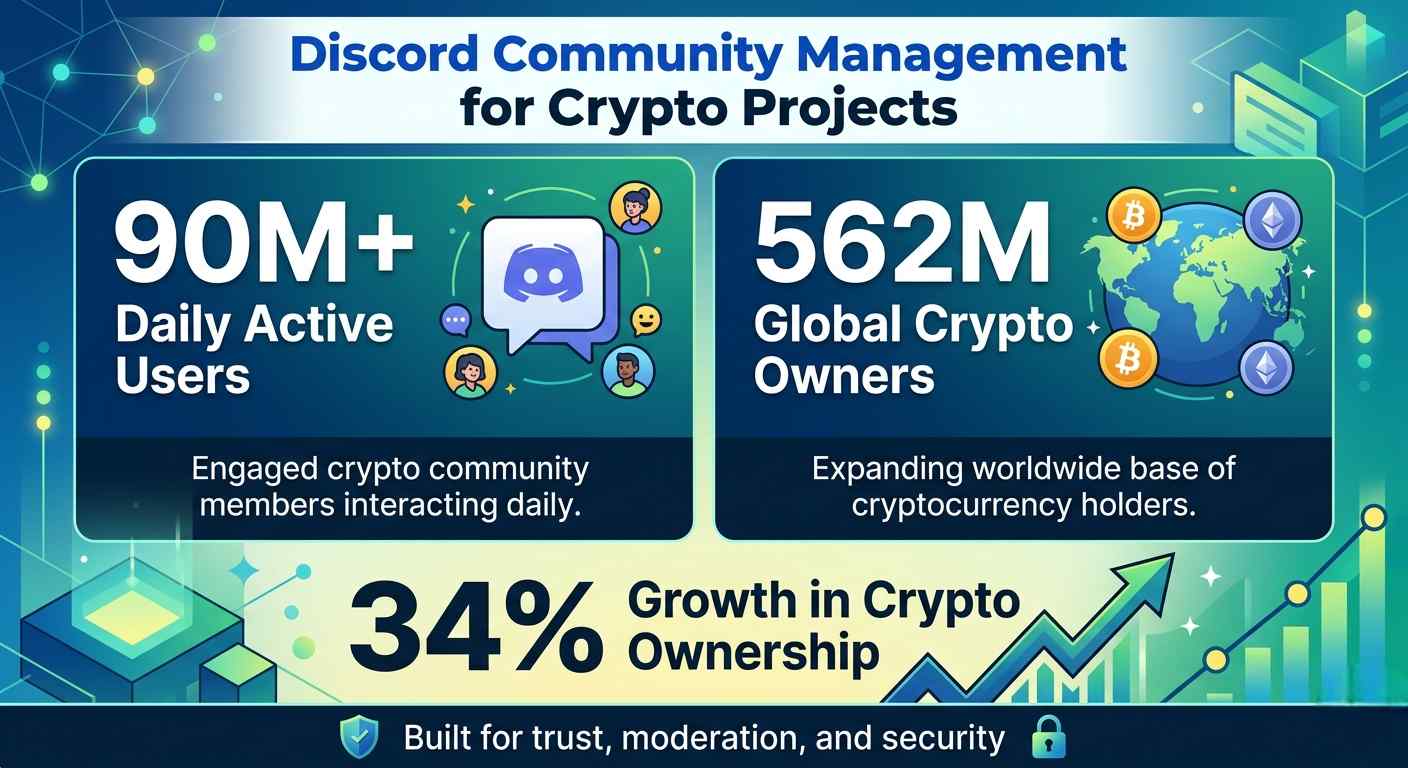
Discord fits crypto communities well because these projects need real-time interaction, structured discussion, and clear role-based access. A token launch, staking update, governance vote, or wallet issue can trigger hundreds of questions quickly, and simple chat groups often struggle to handle that. Discord gives teams better control over where conversations happen, who can join them, and how moderators keep the server organized.
That structure makes Discord especially useful for growth-stage projects. Teams can separate announcements, support, governance, education, partnerships, and regional chats into different channels. They can also gate access for holders, testers, contributors, or moderators, and use voice channels for AMAs and community calls. This creates a cleaner user experience and a more manageable workflow for staff.
For crypto brands, this affects more than convenience. It shapes retention, support quality, and launch execution. A poorly managed server can bury important updates, slow responses, and expose members to scams. A well-managed Discord community helps projects educate users, collect feedback, build trust, and keep communication clear during busy periods.
Compared with Telegram, Discord offers more structure, stronger moderation, and better segmentation. Telegram is useful for fast reach and simple broadcast communication, while Discord works better for deeper engagement, support, and long-term community operations. Many serious crypto projects benefit from using both, with Telegram for broad visibility and Discord for structured community management.
How to Structure a Discord Server for Scale and Trust
Server structure is the first layer of community management. A crypto Discord cannot stay healthy through moderation alone. It needs a clear layout, clear roles, and tight access rules from the start. Discord’s admin tools support this through rules screening, verification, permissions, and safety controls. When structure is weak, users miss updates, support questions go to the wrong places, and scammers exploit the confusion. A clean server prevents many of these problems before they grow.
Start with Clear Objectives
Crypto teams should treat server architecture like an operating model. Every category, channel, and role should have a clear purpose. Before building, the team should define its main goals, such as product education, holder engagement, technical support, governance, gaming activity, or ambassador coordination. Once the purpose is clear, channel planning becomes easier and the server avoids unnecessary clutter.
Build a Clear Channel Layout
A strong channel structure usually includes spaces for welcome and rules, official announcements, FAQs, product updates, support, general chat, feedback, events, regional communities, and private staff areas. This makes the server easy to scan and helps members quickly find where to start, where to ask for help, and where official information lives. Threads can also keep busy discussions organized without creating too many extra channels.
Create a Simple Role Hierarchy
Roles are just as important as channels. A healthy crypto server usually needs a simple hierarchy such as admin, community lead, moderator, support specialist, ambassador, verified member, and special access roles for holders or partners. Each role should match real responsibilities, not status. Members need to know who represents the project, who handles support, and who only has community access.
Use Least-Privilege Permissions
Permissions should follow a least-privilege model, which means each role gets only the access it truly needs. This is critical in crypto communities, where too much access can create serious risk. A compromised moderator or support account can spread fake links, false announcements, or scams in minutes. Limiting access to announcements, links, webhooks, integrations, and role management helps protect the server and makes trust easier to maintain.
Onboarding Best Practices for New Members
Onboarding sets the tone for the full community experience. A new member may join with interest, but that interest fades quickly in a confusing server. In crypto, the first few minutes matter even more because users already expect fake links, impersonation attempts, and noisy hype. A strong onboarding flow helps the project build trust before open participation begins.
Use Rules Screening to Set Expectations
Discord’s Rules Screening feature helps projects guide new members from the start. It requires users to read and accept rules before they can talk, react, or DM others in the server. For crypto communities, this should work as more than a behavior checklist. It should act as a first security briefing that warns users about scams, fake support accounts, unofficial token sale links, impersonation, and where to report suspicious activity.
Adjust Verification Based on Risk
Verification levels should match the level of community risk. During quiet periods, lighter settings may be enough. During token launches, airdrops, AMAs, or major announcements, stronger verification can help reduce spam, fake accounts, and raid attempts. A small amount of entry friction often prevents much larger moderation problems later.
Build a Clear Welcome Journey
A good welcome flow answers key questions before users need to ask them. A clear welcome channel should direct members to the rules, FAQ, official links, and support area. Teams can also add role selection for language, region, or user type when needed. This keeps the first experience simple, useful, and easier to navigate.
Use Read-Only Channels for Important Information
Read-only channels help keep essential information visible and protected from chat noise. Crypto projects can use them for roadmap updates, token utility explainers, audit links, official wallet and website links, security notices, and event calendars. When members can find trusted information quickly, the server feels more professional, safer, and easier to use.
Moderation Frameworks That Work for Crypto Communities
Good moderation is not a series of random reactions. It is a system. Crypto communities need that system more than most online groups. Price swings, token launches, airdrops, partner drops, and fake support attacks can flood a server in minutes. A team that relies on instinct alone will fall behind fast.
Discord itself pushes a mixed model. The platform gives admins tools for rules screening, verification, AutoMod, role controls, and raid protection. Discord also warns server owners to assign high-level permissions with extreme caution, since the Administrator permission bypasses all channel restrictions. That tells you something important right away: moderation starts long before a mod reads a bad message.
For crypto projects, the best moderation model combines preventive setup, automated filtering, and human judgment. Each layer does a different job. Preventive controls reduce risk before abuse appears. Automated tools catch volume and patterns at scale. Human moderators handle context, edge cases, and escalation.
The three-layer moderation model
A practical moderation system for crypto Discord servers works in three layers.
Preventive controls
This layer shapes who can enter, what they can do, and where they can post. It blocks common abuse before it starts.
Automated detection
This layer catches known patterns such as scam phrases, spam bursts, fake support language, and mention abuse.
Human review and escalation
This layer handles judgment calls. Mods review reports, apply penalties, log incidents, and send serious cases to senior staff.
This model keeps the server stable during both quiet periods and high-pressure events. It also stops moderators from carrying the whole burden by hand.
Preventive moderation controls
Preventive controls do much of the heavy lifting. They lower the amount of abuse that reaches public channels, and they make the server easier to manage during growth.
A strong preventive setup includes these parts:
Rules screening
Discord’s Rules Screening requires new members to accept the server rules before they can talk, react, or DM others in that server.
Verification levels
Discord offers five verification levels, from None to Highest, to control who can send messages. Discord states that these levels help stop bots and spam accounts from mass-joining public servers.
Channel restrictions
New members should not post everywhere on day one. Limit access until they pass basic checks.
Limited posting permissions for new users
Read-only onboarding and info channels reduce chaos and stop early spam bursts.
Official support boundaries
State clearly that support happens only in public channels or through a ticket flow. No wallet help in DMs.
Public scam warnings
Pin a plain warning in welcome and announcement areas. Tell users that admins never DM first and that unofficial token sale links are banned.
These controls work best when the team reviews them often. A launch week needs tighter settings than a slow week.
Automated moderation controls
Automation gives crypto teams speed. Discord’s AutoMod can filter harmful words and phrases, mention spam, and spammy text before messages go live. Discord says these filters work across text channels, threads, forum posts, and text chat in voice.
That matters on launch days. Manual review cannot keep up with sudden floods of fake help offers, copied scam links, and mass mentions. AutoMod can.
Crypto projects should build keyword and pattern blocks around real attack behavior. Good block lists often include:
Scam phrases
Words tied to fake claims, emergency wallet prompts, or rushed token sale messages.
Fake support language
Phrases such as “DM for support,” “sync wallet here,” or “manual verification needed.”
Suspicious domains
Common fake site patterns, URL shorteners, and lookalike domains.
Launch-day spam patterns
Repeated promo text, copied whitelist claims, and mass-posted invite messages.
Mention abuse
High-volume @everyone or role ping spam during hype events.
Discord also advises server owners to turn on AutoMod and use it to block bad messages before they are posted, which is a core anti-raid step.
Automation should not replace human moderation. It should cut noise so human moderators can focus on context and member trust.
Human moderation workflows
Crypto communities still need human review. Bots can catch patterns, but they cannot judge intent, read nuance, or decide how serious an abuse case is. That is where workflows matter.
A working human moderation flow should include:
Warning templates
Mods need standard wording for spam, abuse, impersonation, and off-topic promotion. This keeps enforcement consistent.
Timeout, kick, and ban decision tree
Use timeouts for low-level disruption. Use kicks for short-term removal. Use bans for scams, impersonation, repeated abuse, and malicious links.
Incident logging
Log the date, user ID, channel, action taken, and screenshots or message links.
Appeal process
Give members one clear place to appeal. Keep reviews private and documented.
Escalation path to senior admins
High-risk cases such as fake staff accounts, compromised integrations, or launch-day phishing need fast review by senior staff.
Evidence capture for abuse cases
Save screenshots, deleted message records, and timestamps before cleaning up public channels.
Consistency matters here. Members lose trust when one moderator deletes a scam post and another ignores the same behavior later in the day.
Moderation staffing model by project stage
A small early-stage project does not need the same staffing model as a global token ecosystem. The moderation team should grow with the server’s risk, traffic, and time-zone spread.
Early-stage startup community
A founder, one community lead, and a small mod team can usually handle this phase. Focus on rules, onboarding, and support triage.
Token launch or growth phase
This phase needs more eyes on the server. Add shift coverage, faster escalation, and tighter launch-day playbooks.
Mature multi-region project
A larger server needs regional moderators, language coverage, and structured handoff between time zones.
Always-on support community
Projects with live products, wallets, games, or financial tools need dedicated support staff and clear coordination with product and security teams.
The staffing rule is simple. If the server never sleeps, moderation cannot sleep either.
Want to turn your Discord server into a trusted community hub?
Strengthen your crypto community with better moderation, safer member interactions, and a server structure built for long-term engagement.

Crypto-Specific Security Best Practices for Discord
Security is where community management turns into asset protection. In crypto, a Discord mistake is not just a PR problem. It can lead to drained wallets, fake token sales, stolen credentials, and long-term trust damage. That is why Discord security should be treated as a core part of project risk control, not a side task.
Teach Members How Official Communication Works
Members need a simple rulebook for how official communication works. If the team leaves that unclear, scammers will fill the gap. Projects should clearly state that admins do not DM first, official links only appear in designated read-only channels, major announcements should be verified through the website and social accounts, and users should rely on bookmarked official links for important actions. These rules reduce panic and make fake urgency tactics less effective.
Manage Invite and Link Hygiene
Invite links need active management because old public links can become a security risk. Teams should track which invites are live, where they are posted, and who created them. Public invites should be rotated carefully, stale links should be removed, and older placements across websites, docs, blogs, and partner pages should be reviewed regularly. Good invite hygiene closes off a common weak point.
Protect Support From Impersonation
Support impersonation is one of the most common crypto attack paths on Discord. A fake helper can copy a staff name and send phishing links or wallet prompts through DMs. Projects should reduce this risk with verified support roles, a clear rule that no wallet help happens in DMs, a structured ticket or support flow, ready-made scam response messages, and a visible moderator list. The less guesswork members face, the safer the community becomes.
Require Strong Security for Staff
Staff account security matters just as much as public moderation. One compromised moderator or admin account can post fake announcements, remove warnings, or add harmful integrations. Teams should require multi-factor authentication for all moderators and admins, use strong password management, maintain clean and updated work devices, review admin rights regularly, and limit bot or app permissions to only what is necessary. Tight internal controls can prevent major losses.
Publish a Community Security Playbook
Every crypto Discord server should have a public security playbook that is short, clear, and easy to find. It should explain common scam examples, fake giveaway warning signs, how to report suspicious behavior, what to do after clicking a malicious link, and how the team will communicate during an incident. A playbook turns security from a vague warning into a repeatable process, which is exactly what crypto communities need.
Looking for a safer and more active Discord community?
Engagement Best Practices That Improve Retention Without Hype
Strong crypto communities do not grow through nonstop promotion. They grow through useful participation. People stay in a Discord server when it helps them learn, solve problems, and feel closer to the product. They leave when every channel feels like a sales feed. For crypto brands, the goal is not more messages. The goal is more useful messages.
Focus on Useful Engagement, Not Vanity Activity
Useful engagement gives members a reason to return. Vanity activity fills channels with repetitive hype, shallow contests, and forced chatter that adds little value. A stronger content rhythm includes product updates, roadmap explainers, technical breakdowns, governance Q&A, ecosystem education, and event recaps. These formats help members understand what the team is building and why it matters. They build trust through clarity rather than noise.
Use Community Formats That Add Real Value
Some engagement formats work well across most crypto communities because they give members direct access to the team in a structured way. AMAs help with founder updates, roadmap clarity, token design questions, and governance discussion. Office hours give users a predictable time to ask support or product questions. Product demos show progress more clearly than text announcements alone. Staged announcements with separate Q&A rooms keep important updates organized. Testing sessions and feedback threads also help turn active users into contributors instead of passive readers.
Encourage Peer Support and Expert Participation
A strong server should not depend on the team to answer every question alone. Good communities create room for peer support, where experienced users help newer members and moderators guide discussions into the right places. Crypto projects can support this by keeping an FAQ visible, creating one clear support area, and marking trusted helpers with visible roles. Public recognition also helps because it shows the server values useful contribution, not just activity. Expert participation matters as well. When product managers, engineers, researchers, or ecosystem partners speak at the right moments, the community becomes more credible and informative.
Build Role-Based Engagement Programs
Role-based engagement makes a crypto server more intentional. Not every member joins for the same reason, so roles help teams create different experiences without turning the server into a mess. Ambassador roles can support outreach and event help. Contributor recognition can reward members who answer questions, report bugs, or write guides. Beta tester groups can support previews and early feedback. Holder education rooms can focus on token utility and governance updates. Partner spotlights can give collaborators structured visibility without allowing random promotion. This kind of segmentation helps communities grow in a more organized and useful way.
Conclusion
A strong Discord community does not grow from noise alone. It grows from structure, trust, safety, and useful daily interaction. For crypto projects, that means clear server design, careful moderation, smart onboarding, tight security rules, and engagement that helps people learn and stay involved. Teams that treat Discord as a real business channel can build stronger retention, better support, and cleaner communication during product updates, token events, and community campaigns. For brands that want expert help with this process, Blockchain App Factory provides discord marketing to help crypto projects build, manage, and grow high-trust communities that support long-term success.

Vimal J is the Head of Sales at Blockchain App Factory, with 10+ years of experience in sales, client strategy, and Web3 business growth. He helps startups, enterprises, and project founders choose the right blockchain solutions for their goals, bringing a practical market perspective to topics like token development, crypto launches, and Web3 adoption.
Article Reviewed by:
Arun Kamala Santhanath
Marketing Head, Blockchain App Factory


