Key Insights
- Tokenization allows investors to buy small shares of high-value properties. This opens the market to more people without requiring millions in capital.
- Digital tokens track ownership and income distribution on a secure blockchain. Investors can verify transactions without relying on middlemen.
- The Delin Building project sets a benchmark for regulated tokenized properties. It highlights the city’s readiness for cross-border and global investment opportunities.
Imagine owning a part of a Hong Kong apartment without needing millions in your bank account. It might sound impossible, but tokenization makes it real. In simple terms, tokenization turns a property into digital tokens. Each token is a small piece of ownership, similar to a share in a company. You don’t have to buy the whole building. You can own just a fraction and still benefit from the property.
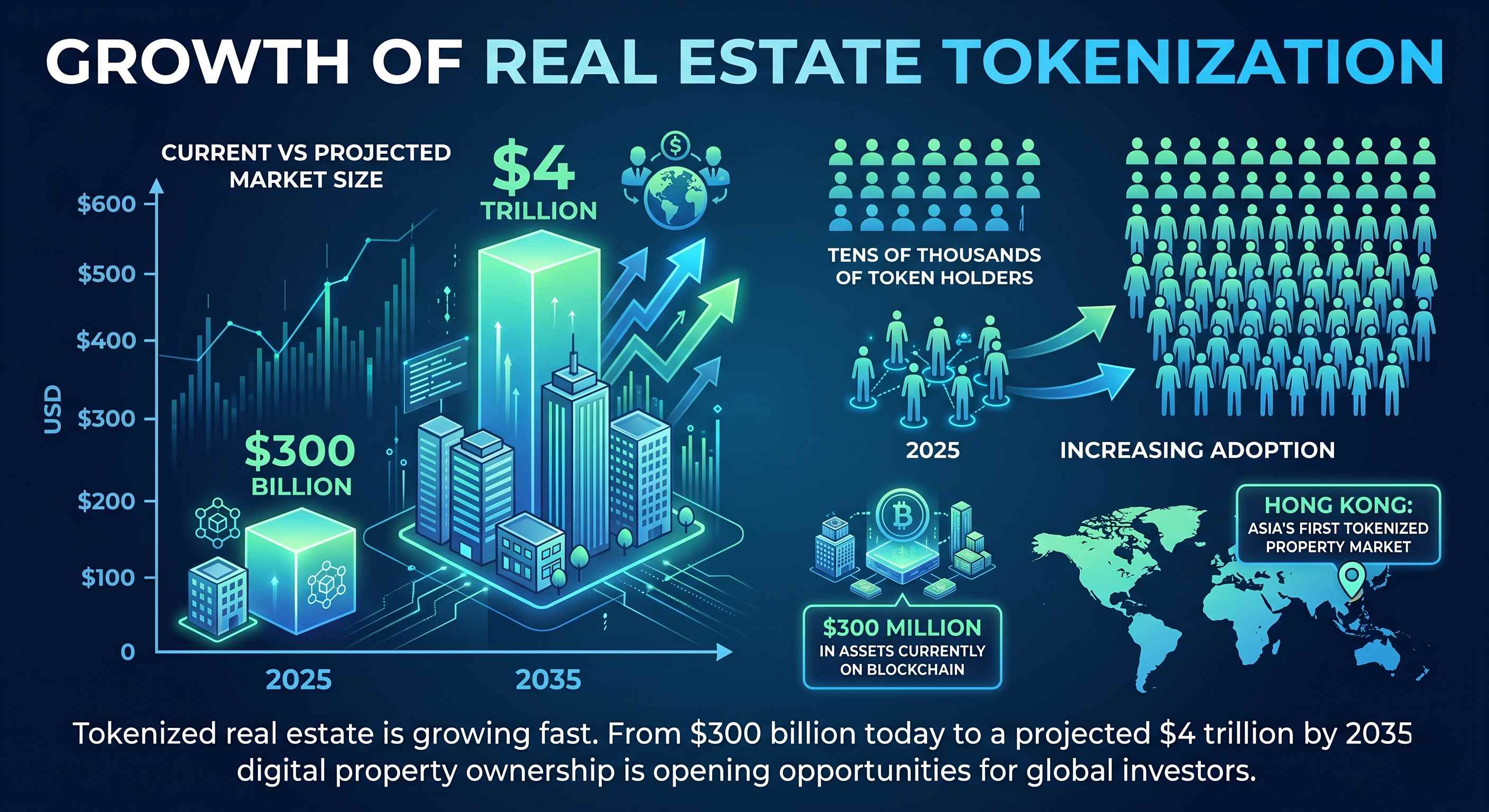
This isn’t just a local curiosity. Analysts estimate that global real estate tokenization could grow from under $300 billion today to around $4 trillion by 2035, as more investors and developers embrace the model. The market is already showing strong interest, with tens of thousands of token holders and over $300 million in assets currently locked on blockchain platforms. These numbers highlight that tokenized property is moving beyond experimentation into a rapidly growing investment segment.
This story goes beyond technology. It focuses on a real building in Hong Kong, the first to be offered this way. Investors from around the world are paying attention, and the market is starting to think differently. In this article, we will explain how this tokenized property works, who is behind it, and why it matters for anyone interested in property investment.
What Is Real Estate Tokenization? A Beginner-Friendly Breakdown
Digital shares for property ownership
Think of a property as a pie. Traditional ownership means buying the whole pie yourself. Tokenization slices it into many pieces. Each piece is a digital token representing a real stake in the property. You can own one piece or many, depending on your investment.
How this differs from normal property investment
In the past, only wealthy buyers or companies could afford large properties. Tokenization changes that. More people can participate, and you don’t need to go through banks for big loans or sign a lot of paperwork. Everything is recorded digitally, which makes investing faster and easier.
Real World Assets simplified
Real World Assets, or RWAs, include tangible things like houses, offices, or land. When these assets are tokenized, the property’s value is mirrored in digital form. Investors can buy, hold, or sell these tokens without stepping inside the building. The ownership is digital but represents a real, physical asset.
Hong Kong’s Landmark Project: First Tokenized Property Launch
The project in a nutshell
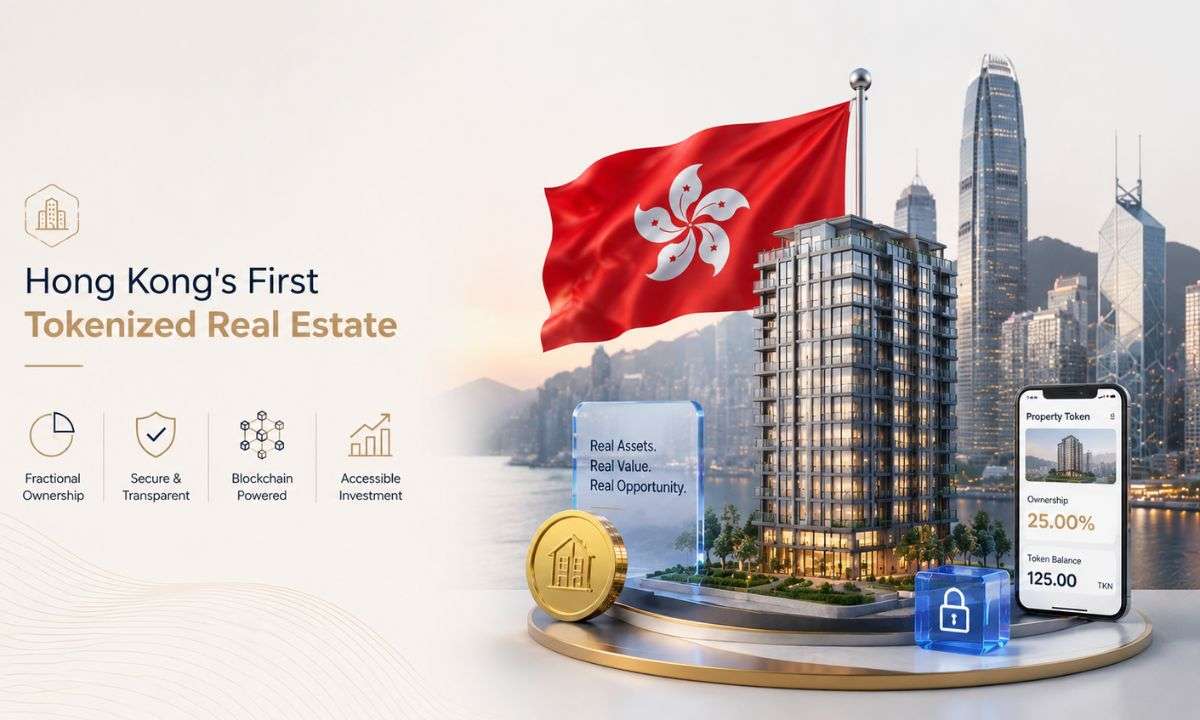
Hong Kong’s first tokenized property is the Delin Building. It has been digitized using HashKey Chain. Investors can buy tokens that correspond to shares in this building. This is the first time a property in the city has been offered in this way, setting a reference for future projects.
Who made it happen
The project was made possible through a collaboration between property developers, blockchain technology providers, and fintech firms. They handled everything from digitizing ownership records to managing secure token sales. These partnerships make it easier for investors who may not know the technical side of blockchain.
Legal approval and compliance
A key question for investors is legality. In Hong Kong, the Securities and Futures Commission (SFC) has guidance that allows this type of investment under certain rules. The Delin Building project followed these rules closely. Investors can participate knowing their tokens represent legitimate ownership rights under local law.
How It Works: The Mechanics of Tokenization
How tokens represent property ownership
When a property is tokenized, it doesn’t become a digital collectible. The ownership is organized through an LPF, or Limited Partnership Fund. The fund holds the property, and each token stands for a small share of it. Each token is a claim on a portion of the building’s value. The system keeps these records digital, so every investor can see exactly what they own in real time.
Smart contracts and safe recording
Tokens are managed with smart contracts, which are rules written on the blockchain. They handle transfers, record keeping, and payments automatically. There’s no need for a middleman to verify every transaction. The blockchain keeps a secure, permanent log of all actions. A custody system holds the tokens safely, like a bank keeping valuables. Together, smart contracts and custody ensure that ownership is secure and verifiable at any moment.
What investors actually receive
Buying a token gives you a share of the property’s profits and value. If the building earns rent or rises in value, token holders benefit proportionally. You don’t have to manage tenants or handle repairs. Your ownership is digital but backed by real property. Depending on the project, tokens can provide income distributions and potential gains if the property increases in value.
Hong Kong’s Regulatory and Legal Framework
The SFC’s role
The Securities and Futures Commission (SFC) sets rules for investment products in Hong Kong. Tokenized property is not treated like an unregulated experiment. The SFC reviews projects to confirm they meet legal standards and protect investors. The Delin Building tokens moved forward only after meeting these requirements. Investors can trust that the tokens represent recognized ownership rights under local law.
The RWA registry platform
Hong Kong also created a Real World Asset (RWA) registry platform. It records details of tokenized assets like property or gold. This registry keeps information accessible and verifiable. Anyone buying tokens can see which asset each token represents and where the official record is kept. This reduces confusion and helps make the investment process smoother.
Protection and compliance
Regulatory rules are practical, not just formalities. They require clear disclosure of rights, risks, and how returns are distributed. Following these rules helps reduce misunderstandings and sets clear expectations for investors. Token ownership becomes a structured, understandable investment rather than a mystery.
Want to start investing in tokenized real estate today?
Explore how Blockchain App Factory can help you convert properties into digital tokens securely. Start fractional property investment and access global opportunities.

Real Estate Tokenization Across Asia and Globally
How Hong Kong compares with other hubs
Hong Kong isn’t the only city exploring property tokenization, but it has moved faster than most. Singapore has run pilot programs for commercial properties, and developers in the UAE are testing token sales too. What sets Hong Kong apart is its combination of clear rules and collaboration between public and private organizations. This allowed the city to move from planning to actual token offerings while some other markets are still figuring out the framework.
Trends shaping tokenization worldwide
Property tokenization is spreading around the globe. In Europe and the Americas, both residential and commercial properties are being divided into digital tokens. Some projects focus on small apartment blocks, while others cover large office buildings. The common theme is that investors can access expensive real estate without buying a whole property. Small entry points make it easier for more people to invest in the market.
Borderless opportunities for investors
One major benefit of tokenized property is that it crosses borders. An investor in one country can own tokens for a property halfway across the world. There’s no need for a foreign bank account or piles of paperwork. This approach opens global investment opportunities and makes property ownership more accessible, without being tied to a specific location.
The Technology Behind the Tokens
HashKey Chain and the infrastructure
Every tokenized property relies on a digital system to track ownership. In Hong Kong, the Delin Building project uses the HashKey Chain. This blockchain acts like a sturdy ledger that records who owns what and keeps errors or fraud from happening. It meets the requirements of institutional investors, so larger stakes can be held with confidence.
Smart contracts and revenue management
Smart contracts are automatic rules built into the blockchain. For tokenized property, they manage rental income or dividends and send them directly to token holders. Everything happens according to the set rules, so investors don’t have to wait for checks or manual payments.
Security, accountability, and record keeping
Tokens come with built-in digital safeguards. Every transaction is logged on the blockchain, creating a permanent record. Investors can see how many tokens exist, who owns them, and how revenue is distributed. This system reduces uncertainty and gives reassurance similar to holding a certified title deed for a traditional property.
Investment Pathways for Global Investors
Accessing Hong Kong’s tokenized property market
If you live outside Hong Kong but want a stake in its real estate, tokenized property makes it surprisingly easy. You don’t need a local bank account, mortgage approval, or piles of legal paperwork. All you need is a digital wallet that can safely hold your tokens.
Steps to participate
- Set up a compatible digital wallet.
- Complete KYC (Know Your Customer) verification.
- Buy tokens based on the amount you want to invest.
These steps let investors hold a fractional share of the property and receive any income or growth linked to it.
Example scenario
Suppose you want to invest $5,000 in the Delin Building. Instead of buying an entire apartment, you purchase tokens representing a small portion. Each month, you could receive a share of rental income tied to your tokens. If the property increases in value, your tokens could also gain value. This way, you benefit from real estate ownership without handling tenants or maintenance.
Market Impact: What Tokenization Means for Real Estate
More people can enter the market
Tokenization lowers the barrier to entry for real estate investment. You no longer need millions to participate. With digital tokens, smaller investors can join the market, bringing new capital and interest into properties that were once accessible only to wealthy buyers.
Liquidity for traditionally hard-to-sell assets
Selling high-value properties can take months or even years. Tokenization allows fractional ownership and, in some cases, trading on secondary platforms. This flexibility helps investors convert part of their stake into cash faster than selling the entire property.
Influence on traditional property investment
Tokenization may change how developers and investors approach property. Developers could design projects with tokenized shares in mind, rather than aiming only at wealthy buyers. Banks and investment firms might also offer tokenized assets, blending traditional and digital methods of property investment. This could reshape how people invest in real estate over time.
Conclusion
The launch of Hong Kong’s first tokenized property demonstrates how digital ownership is reshaping real estate investment. Fractional ownership, secure blockchain records, and regulated frameworks are opening doors for investors around the world, making high-value properties more accessible than ever before. Projects like the Delin Building show the potential of tokenization to combine real estate with modern technology while maintaining legal compliance. For businesses and investors looking to enter this space, Blockchain App Factory provides Real Estate Tokenization Services, helping turn properties into tradable digital assets efficiently and securely.

Vimal J is the Head of Sales at Blockchain App Factory, with 10+ years of experience in sales, client strategy, and Web3 business growth. He helps startups, enterprises, and project founders choose the right blockchain solutions for their goals, bringing a practical market perspective to topics like token development, crypto launches, and Web3 adoption.