Key Insights
- Platform choice shapes community outcomes by aligning with your main goal, Discord builds engagement while Telegram drives fast reach
- Engagement and reach need different tools, Discord supports interaction and events while Telegram delivers instant updates at scale
- Community strategy drives long-term value, strong management and active engagement lead to higher retention and better revenue potential
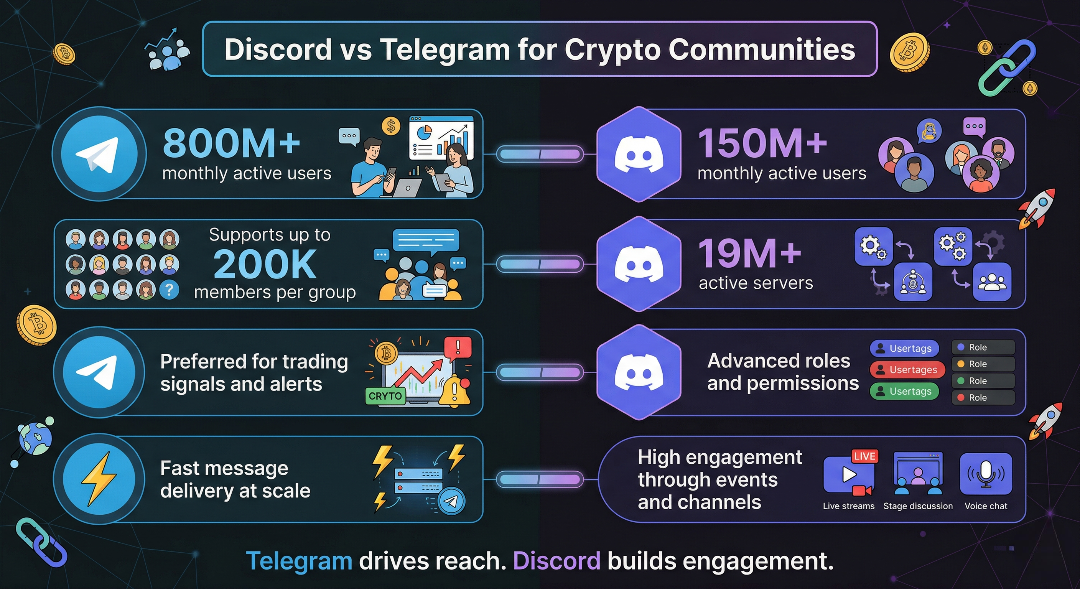
Crypto communities have expanded fast, and platform choice now shapes that growth in real terms. Telegram has more than 800 million monthly active users, and many crypto projects use it for announcements, trading groups, and market alerts. Discord has more than 150 million monthly active users and over 19 million active servers, with strong use across NFT, gaming, and Web3 groups. The gap is clear. Telegram leads in speed and audience size. Discord stands out for organized discussion, stronger member interaction, and deeper community building.
That split matters for businesses. Teams need a platform that matches their goals from day one. Discord gives brands structured spaces, role-based access, and stronger day-to-day engagement. Telegram gives brands fast updates, broad message reach, and simple setup. Each platform supports growth in a different way. This guide compares Discord and Telegram in clear business terms so teams can choose the right fit for community strategy, user retention, and revenue goals.
Discord vs Telegram – Quick Overview
What is Discord?
Discord is a community-first platform built around servers and channels. Each server works like a private hub where teams create separate spaces for topics, support, and announcements. This structure helps large crypto projects stay organized as they grow. NFT collections and DAOs often rely on Discord to manage thousands of users at once. It supports roles, permissions, and bots, which makes it useful for projects that need control and layered communication.
What is Telegram?
Telegram is a messaging app that focuses on speed and simplicity. It uses groups and channels to share updates with large audiences. Crypto traders and investors prefer Telegram for real-time alerts, price updates, and quick discussions. Many projects use it to broadcast news to thousands of users in seconds. Its clean interface and low setup time make it a popular choice for early-stage crypto startups.
Key Differences (Quick Snapshot)
Discord and Telegram serve different goals. Discord offers structure with multiple channels, so teams can organize conversations and manage large communities with ease. Telegram keeps things simple with one main chat or broadcast channel, which helps messages spread faster. Discord focuses on engagement through events, voice chats, and roles. Telegram focuses on reach and speed. Discord gives deeper moderation tools, while Telegram keeps admin controls basic and easy to use.
Why Crypto Communities Matter for Business Growth
-
Community as a Growth Engine
Crypto projects rely on people more than traditional products do. A strong community drives token demand and builds trust among investors. Data from 2023 shows that over 70 percent of successful token launches had active communities before launch. These users promote the project, answer questions, and create buzz across social platforms. This turns the community into a live marketing channel that runs every day without heavy ad spend.
-
Business Benefits
A well-managed crypto community improves retention and keeps users engaged over time. Active members return often, join discussions, and support new launches. Projects gain direct feedback from users, which helps teams fix issues and improve features faster. This reduces the need for costly research. Community-led growth also lowers customer acquisition costs, as referrals and word of mouth bring in new users without paid campaigns.
Discord vs Telegram – Feature Comparison
User Experience
Discord gives users a structured layout with multiple channels inside one server. Each channel serves a clear purpose, such as announcements, support, or trading chat. This keeps conversations organized even with thousands of members. Telegram keeps things simple with a single chat or channel where messages flow in real time. Users scroll through updates quickly, which works well for fast-moving crypto discussions and alerts.
Community Management Tools
Discord offers detailed control through roles and permissions. Admins assign roles like moderator, investor, or VIP, and each role has access to specific channels. Bots handle tasks such as spam filtering and user verification. Telegram keeps admin tools basic. Group admins can pin messages, remove users, and manage posts, but deeper control requires external bots or manual effort.
Scalability
Telegram supports very large groups with up to 200,000 members, which suits projects that aim for rapid growth. Messages load quickly even in busy groups. Discord can handle large communities too, but it needs a clear structure with categories and channels. Without that structure, conversations can become hard to manage as the user base grows.
Automation & Bots
Discord supports advanced bots that manage onboarding, verify token holders, and run engagement activities. Many NFT projects use bots to grant access based on wallet ownership. Telegram uses bots mainly for alerts, trading signals, and simple automation tasks. These bots help push updates fast but offer fewer customization options compared to Discord.
Engagement Features
Discord focuses on interaction. It supports voice channels, live events, and AMA sessions where teams speak directly with their community. This builds stronger relationships over time. Telegram limits engagement to text, voice notes, and basic live streams. It works well for updates but offers fewer tools for deep interaction.
Security & Privacy
Telegram attracts users who value privacy. It allows anonymous participation and offers encrypted chats. This appeals to traders who prefer minimal identity exposure. Discord focuses on control. Admins manage access through roles, restrict channels, and monitor activity more closely. This helps reduce spam and keeps discussions organized.
Want to grow your crypto community faster?
Build an active crypto community with expert Discord marketing services that drive engagement, user growth, and long-term retention.

Use Cases – Which Platform Should You Choose?
Choose Discord If You Want
Discord fits projects that aim for strong engagement and clear structure. NFT collections and DAO communities benefit from organized channels, role-based access, and interactive events. Teams can guide users through onboarding, support discussions, and exclusive content areas. This setup keeps members active and builds long-term loyalty.
Choose Telegram If You Want
Telegram suits projects that need speed and wide reach. Trading groups, signal providers, and early-stage token launches use it to send updates instantly. Messages reach thousands of users in seconds, which helps during market movements or announcements. Its simple interface makes it easy for new users to join and stay updated.
Best Strategy: Use Both
Many successful crypto projects use both platforms together. Discord handles engagement, community discussions, and events. Telegram handles announcements, alerts, and quick updates. This combination gives projects both depth and reach, which helps them grow faster and keep users informed at every stage.
Cost, ROI, and Business Value
-
Setup and Management Costs
Telegram is cheap and fast to launch. A team can create a group or channel in minutes and start posting updates the same day. This makes it a smart pick for early-stage crypto projects with small budgets. Discord takes more time at the start. Teams need to build channels, assign roles, set permissions, and install bots. That extra work pays off later. A well-built Discord server can support a larger and more active community without turning into chaos.
-
ROI Comparison
Discord often delivers stronger long-term returns through deeper engagement and better retention. Members spend more time inside structured channels, join live events, and take part in daily discussions. That activity helps teams build trust and keep users close after launch. Telegram drives a different kind of return. It helps projects grow fast and spread updates to a wide audience in real time. For brands that need reach and speed, Telegram can bring quick traction and lower promotion costs.
-
Monetization Opportunities
Both platforms give crypto projects clear ways to make money from their communities. Telegram works well for paid channels, premium trading groups, and private signal access. Discord fits token-gated spaces, paid memberships, and exclusive content for holders or investors. Teams can create member-only rooms, early access groups, and private education hubs. These offers turn a free community into a revenue channel and reward loyal members at the same time.
How to Build a Crypto Community (Step-by-Step)
Step 1: Define Your Goals
Start with one clear goal. Do you want fast growth, deeper engagement, or direct revenue from the community? Each goal shapes the platform, content plan, and team structure. A trading project may care most about speed and reach. An NFT brand may care more about loyalty and discussion. Clear goals help teams track the right numbers, such as member growth, daily activity, or paid conversions.
Step 2: Choose the Platform
Pick the platform that fits your audience and your project model. Telegram suits fast-moving communities that need quick alerts and simple communication. Discord suits projects that need structure, subgroups, and rich interaction. Think about user habits, too. Traders often prefer Telegram. NFT buyers, DAO members, and gaming users often prefer Discord. The right match saves time and improves member experience from day one.
Step 3: Set Up Your Community
Build the space with order from the start. On Discord, create channels for announcements, support, general chat, and team updates. Add roles and bots to manage access and reduce spam. On Telegram, set clear rules, pin key messages, and connect useful bots for alerts or moderation. Every crypto community needs clear posting rules, active admins, and fast scam control. A clean setup builds trust and keeps new members from leaving early.
Step 4: Grow Your Audience
Growth starts with strong visibility. Crypto teams often use airdrops, referral campaigns, influencer posts, and exchange partnerships to attract new members. Cross-promotion on X, Reddit, and crypto news sites can push traffic into your group fast. Good growth campaigns give people a reason to join now, not later. That reason can be early access, token rewards, whitelist spots, or market updates they cannot get elsewhere.
Step 5: Engage and Retain Users
A community only matters if people stay active. Teams need a steady stream of events, rewards, and useful content to keep attention high. AMA sessions, contests, meme campaigns, token rewards, and role badges can keep members involved week after week. Gamification works well in crypto groups since users like progress, status, and perks. Retention grows once members feel seen, heard, and rewarded for showing up.
Want to stand out in a crowded Web3 market?
Final Verdict – Discord vs Telegram
Discord Wins For
Discord stands out for projects that want strong engagement and clear structure. It works well for teams that plan to build long-term communities with active discussions. Features like channels, roles, and voice chats help members connect in smaller groups and stay involved. NFT projects and DAOs often choose Discord since it supports detailed interactions and deeper user participation over time.
Telegram Wins For
Telegram works best for speed and wide communication. It allows teams to send updates to thousands of users in seconds. This makes it ideal for trading groups, signal channels, and fast-moving crypto projects. The setup is simple, and users can join quickly without learning a complex interface. For projects that focus on reach and real-time updates, Telegram delivers strong results.
The Smart Choice
Many crypto projects use both platforms to cover all needs. Discord handles discussions, events, and community building. Telegram handles announcements, alerts, and quick updates. This combined setup gives teams better control over engagement and reach. It helps projects grow faster and keep users informed without missing key interactions.
Conclusion
Discord and Telegram both play key roles in crypto community building, but each serves a different purpose. Telegram helps projects reach large audiences fast, and Discord builds stronger engagement through structured interaction and active discussions. Many successful crypto brands use both platforms to balance reach and retention. The right setup can improve user trust, increase participation, and support long-term growth. Blockchain App Factory provides Discord marketing services that help businesses build well-structured communities, manage user engagement, and drive consistent growth in the crypto space.

Vimal J is the Head of Sales at Blockchain App Factory, with 10+ years of experience in sales, client strategy, and Web3 business growth. He helps startups, enterprises, and project founders choose the right blockchain solutions for their goals, bringing a practical market perspective to topics like token development, crypto launches, and Web3 adoption.