Key Insights
- The RWA on-chain market cap crossing $23 billion after doubling in a year shows rising confidence in tokenized assets. This shift suggests investors now see RWAs as a practical part of digital finance, not just an early-stage concept.
- Much of the market is being pushed by tokenized Treasuries, private credit, and fund-like products.That tells us demand is centered on assets tied to real value, steady returns, and financial use.
- Liquidity gaps, legal differences, and market concentration still limit wider adoption of tokenized assets.The next phase will depend on better access, stronger trust, and smoother market structure.
The real-world asset market has crossed $23 billion, and that number means more than a short burst of attention. It shows that tokenized assets are gaining a real place in digital finance. Not long ago, this area felt like a side topic in crypto. People discussed it with interest, but many still saw it as early and uncertain. That mood has shifted. More capital is now moving into tokenized versions of familiar financial products, and that is making RWAs look less like an experiment and more like a working part of the market.
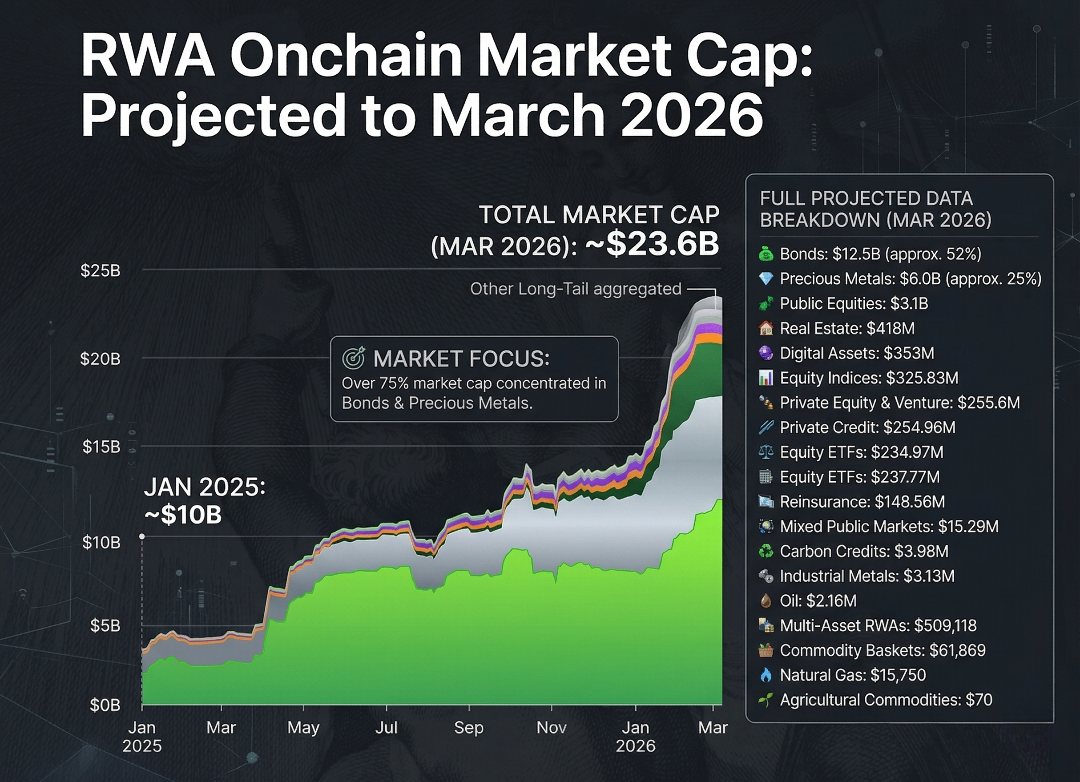
The image placed here helps reinforce that point. It gives readers a quick visual sense of how the on-chain RWA market has grown and how different asset classes are contributing to that rise. The chart supports the story, but the bigger point is what sits behind the number. Investors are paying more attention to assets that connect blockchain systems with real financial value.
Why This Figure Matters
The $23 billion mark matters for one simple reason. It reflects a change in trust. Investors are no longer looking only at crypto-native assets. They are also paying closer attention to products tied to bonds, credit, funds, and other instruments that already have a place in traditional finance. Once those assets move on-chain, digital finance starts to feel more familiar and easier to understand.
This is one reason RWAs are getting more attention now. They give blockchain-based finance a more grounded image. Crypto has often been linked with sharp price swings and short-term speculation. RWAs bring a different tone. They connect digital systems with assets people already know, and that makes the space feel more useful to a wider group of investors.
What This Change Says About the Market
This shift says a lot about where the market is heading. Blockchain is no longer being used only for native tokens or speculative activity. It is now being used to represent access to traditional assets in digital form. That is a meaningful step for the sector. It shows that the market is starting to value function and familiarity, not just novelty.
The rise in RWA activity also suggests that digital finance is entering a more practical phase. People still care about growth and price, but they are also looking at what an asset represents, how it works, and what kind of value sits behind it. That is a more mature pattern, and it gives this category more weight than it had in its earlier stage.
Quick Points
- The RWA market has passed $23 billion
- Tokenized assets are gaining a more serious role in digital finance
- The intro image supports the growth story without carrying the full argument
- Investors are showing more interest in familiar financial products on-chain
- The market is starting to value practical use over pure speculation
What Are RWAs?
RWAs, or real-world assets, are traditional assets that are represented on a blockchain. The idea is simple. An asset from the offline financial world is given a digital form that can be used in an on-chain system. The original asset still belongs to the real economy, but the ownership, claim, or exposure is reflected through a token. This gives investors a way to interact with familiar financial products through blockchain-based networks.
A Simple Definition
Think of RWAs as a bridge between traditional finance and digital finance. The asset itself does not become imaginary or abstract once it is tokenized. A U.S. Treasury is still a Treasury. A private credit product is still linked to lending activity. A money market fund still works as a lower-risk cash-style product. The difference is that the claim tied to the asset is now represented in token form, which changes how it is accessed, held, and moved.
That is what makes this category easier to understand than many people expect. The value does not come from hype alone. It comes from assets that already have a clear place in finance. Tokenization changes the wrapper, not the reason the asset matters.
How Tokenization Works
Tokenization is the process that turns a traditional asset into a digital token. It takes the value or ownership claim tied to an asset and records that claim on a blockchain. You can think of it as turning a paper-based record into a digital version that can move through online systems more easily. The asset remains rooted in the real world, but the format becomes more flexible for digital use.
This matters for access and movement. A tokenized asset can be transferred, tracked, and managed in a way that fits blockchain systems better than old paper-based or closed financial structures. That change is one reason tokenization is gaining interest. It gives familiar assets a digital form without removing their original financial purpose.
Common Examples of RWAs
A few examples make the category easier to picture. U.S. Treasuries are among the most talked-about RWAs because they are familiar and are often seen as lower-risk than many crypto assets. Private credit is another active category, since it gives investors exposure to lending-based returns. Money market funds are also part of this space, especially for those who want more stable options on-chain.
Then there is real estate, which often comes up in tokenization discussions because ownership can be divided into smaller portions. That makes access easier for people who cannot commit large amounts of capital at once. Commodities also fit well into this model. They already have recognized market value, and tokenized exposure can make them easier to access through digital channels.
Why RWAs Feel Different From Typical Crypto Assets
RWAs feel different from many crypto assets because they are tied to something people already understand. A large part of crypto still depends on market sentiment, momentum, and speculation. RWAs add a different layer. They connect blockchain activity with assets that have existing value, known structures, and more familiar income patterns.
That difference matters for trust. Many investors find it easier to assess an asset linked to bonds, credit, or funds than a token with no connection to a real-world financial product. This does not remove risk, but it does make the category easier to evaluate. For many market participants, that alone is a big reason RWAs are getting more attention now.
Why Crossing $23B Is a Big Deal
Crossing the $23 billion mark is a real milestone for the RWA market. It shows that this sector is no longer sitting on the edge of crypto conversations. More money is moving in, more platforms are paying attention, and more investors are treating tokenized assets as a category with staying power. A number like this does not appear by accident. It usually points to rising interest, repeated use, and a market that is starting to gain real traction.
A Fast Rise in a Short Time
The pace of growth matters just as much as the number itself. In its early phase, the RWA sector looked small and uncertain. It was often grouped into niche discussions, even inside crypto. That is no longer the case. The market has grown quickly, and that shift suggests that tokenized assets are finding a place that more people are willing to take seriously.
A fast rise like this often signals a change in behavior. People are not only reading about RWAs. They are putting capital into them. That is a major difference. Interest without participation means very little. Interest backed by money tells a different story, and that is what this milestone reflects.
Growing Confidence From Different Sides
This rise says something else too. Confidence is coming from more than one direction. Crypto-native investors are paying closer attention to RWAs since these assets connect digital markets with real income-producing instruments. For many of them, that offers a break from the sharp swings tied to purely speculative tokens.
Traditional finance firms are watching the same trend for a different reason. Tokenization gives them a new format for offering familiar products in digital form. That makes the category easier to take seriously. Once both groups start focusing on the same market, the signal becomes harder to ignore. It suggests that RWAs are moving past curiosity and entering a more established stage.
Big for On-Chain Finance, Small Next to Traditional Finance
Context still matters. $23 billion is small next to traditional finance. Global bond markets, private credit, and money market funds are vastly larger. No one should confuse this milestone with full-scale adoption across the financial system. That has not happened.
Still, within on-chain finance, this number carries real weight. It marks a clear shift in preference. More investors are showing interest in assets tied to cash flow, credit quality, and financial products they already understand. That matters. It shows that digital finance is starting to make room for assets that feel more practical and less speculative.
What the Number Really Tells Us
The bigger story is not the number alone. The bigger story is what the number says about market behavior. Investors are looking for assets with real backing. Platforms are giving more room to tokenized products. Institutions are starting to treat this category as worth their time. That combination turns a market headline into something more meaningful.
So, why is $23 billion a big deal? The answer is simple. It shows that RWAs are no longer just an idea with promise. They are becoming a real part of on-chain finance, and the market is starting to treat them that way.
Why Tokenized Assets Are Gaining Speed
The rise of tokenized assets is not happening by chance. Investors are paying closer attention for practical reasons. They want income-linked products, easier access, and systems that feel less slow than older financial channels. That mix is giving RWAs more room in the market and pulling them closer to mainstream financial use.
Demand for Yield and Stability
A big reason behind this trend is the search for steadier returns. Many investors are no longer satisfied with assets that depend only on sentiment and short-term price swings. They want products linked to real income, real borrowers, and assets that already have a place in traditional portfolios. That is where RWAs start to make sense. They offer a path into digital finance without asking investors to rely only on speculation.
Tokenized Treasuries and private credit products stand out in this setting. They are tied to financial structures people already understand. Their appeal comes from familiarity and the chance of more predictable returns. That does not remove risk, but it does make these assets feel easier to assess than many volatile crypto tokens. For investors who want on-chain exposure with less chaos, that difference matters.
Faster Asset Movement and Simpler Access
Another reason for the growing interest is the way blockchain changes how financial assets move. Traditional systems often involve delays, narrow market hours, and several layers of paperwork or middlemen. Tokenized assets offer a cleaner format. They can move through digital systems more directly, and they are not tied to the same rigid operating windows that many traditional markets still use.
That change matters in everyday use. People want faster settlement, easier transfers, and fewer barriers between buying and holding an asset. Tokenized formats answer some of those needs. They do not fix every problem, but they make digital access feel more natural. That matters to both users and platforms that want financial products to work more like modern online services and less like old back-office systems.
Institutional Interest Is Adding Weight
Institutional participation is another reason this market is moving forward. Large financial firms are showing more interest in tokenized products since these assets give them a digital route for familiar offerings. They are not entering this space for novelty. They are looking at distribution, market access, and new ways to package traditional instruments.
That matters for market perception. Once institutions enter a category, it starts to look less niche. Their presence brings more attention, more structure, and a greater sense of seriousness. It tells the market that tokenized assets are not only for crypto-native traders. They are beginning to look relevant to larger financial players with longer time horizons and stricter standards.
Better Access Through Fractional Ownership
Tokenization is also gaining interest since it can lower the entry barrier for some assets. In traditional finance, many products are hard to access. They may require large minimum investments, limited distribution channels, or investor status rules that keep them out of reach for most people. Tokenization can make entry easier by splitting exposure into smaller units.
This matters most in areas like real estate-linked products and certain fund structures. Instead of needing a large amount of capital, investors can get smaller pieces of exposure through tokenized formats. That makes the market feel more open. It does not remove every legal or financial limit, but it does make participation easier for a wider group than before.
Ready to Turn Real-World Assets Into On-Chain Products?
As interest in tokenized assets grows, businesses have a real chance to bring bonds, funds, real estate, and other assets onto the blockchain. Blockchain App Factory helps you build RWA tokenization solutions that fit your business goals and market needs.

The Categories Driving Most of the Growth
The biggest gains in the RWA market are coming from asset classes that already make sense to investors looking for income and relative stability. This is not a market led by flashy retail trends. It is being pushed forward by practical products with familiar financial use. That gives the sector a more grounded profile and helps explain why capital keeps moving into it.
Tokenized Treasuries Lead the Conversation
Tokenized Treasuries are one of the biggest growth areas in the market right now. Their appeal is easy to understand. They are tied to government-backed debt, they are familiar to a wide range of investors, and they offer a level of predictability that many crypto assets do not. For people seeking lower-volatility options on-chain, Treasuries often feel like the easiest starting point.
This category also benefits from trust. Investors already know what Treasuries are and how they work. Putting them on-chain changes access and distribution, but it does not change the basic financial idea behind them. That makes them easier to accept than newer or more speculative token categories.
Private Credit Keeps Gaining Interest
Private credit is another major part of the RWA story. These products give investors exposure to lending-based returns through digital channels. That appeals to users who want assets connected to real borrower activity rather than simple market momentum. The attraction here is not excitement. It is income potential linked to something more concrete than price speculation.
This category also fits well with the broader shift in investor behavior. Many participants now want assets that feel grounded in financial activity they can understand. Private credit meets that need. It offers a product type that already exists in traditional finance, then places it in a digital format that fits blockchain-based access.
Fund-Like Products Add Practical Use
Fund-like tokenized products are also taking a larger share of attention. These structures often package familiar financial exposure into a form that works more easily in on-chain systems. They appeal to investors who want something structured, recognizable, and easier to fit into a diversified digital portfolio.
Their growth says something useful about this market. People are not only chasing raw exposure. They are also looking for products that resemble established financial tools. That makes fund-style tokenized products an important part of current market growth.
Growth Is Still Concentrated in Practical Segments
What stands out most is where the momentum is coming from. The market is not being led by broad consumer excitement. It is being led by categories tied to yield, cash management, and credit exposure. That tells us the current RWA phase is more practical than promotional. The products gaining ground are the ones investors can understand and use with a clear reason behind the trade.
What This Trend Really Signals
The rise of RWAs signals a change in how blockchain is being used. For years, tokenization was often discussed as a large future idea. The concept sounded promising, but real use cases looked limited. That is starting to change. More capital is now moving into tokenized products tied to real assets, and that shows that blockchain is finding a role beyond native digital tokens.
This Is More Than a Crypto Talking Point
The market is showing that tokenization is becoming more than a theme people mention in passing. It is starting to support actual financial products with real demand behind them. That matters since markets become credible once people use them, not once they talk about them. The rise of tokenized Treasuries and private credit shows that users are willing to place money into these structures, not just discuss them online.
That shift is important for the broader digital asset space. It suggests that blockchain can support financial products tied to real value, not only assets created inside crypto itself. That widens the purpose of on-chain finance and gives it a more practical base.
Use Matters More Than Noise
This trend also signals that the current stage of the market is about use, not hype. The products gaining traction are the ones that meet basic financial needs. Investors want yield, easier access, and formats that fit digital systems. RWAs answer those needs in ways that many purely speculative assets do not.
That does not make the market perfect or complete. It does show that the attention is shifting toward products with everyday financial logic behind them. In finance, that often matters more than loud headlines or dramatic claims. A product gains staying power once people find it useful and keep coming back to it.
The Market Is Entering a More Practical Phase
The broader signal is simple. Tokenization is starting to earn attention through use. The market is beginning to reward assets that connect digital systems with real financial products. That makes this phase look more mature than earlier waves of crypto excitement. The real question now is not whether tokenization sounds interesting. The question is whether it keeps solving practical problems well enough for adoption to continue.
The Challenges Still Holding the Sector Back
The RWA market is growing, but growth alone does not remove friction. A market can post good numbers and still carry weak spots under the surface. That is the case here. Tokenized assets are gaining traction, yet several issues still limit wider adoption. The biggest ones are liquidity, regulation, and concentration. Each of these affects how far the sector can go from here.
Liquidity Is Still Limited
Liquidity remains one of the clearest weak points in the RWA market. A tokenized asset may exist on-chain, but that does not mean it trades often or has deep demand in the secondary market. Many products can be bought and held, but selling them quickly at a fair price is still much harder. That creates a gap between ownership on paper and market activity in practice.
This issue matters since active markets need more than issuance. They need buyers, sellers, trading venues, and enough volume to support price discovery. Many tokenized products still fall short on that front. Their markets are often narrow, and that makes them feel less flexible than their digital format suggests. Tokenization changes how ownership is recorded, but it does not automatically create a busy market around that asset.
Regulation and Compliance Still Slow Growth
Regulation is another major hurdle. Tokenized assets do not sit under one shared global rulebook. Different countries treat them in different ways, and those differences can be wide. Some jurisdictions welcome experimentation. Others take a stricter line based on existing securities law, investor rules, or product structure. That patchwork makes expansion harder for issuers and platforms trying to reach a broader market.
Compliance adds more friction. Many tokenized products require investor checks, onboarding steps, restrictions on transfers, and rules about who can participate. These checks exist for legal reasons, but they also make the user experience less open than many people expect from blockchain-based finance. For the average investor, the process can feel more controlled than accessible. Until legal standards become easier to work with across regions, growth will stay slower than many market watchers expect.
Market Concentration Is Still High
The market is growing, but it is still concentrated in a narrow set of categories. A large share of current activity sits in tokenized Treasuries, private credit, and fund-like products. A small number of issuers account for much of the volume and attention. That gives the market momentum, but it also shows that growth is not yet broad across many asset classes.
This concentration matters since a healthy market usually spreads activity across more products, more issuers, and more user groups. The RWA sector is not there yet. It has depth in a few areas, but limited breadth across the full market. That does not erase the progress already made. It simply shows that the sector is still early and still dependent on a handful of practical categories.
Is Finance Really Being Rewritten in Real Time?
That headline sounds bold, and part of it rings true. Tokenized assets are drawing more capital, more institutional attention, and more market discussion than they did a few years ago. This is not a fringe idea anymore. Real products are gaining users, and real money is moving into them. That alone marks a shift in how digital finance is developing.
The Direction Is Real
The direction of travel is real. Tokenization is no longer just a concept used in market commentary. It is now tied to products people can buy, hold, and use inside financial systems. That matters since real adoption starts with use, not with headlines. The rise of tokenized Treasuries, private credit, and similar products shows that the market is moving toward practical financial tools.
This shift is important for another reason. It shows that blockchain is starting to support assets with value outside the crypto market itself. That gives the technology a broader role. It moves the conversation away from pure speculation and closer to actual financial function.
Mass Change Has Not Arrived Yet
At the same time, it would be too early to say that finance has already been reshaped at full scale. The market is still small next to traditional finance. Liquidity remains uneven. Legal rules differ across regions. Access is still restricted in many cases. Those limits matter, and they show that the market is still forming rather than finished.
So the bold claim needs a balanced reading. Yes, tokenization is moving in a real direction. No, the full financial system has not changed overnight. The groundwork is forming, but the wider structure is still incomplete. That is a better way to read the current moment.
What Will Decide the Next Stage
The next stage depends on practical questions. Can these assets trade more easily? Can legal rules become more consistent? Can users trust the systems enough to keep returning? Those issues matter more than big statements about the future. If they improve, tokenization will move deeper into finance. If they remain unresolved, growth will continue but stay limited to a narrower part of the market.
What Comes Next for RWAs
The future of RWAs looks promising, but the next stage will depend on what happens beyond market headlines. Growth can continue, but only if the surrounding systems improve. Better trading venues, smoother access, and easier user experiences will matter a lot. A market can attract attention early, but lasting adoption comes from repeated use and trust.
Better Infrastructure Will Matter
The sector needs stronger support around the assets themselves. That includes better venues for trading, smoother onboarding, and systems that make tokenized products easier to use. If investors can access these products without unnecessary friction, the market becomes more practical and more appealing. Ease of use matters in finance just as much as product quality.
This also applies to trust. People return to markets that feel reliable. They want clear processes, dependable access, and products that work as expected. If those pieces improve, RWAs will have a better chance of moving beyond early adoption.
More Institutions May Join
Institutional participation is likely to grow if the market keeps maturing. Financial firms are already testing tokenized versions of familiar products, and more of them may enter if the market shows steady demand. Their entry would add more capital, more visibility, and more structure. That would also help the sector look less niche and more like a normal extension of existing finance.
A larger institutional presence may also broaden the market. Once more firms start issuing or supporting tokenized products, the category can grow beyond a small group of early leaders. That would be healthy for the sector and useful for long-term development.
More Asset Classes May Follow
Right now, much of the market sits in Treasuries, private credit, and fund-like structures. Over time, that can expand. Real estate-linked products, commodities, and other financial instruments may gain more space if the market keeps improving. That kind of expansion would make the sector more diverse and less dependent on a small number of use cases.
The main point is simple. The opportunity is there, but the outcome will depend on whether the market becomes easier to use, easier to trust, and easier to support across legal systems. That is what will decide whether RWAs remain a promising niche or grow into a larger part of digital finance.
Conclusion
RWA on-chain market cap crossing $23 billion after doubling in a year shows that tokenized assets are no longer sitting at the edge of digital finance. They are gaining traction through familiar asset classes, practical financial use, and rising interest from both investors and institutions. Even so, the market still has work to do in areas like liquidity, regulation, and broader adoption. The direction is real, and the progress is hard to ignore. As this space grows, businesses looking to enter it need the right technical and strategic support, and Blockchain App Factory provides RWA tokenization development services for companies that want to bring real-world assets onto the blockchain with a clear and market-ready product vision.

Vimal J is the Head of Sales at Blockchain App Factory, with 10+ years of experience in sales, client strategy, and Web3 business growth. He helps startups, enterprises, and project founders choose the right blockchain solutions for their goals, bringing a practical market perspective to topics like token development, crypto launches, and Web3 adoption.