Key Insights
- Private market tokenization breaks large assets into smaller digital ownership units. This allows more investors to participate without needing high capital.
- Fractional ownership reduces entry barriers and improves access to private investments. Investors can spread capital across multiple assets with greater flexibility.
- Digital systems support faster transactions, automated processes, and easier ownership tracking. This improves efficiency for both investors and asset issuers.
Private markets did not welcome everyone in the past. Large real estate deals, private equity funds, and rare assets stayed within a small circle of investors. Entry often required millions of dollars and direct connections. For most people, access remained out of reach.
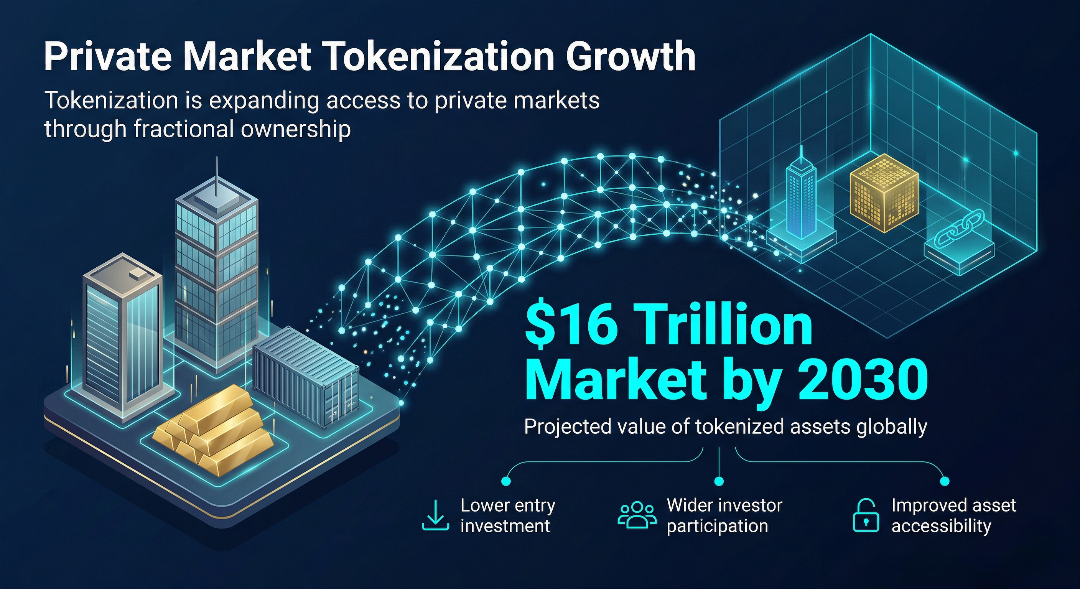
The tokenized asset market could reach $16 trillion by 2030, according to Boston Consulting Group. This projection reflects a clear shift in how ownership is structured and distributed.
Private market tokenization introduces a different way to own assets. It converts ownership rights into digital units that investors can buy and hold. Instead of one person owning a full asset, many people can share it in smaller portions. This model supports fractional ownership and reduces the need for large upfront capital.
From Exclusivity to Accessibility
Private investing has long depended on size and status. High minimum investments and long processes kept many investors away. Tokenization simplifies how ownership is recorded and shared. It replaces layers of paperwork with digital records that are easier to manage.
Ownership no longer needs to sit with a single investor. It can be split into many parts and distributed across a wider group. This shift opens the door to more participants and changes how private markets function.
Why This Shift Matters
This change affects how investors think about access and control. Smaller investment sizes allow more people to take part in high-value opportunities. Digital systems make ownership records easier to track and manage.
Liquidity also begins to improve. Private assets once required long holding periods, but digital ownership allows easier transfers between investors. This does not remove all limits, but it creates more flexibility than older systems.
What Is Private Market Tokenization?
Breaking Down the Concept in Simple Terms
Private market tokenization refers to converting ownership rights in an asset into digital tokens. These tokens represent a share in the asset and can be stored and transferred using blockchain or similar systems.
Think of a large property divided into many smaller pieces. Each piece represents a portion of ownership. Tokens act as those pieces. Investors can buy them, hold them, or transfer them based on the rules set for the asset.
Digital Tokens vs Traditional Ownership
Traditional ownership relies on legal documents, intermediaries, and manual records. Transfers often take time and require approval from multiple parties. Tracking ownership can also become complex as more investors join.
Tokenized ownership simplifies this process. Records are stored digitally, and transfers can happen with fewer steps. Ownership becomes easier to track, and updates occur faster. Legal structures still apply, but the process becomes more direct.
Types of Assets Being Tokenized
Tokenization applies to many types of private assets. It is not limited to one sector.
Real estate is a common example. Properties can be divided into smaller ownership units, which allows investors to participate without buying the entire asset. This creates new opportunities for those who want exposure to property markets.
Private equity and venture capital are also part of this shift. Investments in private companies can be split into smaller stakes. This opens access to early-stage opportunities that were once limited to a select group.
Infrastructure and energy projects benefit as well. Large projects often require major funding. Tokenization allows smaller contributions from multiple investors, which helps distribute both cost and ownership. Alternative assets such as art and collectibles are entering this space too. Expensive items can now have shared ownership, which makes them more accessible to a broader audience.
How Tokenization Differs from Public Market Investing
Tokenization and public market investing may look similar on the surface, but they operate in different ways.
Public markets offer easy access through exchanges where investors can buy and sell shares quickly. These markets follow standard rules and provide regular disclosures.
Private markets operate with different conditions. Access may be restricted, and regulatory requirements vary by region. Tokenization reduces some of these barriers, but it does not remove them entirely.
Liquidity also differs. Public assets can be traded easily, often within seconds. Private assets usually require longer holding periods. Tokenization improves transferability by allowing smaller ownership units to change hands, though it does not guarantee constant trading activity.
Understanding Fractional Ownership in the Digital Age
What Fractional Ownership Really Means
Fractional ownership divides an asset into smaller portions so that multiple investors can own a share. Instead of one person holding full ownership, many investors participate together.
This model lowers the capital required to enter private markets. Investors can commit smaller amounts while still gaining exposure to valuable assets. It changes the scale at which people can invest. For many investors, this means access to opportunities that were previously out of reach.
Traditional Fractional Ownership vs Tokenized Models
Fractional ownership has existed for years through funds, syndicates, and shared investment structures. These models allow multiple investors to pool resources and invest together. These systems often involve complex administration. Documentation, approvals, and reporting can slow down the process. Transfers of ownership may also be limited or restricted.
Tokenized models simplify these steps. Digital records replace manual tracking, and ownership can be divided with more precision. Transfers become easier to manage, and reporting becomes more direct. The difference lies in how ownership is handled. Traditional systems rely on multiple layers of administration. Tokenized systems reduce that complexity.
Why Investors Are Moving Toward Fractional Models
Investor behavior is changing. Many investors now prefer flexibility and control over large, fixed commitments. Fractional ownership allows capital to be spread across different assets. This reduces concentration risk and supports better diversification. Investors can choose multiple opportunities instead of relying on a single investment.
Lower entry costs also attract a wider range of participants. More people can access private markets without needing large capital reserves. Another advantage is control. Investors can adjust their holdings based on their goals, whether they focus on income, growth, or long-term value. This level of choice makes fractional ownership more appealing in modern investing.
How Tokenization Enables Fractional Ownership at Scale
The Role of Blockchain Technology
Blockchain acts as the base layer for tokenized ownership. It records transactions in a way that cannot be changed later. Each entry stays fixed once added, which reduces the risk of tampering.
This system removes the need for constant verification by third parties. Ownership records remain visible and consistent across the network. Investors do not need to rely on a central authority to confirm who owns what.
Smart contracts add another layer of function. These are digital rules that execute actions on their own. They handle transfers, ownership updates, and payouts without manual steps. This reduces delays and limits human error during transactions.
Digital Tokens as Ownership Units
Tokenization turns ownership into digital units called tokens. Each token represents a small share of an asset. This could be a building, a fund, or any private investment.
Large assets can now be divided into many units with ease. This was difficult under traditional systems, where splitting ownership required complex legal work. Digital tokens simplify this process and allow precise division.
Investors can choose how much they want to buy based on their budget. Asset owners can adjust supply depending on demand. This flexibility supports wider participation and better allocation of ownership.
Automation and Smart Contract Efficiency
Automation reduces the need for manual work in investment processes. Smart contracts can apply rules related to investor eligibility, transaction limits, and ownership conditions. Investor onboarding becomes faster since checks can run through predefined rules. Compliance steps can be built into the system rather than handled separately.
Payouts also become more direct. Returns such as dividends or revenue shares can be distributed automatically once conditions are met. This removes delays linked to manual processing and reduces the workload for administrators. Managing a large number of investors becomes more practical with these systems in place.
Global Accessibility Without Intermediaries
Tokenization reduces location-based limits in investing. Investors from different regions can access the same asset without needing local intermediaries. Digital access allows participation at any time. Traditional market hours no longer define when transactions can take place. This gives investors more control over when they act. Lower reliance on intermediaries also reduces transaction costs. Fewer parties are involved in processing ownership changes. This makes the system more direct for both investors and asset issuers.
Looking to launch your own tokenized asset platform?
Work with a team that understands private market tokenization from strategy to deployment. Get support across legal setup, token structure, and platform development to bring your asset to market with clarity and control.

Key Benefits for Investors and Asset Owners
Lower Entry Barriers for Retail Investors
Tokenization reduces the amount of capital needed to enter private markets. Investors no longer need large sums to access high-value assets. This change allows more people to participate in investments that were once limited to a small group. Retail investors can now take part in sectors such as real estate or private equity with smaller commitments. The investor base expands as access improves.
Enhanced Liquidity in Traditionally Illiquid Markets
Private assets often require long holding periods. Investors usually wait years before they can exit. Tokenization introduces the option of secondary trading. Ownership units can be transferred between investors in smaller portions. This creates more opportunities to exit earlier than traditional models allow. Liquidity is not constant, but flexibility improves compared to older systems.
Improved Transparency and Trust
Ownership records stored on digital systems are easier to track. Investors can verify their holdings without relying on multiple sources. This reduces confusion around ownership details. It also limits the risk of record manipulation since changes are recorded and visible. Trust improves when information remains consistent and accessible.
Faster Transactions and Settlement
Traditional transactions often involve paperwork, approvals, and waiting periods. This slows down the process of buying or transferring ownership. Digital systems reduce these delays. Ownership transfers can happen much faster once conditions are met. In some cases, settlement can occur within minutes instead of days. Faster transactions improve the overall experience for investors.
Cost Efficiency Across the Ecosystem
Fewer intermediaries reduce overall costs. Administrative tasks that once required multiple service providers can now be handled through automated systems. Fees related to processing, recordkeeping, and management decrease over time. Both investors and asset owners benefit from lower operating expenses.
Benefits for Asset Issuers and Businesses
Access to a Larger Pool of Capital
Tokenization allows asset issuers to reach investors beyond their immediate network. Participation is no longer limited to local or institutional contacts. Investors from different regions can take part in the same offering. This increases the potential capital available for a project and improves funding opportunities.
Efficient Capital Raising Processes
Raising capital through traditional methods often involves long timelines and multiple intermediaries. Each step adds time and cost. Digital issuance simplifies the process. Ownership units can be created and distributed more directly. Investor onboarding and verification can be handled within the same system. Fundraising cycles become shorter, and businesses can access capital faster.
Better Asset Liquidity and Valuation
Tokenized assets allow more frequent trading compared to traditional private investments. As more investors participate, pricing becomes more active. Regular trading activity helps reflect current demand more accurately. This leads to better price discovery over time. Improved liquidity and pricing benefit asset issuers by attracting more investor interest and supporting ongoing participation.
Real-World Use Cases of Tokenized Private Markets
Real Estate Tokenization
Real estate shows how tokenization works in practice. A commercial building or apartment complex can be divided into digital ownership units. Each unit represents a share of the property. Multiple investors can hold these shares instead of one owner controlling the entire asset.
This model removes the need for large capital commitments. Investors can enter the property market with smaller amounts and still gain exposure to rental income and asset value growth.
Income distribution also becomes more direct. Rental earnings can be shared based on ownership percentages. Each investor receives returns in line with their stake. This method simplifies income allocation and reduces delays linked to manual processing.
Private Equity and Venture Capital
Private equity and venture capital have long required large commitments and patience. Investors often wait several years before seeing returns. Tokenization changes how these investments are structured.
Ownership in startups or private companies can be divided into smaller units. Investors can participate with lower capital while still gaining access to early-stage opportunities. This widens participation beyond traditional investor groups.
Liquidity also improves in some cases. Early investors may transfer their holdings instead of waiting for a full exit event such as an acquisition or public listing. This adds flexibility to a market known for long lock-in periods.
Infrastructure and Energy Projects
Infrastructure and energy projects require large funding and long timelines. Examples include solar farms, transport systems, and data centers. These projects often attract institutional investors due to their size.
Tokenization allows these assets to be split into smaller ownership portions. Investors can contribute smaller amounts and still take part in long-term projects. This expands the pool of capital available for development.
For investors, this opens access to sectors that were once difficult to enter. For project owners, it provides an additional funding route that does not rely on a few large contributors.
Art, Collectibles, and Luxury Assets
Art and collectibles have always carried high price tags. A rare painting or vintage watch often sits with a single owner due to its cost. Tokenization changes how ownership works in these markets. A single asset can be divided into many shares. Investors can buy fractions instead of the whole item. This makes it easier to participate in markets that were once limited to wealthy collectors. It also helps asset owners access value from items that are hard to sell quickly. Instead of waiting for a full sale, ownership can be distributed among multiple investors. This creates a more flexible way to manage high-value collectibles.
Compliance, Regulation, and Legal Frameworks
Importance of Regulatory Compliance
Tokenized assets still operate within legal systems. Compliance plays a central role in how these projects function. Investors must be verified, and platforms must follow rules that prevent misuse of funds. KYC and AML checks confirm investor identity and the source of funds. These checks help prevent fraud and unlawful activity. They also protect investors by maintaining a controlled environment. Without proper compliance, trust in the system breaks down. Legal alignment remains necessary for long-term adoption.
Security Tokens vs Utility Tokens
Tokens fall into different categories based on their function. Utility tokens provide access to a product or service. They do not represent ownership or financial returns. Security tokens represent an investment interest. They may provide rights linked to profits, dividends, or asset ownership. Many tokenized private assets fall under this category since they carry financial value. This classification affects how tokens are issued and traded. It also determines investor rights and legal protections. The structure of the token defines how it operates within regulatory frameworks.
Role of Tokenization Platforms and Custodians
Tokenization requires supporting systems to function properly. Platforms manage the issuance of tokens, investor onboarding, and compliance checks. They handle the technical and operational side of the process. Custodians focus on safekeeping. They manage access to assets or digital keys depending on the structure. This role becomes important when institutional standards apply. These services connect traditional finance with digital systems. They create a controlled environment where both investors and issuers can participate with greater confidence.
How to Launch a Private Market Tokenization Project
Define Asset Strategy and Objectives
Every tokenization project starts with a clear understanding of the asset. The issuer must know what they are offering and why tokenization fits that asset. Not all assets benefit in the same way, so this step requires careful thought. The goal must be specific. Some projects aim to improve liquidity. Others focus on raising capital faster or reaching more investors. A clear objective helps shape the entire structure of the project. Clarity at this stage avoids confusion later. It sets direction for legal, technical, and financial decisions that follow.
Establish Legal and Compliance Framework
Legal structure comes next. The token must be classified correctly, especially if it represents an investment. Different regions apply different rules, so jurisdiction plays a major role. Compliance checks must be part of the system from the beginning. KYC and AML processes verify investor identity and the source of funds. These steps protect both the issuer and the investors. A clear legal setup supports long-term operation. It reduces risk and allows the project to function within accepted rules.
Design Token Structure and Economics
The token design defines what investors receive. It may represent equity, debt, or a share of revenue. Each option carries different rights and expectations. The issuer must define how returns are distributed and whether investors have voting rights. Pricing and supply also need to be set with care. These details affect how the offering is received. Investors need a clear understanding of what they are buying. A well-defined structure builds confidence and supports participation.
Build Technology and Infrastructure
The project then moves to its technical setup. This includes selecting the blockchain and setting token standards. Smart contracts handle ownership records, transfers, and distributions. Security remains a priority. Smart contracts should be reviewed to reduce errors and risks. The system must also connect with investor onboarding tools and compliance processes. Technology supports both the digital asset and the underlying business. Each part must work together without gaps.
Execute Launch and Distribution
The launch phase focuses on bringing the offering to investors. A clear fundraising plan helps guide this process. Investor onboarding must be simple and well-structured. Partnerships also matter. Platforms, custodians, and compliance providers support operations and add credibility. Their role helps maintain order during the launch. Investors need clear information before they commit. They should understand the asset, the token structure, and the expected returns. Clear communication supports better participation.
Enable Trading and Ongoing Management
Launching the token marks the start, not the finish. Ongoing management keeps the project active and relevant. Investors expect regular updates and accurate reporting. Secondary trading options improve flexibility. Investors gain the ability to transfer ownership when needed. This adds movement to assets that once remained fixed. The project must maintain discipline after launch. Performance, investor trust, and consistent operations determine long-term success.
Conclusion
Private market tokenization is changing how ownership works by breaking large assets into smaller, accessible units and making participation easier for a wider group of investors. It brings more flexibility, faster processes, and broader access to opportunities that were once limited to a few. At the same time, it supports asset owners with new ways to raise capital and manage ownership more efficiently. As adoption grows, this model continues to reshape private investing with a more open and structured approach. Blockchain App Factory provides private market tokenization services that help businesses structure, launch, and manage tokenized assets with the right legal, technical, and operational support.

Vimal J is the Head of Sales at Blockchain App Factory, with 10+ years of experience in sales, client strategy, and Web3 business growth. He helps startups, enterprises, and project founders choose the right blockchain solutions for their goals, bringing a practical market perspective to topics like token development, crypto launches, and Web3 adoption.