
Key Insights
- AI, Web3 communities, and privacy-first data now shape crypto marketing in 2026.
- Strong crypto brands focus on trust, education, proof, and active user engagement.
- SEO, influencer marketing, video content, and token-gated campaigns work best together.
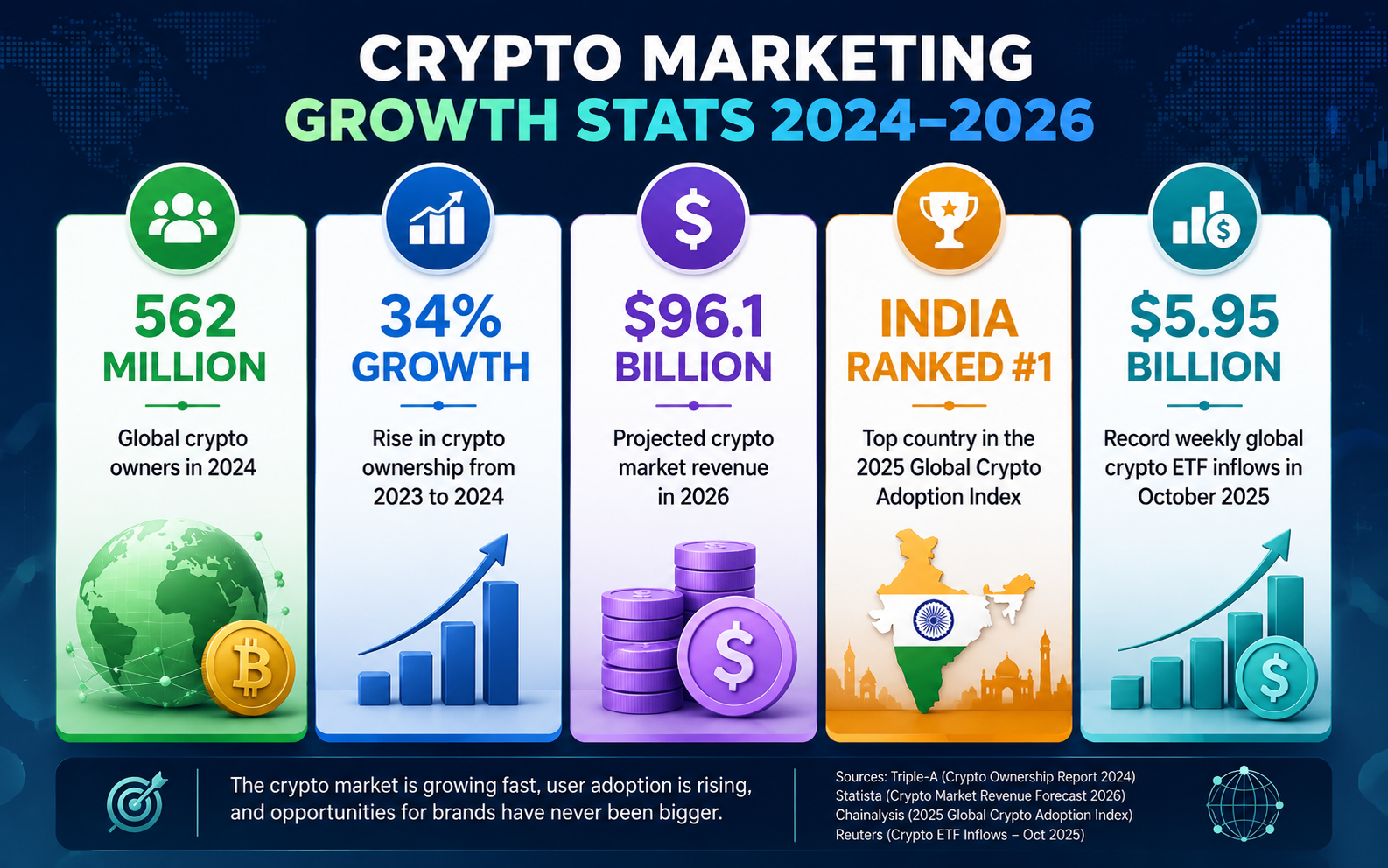
Crypto marketing in 2024 moved past hype. It became a trust race. Global crypto ownership reached 562 million people, up 34% from 420 million in 2023. This growth gave brands a bigger and sharper audience. Users now expect proof, clear messages, safer platforms, and active communities. Flashy token ads no longer carry a campaign. Real growth comes from education, creator trust, search visibility, and community-led content.
2026 raises the bar again. Crypto market revenue is projected to reach $96.1 billion in 2026. India ranked first in the 2025 Global Crypto Adoption Index, which shows strong demand in major markets. Global crypto ETFs recorded $5.95 billion in weekly inflows in October 2025, showing stronger investor interest. AI now shapes content, targeting, and user support. Web3 tools turn users into active members. Regulations push brands to be clearer and more careful. Marketers should expect stricter rules, smarter users, and stronger demand for brands that explain value in plain language.
Why Crypto Marketing Is Changing Rapidly in 2026
Institutional Adoption
Crypto no longer sits on the edge of finance. Banks, asset managers, payment firms, and public companies now treat digital assets as serious market tools. Bitcoin ETFs brought crypto to more traditional investors, and this changed the way brands build trust. A crypto marketing agency in 2026 must speak to retail users and large investors at the same time. Clear reports, strong brand proof, founder visibility, and risk education now matter more than loud claims.
AI-Generated Content Explosion
AI has made crypto content faster to produce, but speed has created a new problem: sameness. Feeds now carry endless token posts, market explainers, bot replies, and auto-written newsletters. Readers spot weak content in seconds. The brands that win use AI for research, drafts, testing, and support, then add human judgment. Strong crypto marketing in 2026 needs original data, clear opinions, simple stories, and a real voice.
Regulatory Changes
Crypto rules now shape every campaign. Ads, influencer posts, token claims, referral offers, and exchange listings face closer review in many markets. This does not stop marketing. It changes the tone. Brands need careful wording, visible disclaimers, and honest product claims. A strong campaign builds interest without making risky promises. Trust grows faster when users see proof, not pressure.
Privacy-First Advertising
Third-party tracking keeps losing power, and crypto users care deeply about privacy. This pushes marketers toward first-party data, email lists, wallet-based engagement, gated communities, and consent-based campaigns. Brands must earn direct access to users instead of chasing them across platforms. The best crypto marketing trends now focus on owned audiences, clear value, and respectful data use.
Community-Driven Brands
Crypto users do not just buy. They join, vote, share, test, and challenge projects in public. This makes community one of the strongest growth channels in 2026. Discord, Telegram, X, Farcaster, Reddit, and live AMAs help brands build daily contact with users. The goal is not noise. The goal is trust, feedback, and repeat engagement. Strong communities turn users into advocates, and that beats paid reach over time.
Top Crypto Marketing Trends To Watch In 2026
AI-Powered Crypto Marketing Automation
AI Content
AI now helps crypto brands create blogs, social posts, email copy, ad drafts, FAQs, scripts, and community updates at a faster pace. The real value comes from human editing. A strong team checks facts, adds brand tone, and removes weak claims. This keeps content useful, clear, and safe for users.
AI Campaign Testing
Crypto campaigns move fast, and AI helps teams test headlines, landing pages, email subject lines, audience groups, and ad copy. Marketers can see what users click, read, ignore, and share. This helps brands spend less on guesswork and more on content that brings real traffic, leads, and signups.
AI Customer Support
Crypto users ask hard questions about wallets, tokens, staking, gas fees, security, and account access. AI chat tools help answer common questions day and night. Human agents still handle sensitive issues. This mix gives users faster help and gives support teams more time for serious cases.
AI Personalization
Users do not all enter crypto from the same place. Some want trading tips. Some want DeFi guides. Some want NFT access or token rewards. AI helps brands show the right message to each group. A new user gets simple guides. An active user gets product updates, offers, and deeper content.
Web3 Community Building Is More Important Than Followers
Discord
Discord works well for Web3 projects that need deeper talks, role-based access, beta testing, and member support. Brands can create channels for announcements, feedback, AMAs, and holder groups. A good Discord server feels active, useful, and safe. Empty channels and spam hurt trust fast.
Telegram
Telegram remains a strong channel for quick crypto updates, launch alerts, support chats, and global user groups. It works best for real-time contact. The risk is noise. Brands need clear rules, trained moderators, scam alerts, and pinned resources. A clean Telegram group can turn casual users into active members.
X
X still drives crypto conversations, founder visibility, market reactions, and thought content. A strong X strategy needs more than daily token posts. Brands should share product progress, user wins, short explainers, and honest views on market changes. People follow projects that sound real, not scripted.
DAO Communities
DAO communities give users a voice in decisions, grants, votes, and product direction. This builds stronger ownership than passive following. Members support the project since they help shape it. Brands should keep voting simple, publish clear updates, and show how community input changes real work.
Loyalty Ecosystems
Web3 loyalty programs reward users for actions such as referrals, content sharing, testing, holding tokens, joining events, and giving feedback. Points, badges, NFTs, token access, and gated perks can keep users active for months. The best programs reward useful behavior, not empty clicks.
KOL & Crypto Influencer Marketing Will Dominate
Micro Influencers
Micro influencers work well in crypto since their audiences trust them more than broad celebrity accounts. Many have small but active groups that read posts, join AMAs, test products, and share feedback. A project can partner with several niche creators across DeFi, NFTs, gaming, staking, or trading. This gives the brand warmer reach and better user quality.
Crypto Creators
Crypto creators turn complex ideas into simple content. They explain token use, product features, market changes, and launch news in a way users understand. Strong creators bring more than reach. They bring trust, tone, and daily contact with the right audience. Brands should give them clear facts, fair payment, and room to speak in their own voice.
YouTube
YouTube remains a strong channel for crypto education, reviews, explainers, and project breakdowns. Long videos help users understand token models, platform features, security steps, and roadmaps. A good YouTube campaign should focus on clarity, proof, and honest product value. Viewers stay longer when creators show real screens, live demos, and plain examples.
X Spaces
X Spaces gives crypto brands a live stage for launches, founder talks, partner updates, and community questions. It feels direct and public, so weak claims get tested fast. A good Space needs a clear topic, strong speakers, and short answers. The best sessions sound like open talks, not sales calls.
Podcasts
Podcasts help crypto brands build trust through longer talks. Founders can explain vision, product choices, market timing, and user pain points without rushing. Listeners get a fuller view of the project and the people behind it. This makes podcasts useful for B2B crypto marketing, exchange marketing, DeFi brands, and Web3 infrastructure firms.
Want to grow your crypto brand in 2026?
Build trust, reach active users, and grow your Web3 brand with expert crypto marketing services.

Zero-Party Data Marketing
Wallet-Based Personalization
Zero-party data comes straight from users. Wallet activity adds another layer of context. A crypto brand can tailor messages around token holdings, NFT access, staking activity, event claims, or product use. This helps users see content that fits their interests. It also reduces random ads that feel cold and annoying.
Wallet Segmentation
Wallet segmentation helps brands group users by real actions. A project can separate holders, traders, stakers, NFT owners, new wallets, inactive wallets, and high-value users. Each group needs a different message. New users need guides. Loyal holders need updates, perks, and deeper product news. This makes crypto marketing feel more personal and useful.
Privacy-First Marketing
Privacy-first marketing respects user choice and builds trust from the first click. Brands should ask for clear consent, explain data use, and avoid invasive tracking. Crypto users care about control, so careless targeting can hurt a campaign fast. The better path is simple: ask, respect, reward, and keep the value clear.
Token-Gated Marketing Campaigns
NFT Membership
NFT membership gives users proof of access, status, and loyalty in one place. A brand can offer gated content, private chats, early product access, event passes, and reward claims through an NFT. This works best when the NFT gives real use. Pretty artwork alone will not keep members active.
VIP Communities
VIP communities help crypto brands reward serious users, holders, testers, and early supporters. These groups can host private AMAs, founder calls, beta access, partner offers, and launch previews. Members stay active when they feel heard and valued. A small group with strong trust can bring more value than a large silent audience.
Token Access
Token access lets brands give special rights to users who hold a set token amount. This can include premium content, product tools, governance rights, staking perks, or early sale access. The rules must stay simple. Users should know what they get, how to qualify, and how long access lasts.
Exclusive Events
Exclusive events turn token ownership into real contact. Brands can host online workshops, trading sessions, launch rooms, hackathons, local meetups, or private partner events. These moments build trust faster than a feed post. People remember the projects that give them access, value, and real conversations.
AI Search & GEO For Generative Engine Visibility
AI Overviews
AI Overviews now shape how users discover crypto brands through search. Google can pull short answers from trusted pages and show them above standard results. This means your content must answer direct questions with clear facts, simple headings, and updated details. Long fluff loses space. Useful answers win attention.
ChatGPT Visibility
ChatGPT visibility depends on clear brand signals, public content, topic depth, and trusted mentions across the web. Crypto brands need pages that explain services, use cases, pricing cues, security practices, and proof points in plain language. Content should answer buyer questions before a sales call starts.
Gemini
Gemini draws from search, structured pages, and trusted sources. A crypto marketing page should use clean headings, FAQ sections, author details, schema, and short answer blocks. This helps Gemini understand the page faster. It also helps readers scan the content without feeling lost.
Perplexity
Perplexity often cites sources inside its answers, so crypto brands need content that earns citations. Original data, case studies, expert quotes, comparison pages, and clear definitions help. Weak pages rarely get picked. A useful page should make one topic easy to verify and easy to quote.
AI Citations
AI citations reward clear, credible content. Brands should publish author names, update dates, sources, client results, and detailed service pages. Claims need proof. If a page says a campaign improved leads by 40%, show the time frame, channel, and method. Proof makes content more useful for readers and AI tools.
Structured Content
Structured content helps both users and AI systems read a page. Use short headings, direct answers, tables, bullet points, FAQs, schema markup, and internal links. Each section should answer one clear question. This format helps crypto marketing content rank in search and appear in AI answers.
EEAT
EEAT stands for experience, expertise, authority, and trust. Crypto brands need all four since users face scams, fake claims, and risky offers daily. Show real team experience, client work, security knowledge, legal care, and clear contact details. Trust grows when the page feels honest, useful, and easy to check.
Video-First Crypto Marketing
Shorts
Short videos grab attention in seconds and fit the fast pace of crypto news. Product launches, token updates, market tips, and event highlights work well in this format. A clear message and a strong opening keep viewers watching. Brands that post short videos often stay visible across many platforms.
Reels
Instagram Reels help crypto brands reach users outside the existing community. Simple explainers, founder clips, event moments, and user stories attract new audiences without heavy promotion. Reels should focus on one idea at a time. Clear visuals and simple language keep viewers engaged.
TikTok
TikTok continues to shape online trends through short and easy content. Crypto companies can share market basics, security tips, platform features, and behind the scenes updates through creative videos. Educational content performs better than aggressive promotion. People share useful videos far more often than sales messages.
YouTube
YouTube remains one of the best platforms for detailed crypto education. Brands can publish tutorials, interviews, project updates, wallet guides, and ecosystem reviews in longer formats. Viewers spend more time with content that explains real problems and real use cases. Trust grows through consistency and clear communication.
Explain-to-Earn Videos
Explain-to-earn videos reward users for learning instead of simply watching ads. A project can offer points, NFTs, or token rewards after viewers complete a lesson or answer simple questions. This format keeps users active and helps them understand products before making decisions. Better education often leads to stronger community participation.
On-Chain Reputation Marketing
Wallet History
Wallet history gives brands a better picture of user activity across blockchain networks. Holding patterns, transaction history, staking activity, and NFT ownership reveal genuine engagement. Projects can reward loyal users based on actions instead of social media popularity. This creates fairer campaigns and stronger community trust.
Soulbound Identity
Soulbound identities create permanent digital credentials that cannot be traded between wallets. These tokens can represent achievements, event attendance, certifications, or community contributions. Crypto brands can use them to recognize active members and long term supporters. Digital identity becomes more valuable when it reflects real participation.
Reputation Scores
Reputation scores combine wallet activity, governance participation, community actions, and blockchain history into a measurable trust signal. Projects can use these scores for whitelist access, reward programs, and governance rights. Users benefit from building a positive record through genuine activity instead of short term speculation.
Trust Marketing
Trust marketing places transparency at the center of every campaign. Crypto users expect clear token details, open communication, visible founders, security audits, and honest updates. Projects that publish facts instead of hype build stronger relationships over time. Trust remains one of the strongest assets any crypto brand can develop.
Gamified Marketing Campaigns
Spin Wheels
Spin wheels turn simple actions into quick rewards. Users can connect a wallet, join a list, claim points, or complete a task for a chance to win. The format works well for launches, airdrop pages, and event promotions. Clear rules matter here. Users should know the prize, odds, and claim steps.
Quests
Quests guide users through product actions in a fun way. A project can ask users to follow social pages, mint an NFT, try a feature, join Telegram, or invite friends. Each task teaches users something useful. Good quests feel like a game, but they still support real product growth.
Learn & Earn
Learn and earn campaigns reward users for studying a project, token, wallet, or DeFi tool. Users watch lessons, answer questions, then claim points, tokens, or NFTs. This works well for new users who need simple education. It builds attention and reduces confusion before users take action.
Referral Campaigns
Referral campaigns turn happy users into growth partners. A brand can reward users for bringing friends, traders, investors, or community members. The best programs track real actions, not fake signups. Rewards should match the value of each referral, from newsletter joins to paid product use.
NFT Rewards
NFT rewards give users a visible record of participation. Brands can issue NFTs for quests, events, referrals, early access, or learning tasks. These rewards work best when they carry perks, status, or future access. A plain badge fades fast, but a useful NFT keeps users interested.
Crypto SEO Is Becoming Topical Authority SEO
Topic Clusters
Topic clusters help crypto brands cover one subject from every useful angle. A main page can target “crypto marketing,” then link to pages on SEO, influencer campaigns, token launches, community growth, paid ads, and Web3 PR. This structure helps search engines understand depth. It also helps readers find answers faster.
Semantic SEO
Semantic SEO focuses on meaning, not exact keyword stuffing. Crypto content should include related terms, user questions, product use cases, and clear definitions. A page about DeFi marketing should cover liquidity, staking, wallets, exchanges, token users, and compliance. This gives search engines better context and gives readers richer answers.
Entity SEO
Entity SEO helps search engines connect brands, people, products, chains, tokens, and services. A crypto company should build clear pages for its founders, services, case studies, partners, and media mentions. Consistent names and facts matter across the website. Strong entity signals make the brand easier to understand and trust.
Internal Linking
Internal linking turns separate pages into a connected content system. A blog about token launch marketing should link to pages about PR, influencer outreach, community building, and exchange listing campaigns. These links guide readers to the next useful page. They also help search engines find and rank deeper content.
AI Content Checks
AI content needs careful review before publishing. Crypto topics carry risk, so weak facts can damage trust fast. Writers should check claims, add current examples, remove generic lines, and match content to real search intent. The goal is simple: publish content that answers better than competing pages.
Want to turn crypto trends into real growth?
Multi-Chain Marketing Strategy
Ethereum
Ethereum still attracts DeFi users, NFT collectors, builders, funds, and Web3 brands. Marketing for Ethereum projects should focus on credibility, security, ecosystem fit, and clear product value. Audiences here often expect deeper technical proof. Case studies, audits, integrations, and founder content work well.
Solana
Solana has a fast-moving user base across DeFi, NFTs, gaming, and meme coins. Campaigns need speed, strong visuals, creator support, and active social posts. Solana users respond well to live updates, community events, and product demos. Brands should keep messages short, sharp, and easy to share.
Base
Base has grown as a strong chain for consumer apps, on-chain social, payments, and creator tools. Marketing on Base should feel simple and product-led. Users care about smooth onboarding, low fees, and real use. Good campaigns show what people can do in a few clicks.
TON
TON connects closely with Telegram, so its marketing style feels chat-first and mobile-first. Projects can use Telegram groups, mini apps, referral flows, and community tasks to drive growth. This chain works well for games, rewards, payments, and social products. Simple steps help users move from chat to wallet action.
BNB Chain
BNB Chain has a large global user base across DeFi, gaming, exchanges, and retail crypto. Marketing here often needs clear rewards, strong community management, and broad reach across regions. Projects should explain token use, safety steps, and product benefits in simple terms. Trust and speed both matter.
Avalanche
Avalanche attracts DeFi, gaming, enterprise, and subnet projects. Its marketing should focus on performance, custom networks, real use cases, and developer adoption. Brands can build strong content around ecosystem partners, grants, integrations, and user guides. Clear technical education helps the audience see why the chain fits the project.
AI Is Reshaping Crypto Marketing
AI Analytics
AI analytics helps crypto brands read user behavior across websites, wallets, ads, emails, and communities. Teams can spot which pages bring leads, which posts drive signups, and which users return after launch. This helps marketers act with clearer data instead of guesswork. Better data leads to better budget choices.
AI Chatbots
AI chatbots give crypto users quick answers about wallets, tokens, fees, staking, KYC, rewards, and account steps. They work best when trained on verified project content. Human support should still handle disputes, security issues, and high value users. A good chatbot saves time without making users feel ignored.
AI Influencers
AI influencers are entering crypto campaigns through virtual hosts, avatar educators, and branded video characters. They can explain products, run short updates, and support campaigns across markets. Still, crypto users value real people and real proof. Brands should use AI influencers for simple education, not fake trust.
AI Content Scaling
AI content scaling helps teams publish more blogs, ads, emails, scripts, FAQs, and social posts. The risk is weak content that sounds copied. Crypto brands need human review, fact checks, original examples, and updated market context. Content should answer real questions, not fill a calendar.
Predictive Marketing
Predictive marketing helps teams plan campaigns around likely user actions. AI can study past clicks, wallet activity, signups, and purchase behavior to find patterns. This helps brands send better offers, choose better channels, and reach users at the right time. The goal is simple: speak to users before interest fades.
Conclusion
Crypto marketing in 2026 is faster, smarter, and more trust-led than ever. AI, Web3 communities, token access, video content, privacy-first data, and multi-chain campaigns now shape how projects grow. Brands that win will educate users, prove value, and build active communities across every key channel. Blockchain App Factory provides crypto marketing services that help Web3 startups, exchanges, DeFi platforms, NFT brands, and token projects reach the right audience with clear strategy, strong content, community growth, influencer campaigns, SEO, PR, and launch support.
FAQs
What are Crypto Marketing Trends?
Crypto marketing trends are the new ways crypto brands promote tokens, exchanges, wallets, DeFi platforms, NFTs, and Web3 apps. In 2026, these trends include AI content, influencer campaigns, token-gated access, community growth, short videos, privacy-first data, and AI search visibility.
Which Crypto Marketing Strategy Works Best in 2026?
The best crypto marketing strategy in 2026 combines SEO, community growth, influencer content, PR, video marketing, and AI-powered campaign tracking. No single channel can carry a project alone. A strong plan brings traffic, trust, leads, and active users across many platforms.
Is AI Replacing Crypto Marketers?
AI is not replacing crypto marketers. It helps them work faster. Teams use AI for research, content drafts, customer support, ad testing, and user targeting. Human marketers still guide brand voice, compliance, strategy, storytelling, and trust.
What Is Web3 Marketing?
Web3 marketing promotes blockchain projects through communities, wallets, tokens, NFTs, DAOs, and decentralized platforms. It focuses on user participation instead of one-way promotion. Users join, vote, share, test, and help a project grow.
How Important Is SEO For Crypto Projects?
SEO is very important for crypto projects that want long-term traffic. Strong SEO helps users find guides, service pages, token information, exchange updates, and product answers through Google and AI search tools. Good content builds trust before users contact the brand.
How Do Exchanges Market Their Tokens?
Exchanges market tokens through launch campaigns, community updates, PR, influencer content, referral programs, trading contests, email campaigns, and listing announcements. They also use education to explain token utility, trading pairs, fees, rewards, and safety steps.
Why Is Community Building Important In Crypto?
Community building matters since crypto users want direct contact with projects. They ask questions, test features, share updates, and warn others about risks. A strong community builds trust, supports launches, and turns users into long-term supporters.
What Is AI SEO In Crypto Marketing?
AI SEO in crypto marketing means creating content that ranks in Google and appears in AI tools like ChatGPT, Gemini, Perplexity, and AI Overviews. It uses clear answers, structured pages, expert content, trusted sources, schema, and strong topic coverage.

Vimal J is the Head of Sales at Blockchain App Factory, with 10+ years of experience in sales, client strategy, and Web3 business growth. He helps startups, enterprises, and project founders choose the right blockchain solutions for their goals, bringing a practical market perspective to topics like token development, crypto launches, and Web3 adoption.