








Reentrancy Vulnerabilities
This issue occurs when external calls re-enter a contract before state updates are finalized, allowing attackers to drain funds, repeat actions, or exploit stale balances across related functions.
Prevent Smart Contract Exploits Before They Reach Mainnet with Our
Your smart contract becomes a live attack surface once deployed. Our security-first audit process helps detect vulnerabilities, reduce exploit risk, and improve launch readiness before your contract handles real value.

Years of Experience
Employees
Projects
AI & Blockchain Experts
Smart contracts are permanent once deployed on-chain, which is why security review before launch is critical. By mid-2025, more than $2.17 billion had already been stolen from crypto services, showing how costly exploitable weaknesses can become when live systems handle real value. Many of these attacks target known vulnerability patterns that a professional smart contract security audit is designed to detect before deployment.
Blockchain App Factory is a professional smart contract audit company providing comprehensive smart contract security audit services for DeFi protocols, ERC-20 and BEP-20 token contracts, NFT collections, dApps, exchanges, DAOs, and Web3 infrastructure across Ethereum, Binance Smart Chain, Polygon, Avalanche, Solana, and other blockchain ecosystems. Our audit team combines automated vulnerability scanning using tools such as Slither, Mythril, and Securify with deep manual code review and business-logic analysis covering reentrancy, access control flaws, oracle manipulation, flash loan exposure, integer and precision issues, upgradeability risks, MEV-related weaknesses, and logic flaws that automated tools alone may miss.
0
Broad audit exposure across smart contracts and protocol categories.
Zero
Focused on reducing exploit risk before contracts go live.
0
Structured review based on recognized smart contract security references.
0
Applied to protocols handling significant on-chain value.
0
Audit support for large-value blockchain platforms.
0
Security review for NFT contracts and marketplace flows.
0
Audit support for token launches and sale-related contracts.
0
Review of bridge logic and interoperability risk areas.
A smart contract audit is an independent security review of blockchain-based contract code carried out before deployment to identify vulnerabilities, logic flaws, unsafe permissions, and exploit paths. Ethereum's developer guidance treats smart contract security as a serious discipline because deployed contracts are often difficult to change safely once live.
A proper smart contract security audit usually combines automated analysis, manual code review, and protocol-level validation to assess how the contract behaves under real conditions. This includes reviewing business logic, external integrations, execution flow, access control, and attack exposure before the contract begins handling user funds or protocol value. OWASP's Smart Contract Top 10 is built around these recurring vulnerability classes.
Unlike routine testing, a smart contract audit is focused on exploit prevention, remediation guidance, and deployment readiness. The goal is not just to confirm that the code runs, but to understand whether it can be abused once deployed in a live blockchain environment.
The risk landscape keeps reinforcing the need for pre-deployment security review. Chainalysis reported that more than $2.17 billion had already been stolen from crypto services by mid-2025, after crypto platforms had already lost about $2.2 billion in 2024. That makes smart contract auditing a practical security decision for teams preparing contracts to handle real funds and protocol activity.
A smart contract audit helps identify vulnerabilities before they can be exploited in production, reducing the chance of fund loss, emergency fixes, or launch-stage security failures.
Projects that complete a professional smart contract security audit show users, partners, and investors that contract safety has been taken seriously before funds or governance actions go live.
Audits do more than scan for bugs. They also review logic flow, permissions, state transitions, integrations, and protocol assumptions that may create hidden risk under live usage.
A blockchain security audit helps teams move toward deployment with clearer visibility into exploit exposure, remediation priorities, and the contract changes still needed before mainnet.
Smart contracts often control treasury logic, token supply, governance rights, liquidity flows, or external integrations, making them attractive targets for attackers and expensive to leave unaudited.
Security review supports long-term protocol trust by showing that the project has gone through real vulnerability assessment, code review, and pre-launch hardening rather than relying on unaudited logic.
Recent exploit trends continue to show how overlooked contract weaknesses can lead to severe financial loss, protocol disruption, governance abuse, and long-term trust damage.
This issue occurs when external calls re-enter a contract before state updates are finalized, allowing attackers to drain funds, repeat actions, or exploit stale balances across related functions.
Improper access restrictions can expose admin functions, let attackers escalate privileges, misuse roles, or abuse weak authentication methods that put treasury control and upgrades at risk.
These issues arise when contract logic behaves incorrectly under real conditions, causing broken incentives, invalid state changes, rounding errors, or exploitable order-dependent behavior.
Weak oracle design can allow price distortion, stale data usage, flash loan-driven manipulation, or front-running conditions that affect liquidations, swaps, and collateral value.
Poor nonce handling, weak signature checks, or flawed verification paths can let attackers replay approvals, bypass intended controls, or gain unauthorized access to contract functions.
Miscalculations involving rounding, decimals, or unchecked math can distort asset pricing, reward distribution, token balances, and contract-level accounting across financial operations.
Incorrect integration with external protocols, bridges, or dependencies can trigger unexpected behavior, failed transactions, or fund exposure across connected contract systems.
Errors in execution order, strategy sequencing, or conditional flow can lock funds, break expected contract behavior, or create openings for attackers to exploit.
We audit smart contracts across major Web3 use cases, with review depth adjusted to protocol logic, asset behavior, contract interaction, and deployment risk.
We audit DeFi contracts used in AMMs, lending, staking, yield farming, vaults, and synthetic asset systems, focusing on fund flow, pricing, and exploit risk.
We review ERC-20, BEP-20, governance, utility, and custom token contracts, checking supply logic, permissions, minting, burning, and transfer behavior.
We assess NFT contracts across ERC-721, ERC-1155, minting, royalties, metadata, and marketplace flows to help protect asset ownership and transfer security.
We audit smart contracts used in wallet-connected dApps, multi-contract systems, proxy upgrades, access control flows, and oracle-linked application logic.
We review contracts used in play-to-earn systems, in-game assets, breeding logic, progression models, and virtual land mechanics tied to user-owned assets.
We assess contracts used in compliance workflows, multisig governance, supply-chain tracking, digital identity systems, and permission-based asset control.
We audit bridge-connected contracts, asset-locking logic, message flows, validator assumptions, and transfer pathways across interoperable blockchain systems.
We review DAO governance contracts for proposal execution, voting logic, quorum rules, treasury access, and privilege paths that may affect protocol control.
We assess payment-linked contracts and stablecoin systems for transaction reliability, fund handling, role permissions, and logic tied to financial settlement flows.
With our responsive smart contract auditing services, your project benefits from rapid analysis, expert support, and actionable security recommendations that safeguard user funds and reputation.
We review your smart contract code line by line to spot logic flaws, security issues, and missed best practices, so your project's code stays robust, secure, and industry-compliant.
Our team combines automated scanners and manual testing methods to uncover a wide range of vulnerabilities, both critical and subtle, within your smart contract's underlying logic.
We define and verify essential contract properties, making sure these conditions always hold true so your smart contract remains reliable and correct throughout its entire execution.
Our auditors analyze your system's attack surfaces, identify high-risk entry points, and prepare defences so your smart contract can withstand potential real-world exploitation scenarios.
We evaluate weaknesses that could cause financial losses in your contract and provide detailed strategies for risk reduction to protect your funds and keep investors confident.
Our specialists conduct controlled attack simulations to uncover exploitable vulnerabilities in your smart contract that might be missed by regular code reviews or static analysis.
We use mathematical proofs and advanced logic to certify your smart contract's behavior, minimizing risks by confirming it functions as intended under all possible input conditions.
Our advisory services offer ongoing support, architecture guidance, and security upgrades, helping you maintain robust, compliant, and future-proof smart contracts post-deployment.
We’ve provided expert smart contract audits for top blockchain projects, guaranteeing robust security and trust. Here are the projects we’ve secured so far, each marking a milestone in excellence.
We performed a comprehensive smart contract audit for Humanity Protocol, strengthening their digital ID solution and ensuring user privacy, robust security, and reliability in Web3 identity management.
Our team audited the smart contracts powering George on Base, perfecting workflow automation and document management while improving compliance, system integrity, and secure business operations.
We delivered an in-depth audit of Spectra’s smart contracts, reinforcing the security of their digital asset token and protecting users as they trade, manage assets, and interact with DeFi applications.
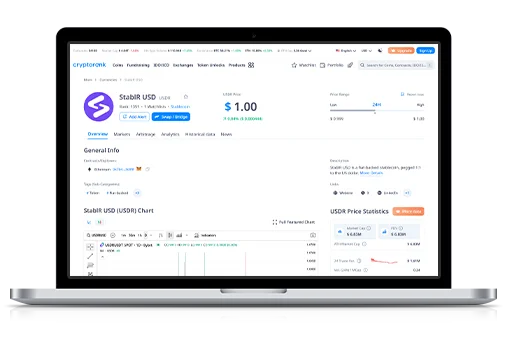
Our smart contract audit for StablR USD enhanced the stability and reliability of their stablecoin, ensuring secure transactions, accurate collateral management, and trust for stable digital payments.
Numine’s smart contracts underwent our rigorous audit process, resulting in improved transactional security, reduced risks, and greater user confidence for cross-chain payments and digital asset management.
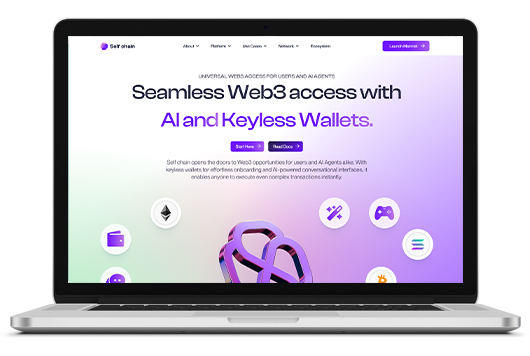
We conducted a thorough smart contract audit for Self-Chain, fortifying their Layer-1 blockchain ecosystem to guarantee user-friendly keyless wallets and reliable AI-powered automation for Web3 access.
Find out how auditors dig into your code, use AI to track down hidden risks, and bring in formal methods to verify your smart contract’s security and reliability on blockchain.
Our smart contract audit process combines automated scanning, manual code review, and protocol-level security validation to examine contract logic, identify vulnerability patterns, and assess deployment risk. The review approach is informed by Ethereum smart contract security guidance, OWASP smart contract risk categories, and established security practices documented by OpenZeppelin and Consensys.
We begin with structured automated analysis to detect common weakness patterns, unsafe code behavior, and suspicious execution paths across the contract. This stage helps us review the codebase faster and build a strong starting point for deeper inspection.
Automated tools help with coverage, but deeper issues often require direct human review. Our team examines contract logic, access permissions, state changes, fund flow, and external interactions to identify flaws that may not be caught during tool-based scanning alone.
Our review also aligns with recognized smart contract weakness categories such as:
For DeFi smart contract audits, we extend the review beyond standard contract checks to evaluate financial logic and exploit conditions that commonly affect live protocols. This is especially important for contracts handling liquidity, pricing, governance, or user funds.
Our DeFi-specific checks include:
By combining tool-based analysis with manual validation, our smart contract audit process helps identify:
Once the review is complete, the findings are documented with issue details, severity classification, and recommended fixes. If required, we also support remediation review so teams can recheck updated contracts before moving toward mainnet deployment.
Identify vulnerabilities, enhance security and performance, and risk-free blockchain deployments with the benefits of our detailed smart contract audit.
Fortify security by fixing vulnerabilities such as reentrancy, integer floods, and external calls, ensuring the contract is secure from exploits and nurturing blockchain integrity.
Ensure error-free blockchain operations by auditing to confirm they function as intended, preventing disruptions and guaranteeing a smooth, reliable application experience.
Mitigate loss prevention by identifying and managing risks from malicious attacks or flaws in the code, ensuring the project is safe from financial loss or security breaches.
Ensure legal compliance by auditing smart contracts to verify they meet industry regulations, mainly for finance and healthcare, preventing legal challenges and compliance issues.
Trace logical errors by detecting flaws in the contract’s logic that could lead to unintended behavior or security holes, allowing developers to resolve issues before deployment.
Optimize gas consumption by auditing contracts to reduce unnecessary gas usage, improving transaction efficiency, lowering costs for users, and enhancing blockchain performance.
Build investor trust by confirming the smart contract’s reliability through audits, making the project attractive to investors, & ensuring funds raised are secure and well-managed.
Gain public recognition by ending audits and obtaining certifications, improving visibility through platforms like CoinMarketCap or CoinGecko, & raising trust in blockchain projects.
Our smart contract audit process follows recognized security references and structured review practices to assess vulnerabilities, classify risk levels, and make findings easier for teams to understand and act on.
We refer to the OWASP Smart Contract Top 10 to review common Web3 vulnerability patterns, recurring exploit scenarios, and security weaknesses frequently seen in smart contract systems.
We use NIST-guided security review principles to assess how risks are identified, examined, prioritized, and documented during the audit process across different contract environments.
We map findings against known smart contract weakness categories using the SWC Registry as a reference point during review, especially for common security and logic-related issues.
We review contracts with attention to secure development practices such as access control, testing discipline, governance safety, external interactions, and deployment readiness.
To keep reporting consistent, findings are classified using CVSS-based severity levels so projects can understand which issues need immediate attention and which ones require later hardening.
Critical and high-severity findings indicate serious exploit risk, possible fund exposure, privilege abuse, or protocol-level weaknesses that may affect launch readiness and user safety.
Medium and low-severity findings usually point to moderate weaknesses, lower-risk flaws, or best-practice gaps that should still be addressed to improve contract quality and reliability.
Using structured standards and severity scoring helps founders, developers, and stakeholders understand the audit report more clearly and prioritize remediation with better context.
Our smart contract audits cover multiple blockchain networks, contract categories, and high-risk Web3 environments where security review directly affects launch safety and protocol reliability.
500+
Contracts
Zero
Exploits
$2.3B+
Value Protected
89%
Critical Finds
All vulnerabilities are responsibly disclosed and addressed before public release, helping teams remediate risk before launch or upgrade.
We audit smart contracts across major blockchain ecosystems and contract categories, with review scope adapted to each chain's logic, language, and risk profile.
Audits for Ethereum, BNB Smart Chain, Polygon, Avalanche, Arbitrum, and Optimism across Solidity and Vyper-based contracts.
Audits for non-EVM programs and Move-based contracts with chain-specific security review.
Audits for AMMs, lending systems, staking platforms, yield protocols, and vault contracts.
Audits for ERC-20, BEP-20, governance, utility, and custom token models.
Audits for ERC-721, ERC-1155, minting logic, royalties, and marketplace interactions.
Audits for bridge logic, multi-signature controls, DAO voting, and treasury management.
Check out our flexible smart contract audit packages to match your project’s needs, budget, and goals. Choose the level of security and support that’s right for your blockchain journey.
| Price (USD) | Starter Package ($4,000–$6,000) |
Professional Package ($8,000–$12,000) |
Enterprise Package ($14,000–$20,000+) |
|---|---|---|---|
| Ideal For |
|
|
|
| Key Features |
|
|
|
| Turnaround |
|
|
|
| Add-Ons |
|
|
|
| Order Now | Order Now | Order Now |
Through years of hands-on practice and extensive auditing, we’ve developed a robust smart contract audit framework created to eliminate risks and enhance the security of your project
The report opens with a clear summary of the audit scope, major findings, risk exposure, and the issues that require the fastest attention.
It documents the vulnerabilities found during review, including affected components, technical explanations, possible impact, and the contract behavior tied to each issue.
Findings are classified by severity so teams can prioritize remediation based on exploitability, technical impact, and deployment readiness.
The report includes practical recommendations to correct insecure logic, improve controls, and reduce exploit exposure before launch or upgrade.
When revised code is submitted, the updated implementation can be checked again to confirm whether reported issues were properly resolved.
The report concludes with a final view of the contract's reviewed condition, helping teams prepare for deployment with better risk awareness and stronger technical clarity.
Crypto projects perform better when marketing strategy, technical expertise and business growth work together. These are three of our senior strategist team directly involved in turning your requirements into engagement.


Works with founders and enterprise teams to scope define realistic priorities, pick the right services and build a practical growth plan from the first conversation.

Leads our crypto go-to-market strategy and has directed many high-profile launch and growth campaigns across the major blockchain ecosystems we serve.

Works with international clients from initial planning through launch, connecting each project with the specialists, services and resources it requires.